After months of impasse and firm lines drawn in the sand, a much-delayed state budget agreement sailed through the General Assembly with a compromise on data center taxation suggested months ago by Gov. Abigail Spanberger.
The budget passed with just nine days to go before the start of the next state fiscal year.
The state Senate voted 23-16, and the House of Delegates 71-22, to approve the two-year tax and spending plan.
“We have a budget that will be ready to go on July 1; that's the deadline. I mean, at any time I'm a lawyer, I'm a trial lawyer, so it's not unusual for us to reach a settlement right before the deadline, right before trial. And so that's kind of what we did,” said Speaker Don Scott, D-Portsmouth.
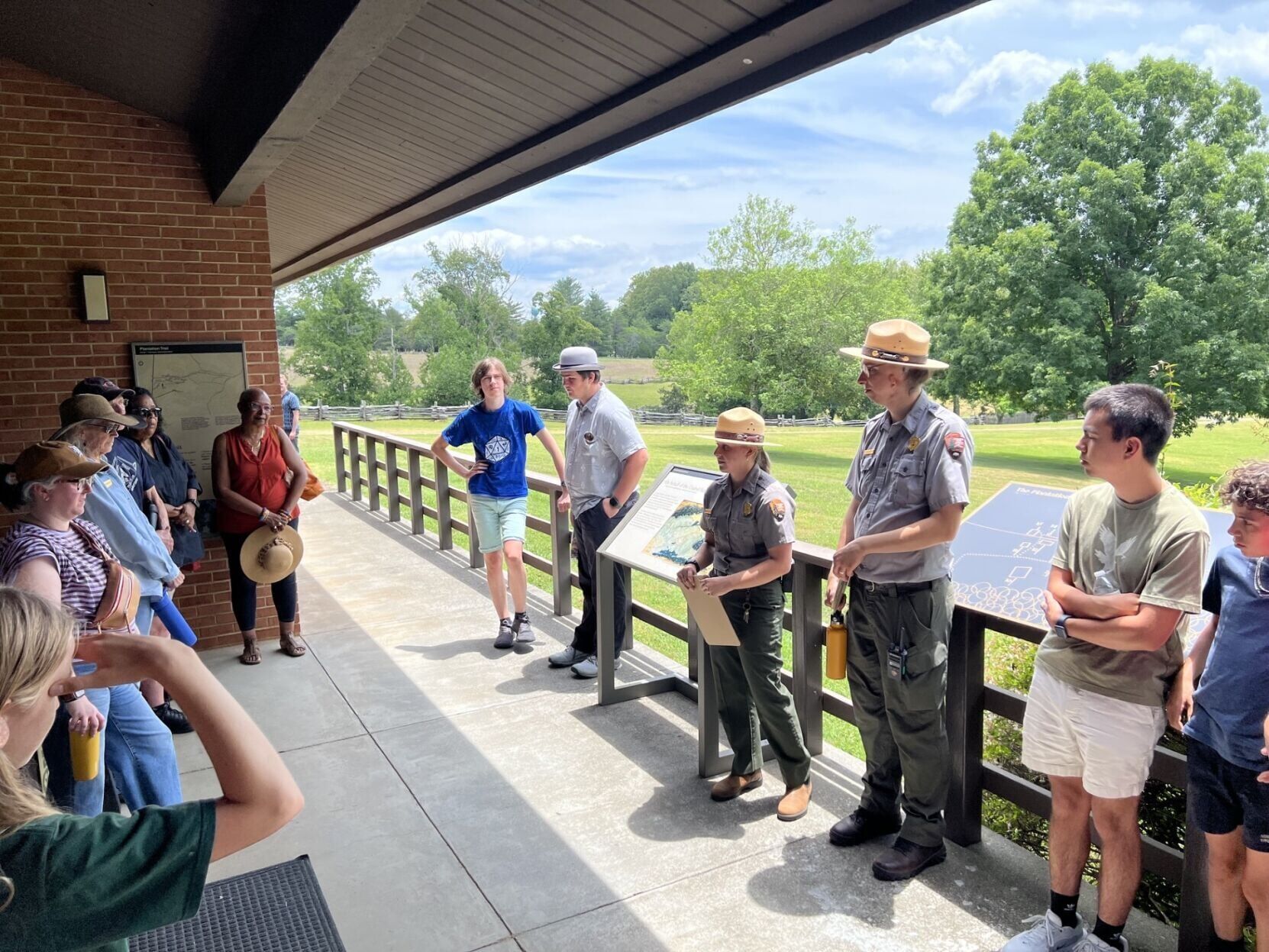
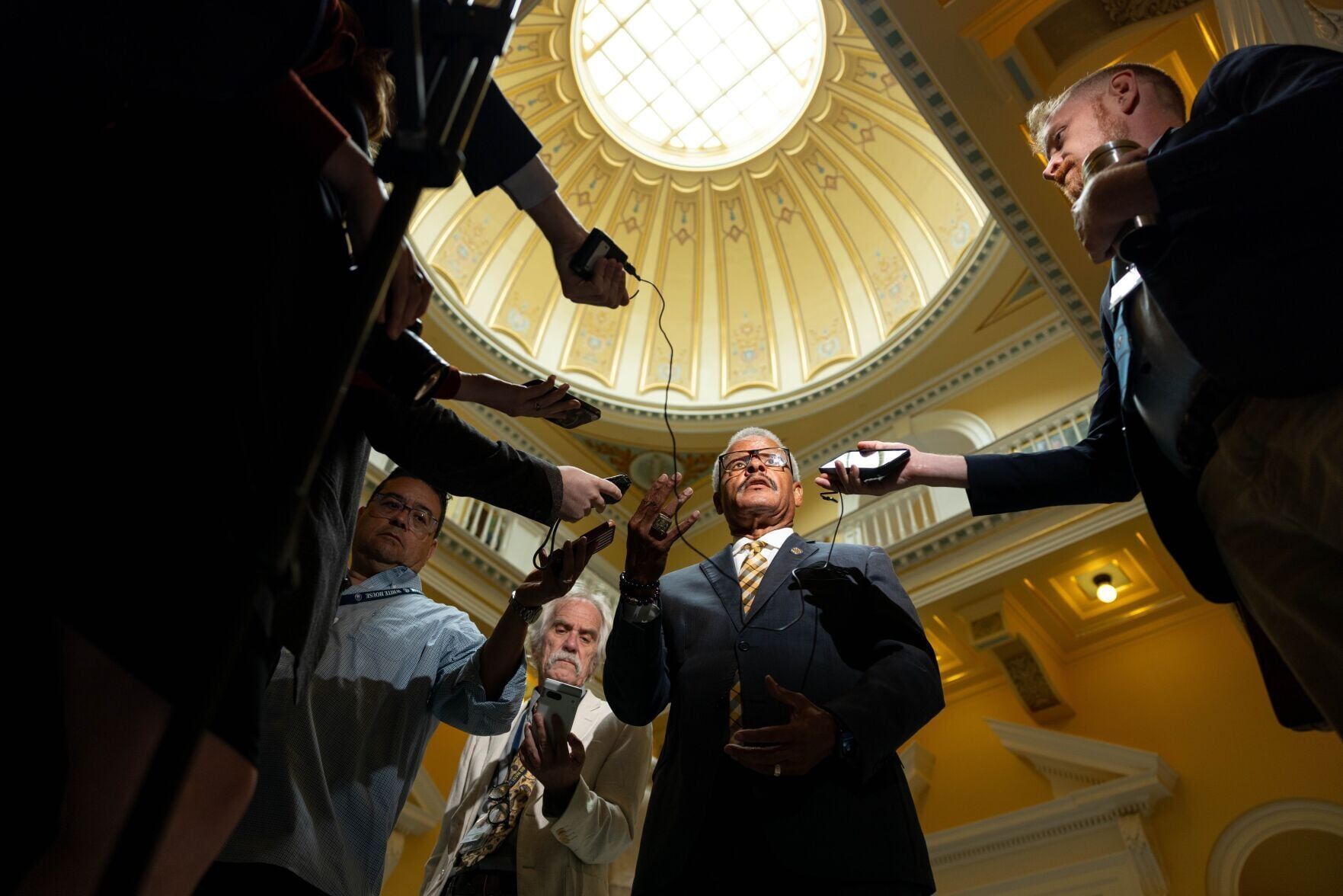
![]()
"Where we ended up was where we started in the first place,
the Senate, too. We were all in the same room, the Senate, the
House, the administration ... we're in the same place we would
have been in March with a lot of pain," said
House Speaker Don Scott, D-Portsmouth.
MIKE KROPF, TIMES-DISPATCH
“We got this thing done. And at the end of the day, there is something in the budget for everybody to love. … Think about healthcare, housing, making sure that we cover the supplemental nutrition — as a kid, I was … hungry sometimes, to know that these summer programs (mean) kids are gonna be able to eat and learn during the summer, that's beautiful,” Scott said.
The budget compromise increases the tax data centers pay for electricity, which had been a fraction of what residential customers pay, and will generate $1.2 billion over the next two years.
The higher data center tax will fund much of the higher spending the Senate had wanted compared to the House's budget proposal, and it ends an impasse that had stalled budget negotiations.
The four-month impasse was over the state Senate’s proposal to end a sales tax exemption for data centers, an idea opposed by Spanberger and House Democrats as a move that would break a state promise and tarnish the state’s image with businesses.
The electricity consumption tax is an alternative to that, said Senate Finance Committee chair Louise Lucas, D-Portsmouth. But she said she'd keep pushing to end the sales tax exemption.
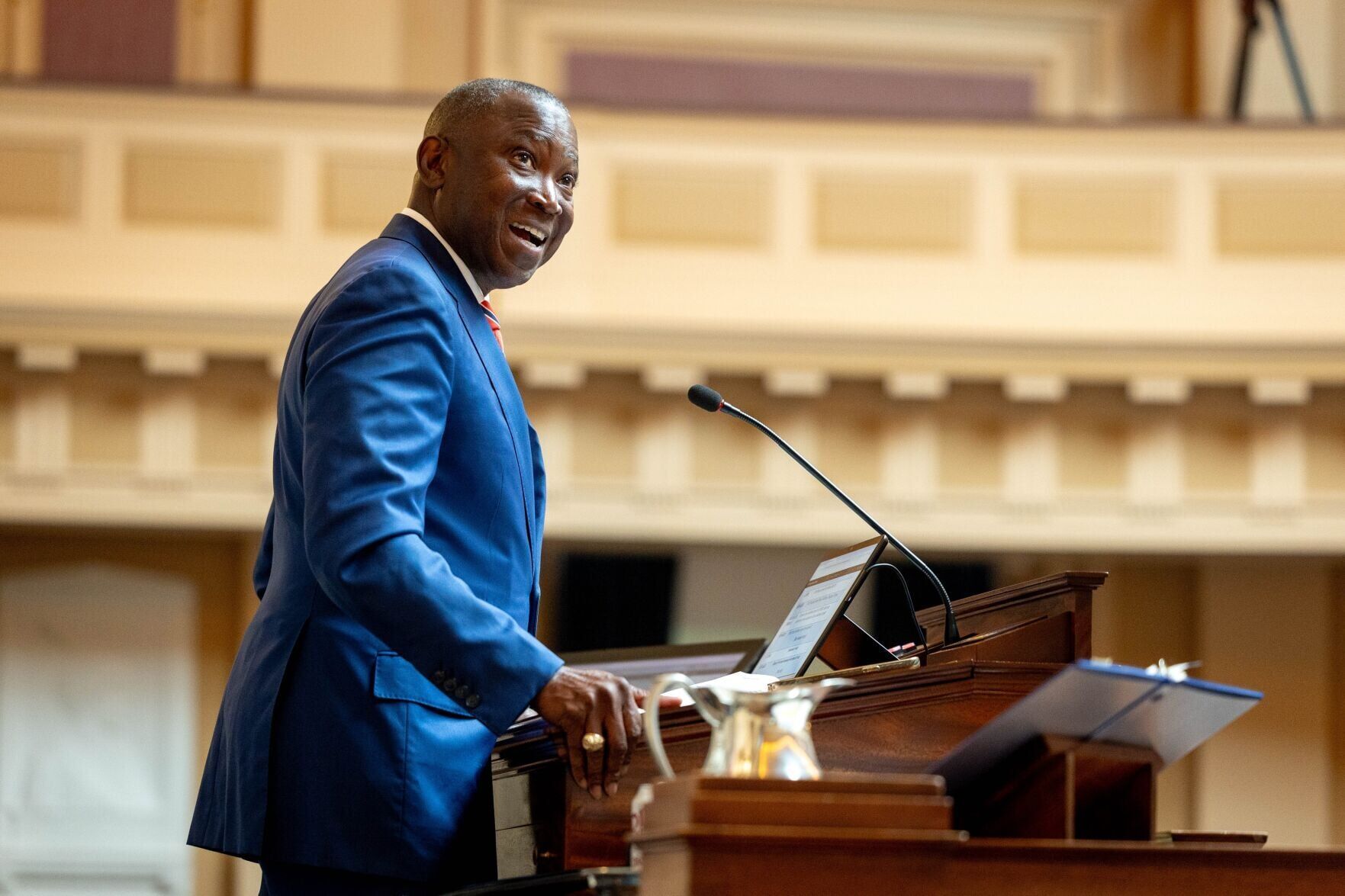
![]()
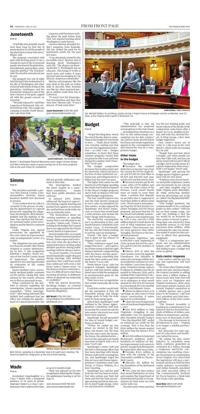
Sen. Louise Lucas, D-Portsmouth, speaks to reporters on
Monday.
MIKE KROPF, TIMES-DISPATCH
Overall, "We have a budget that is great for the citizens of Virginia," Lucas said.
"This conference report took longer than most ... and I spent a lot of time trying to find the right balance between compromising with the House and the governor and having something that made the data centers pay their fair shares," Lucas said.
Weeks before Lucas' sales tax proposal emerged, Spanberger and her staff had started asking about ways to link the exemption to environmental goals for the data center sector.
Their focus was on legislation that would eventually die in the Senate.
It said data centers would only get the exemption if they hit renewable energy and energy storage goals to help the state meet its clean energy goals.
After it died, Spanberger's staff outlined to the House Appropriations Committee staff how increasing the current tax rate for data centers' electricity use could boost state revenues.
Spanberger herself presented the idea to Senate budget conferees on March 11.
"Where we ended up was where we started in the first place, the Senate, too. We were all in the same room, the Senate, the House, the administration ... we're in the same place we would have been in March with a lot of pain," Scott said.
Spanberger's senior staff and the state's chief energy officer had four more meetings with Senate Finance staff on the consumption tax, and Spanberger urged the idea on Lucas and House Appropriations Committee chair Luke Torian, D-Prince William, in a June 5 meeting.
Spanberger has said her goal from the start has been to ensure that data centers pay their fair share and that the state encourages existing and future data centers to meet tough energy, water use and emissions standards.
“This principle is why my administration has proposed several options to the state Senate ... including three variations on a first-in-the-nation energy consumption tax for data centers," she said last week, shortly before the House and Senate negotiators agreed on the consumption tax and cleared the way for a compromise budget.
![]()
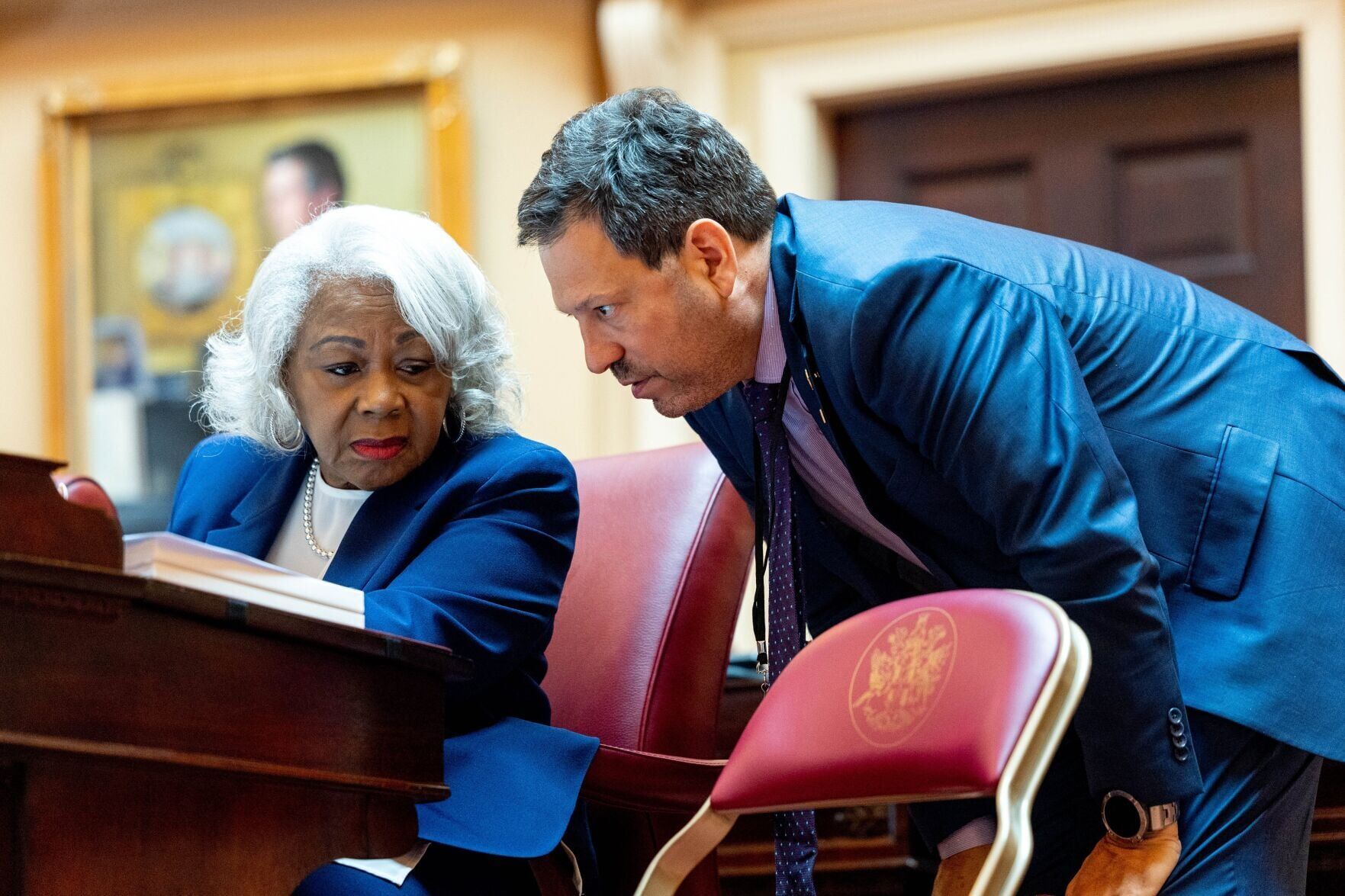
Sen. Louise Lucas, D-Portsmouth, left, is seen with Senate
Majority Leader Scott Surovell, D-Fairfax, in the Senate on Monday.
“Louise can speak for herself,” Surovell said. “I get the sense she
was frustrated with the intransigence of the House and governor. As
we all know, she has a style that is different than most
legislators, which is very popular with a lot of her
supporters.”
MIKE KROPF, TIMES-DISPATCH
Other items in the budget
The budget also:
- Increases the standard deduction on income taxes from the current $8,750 for single filers and $17,500 for joint filers to $9,200 and $18,400 next year, and $9,300 and $18,600 in 2028.
- Increases teacher pay by 4% a year, with a $770 million sum to cover the state’s share of the increase. Local school boards must set funds to cover their share, a portion that depends on an index that is supposed to track their ability to afford school costs. The increase is more generous than the 2% that former Gov. Glenn Youngkin and the House proposed, and more than the 3% the Senate had initially wanted.
- Increases state employee pay by 3.5% a year, and sets a $582 million deposit to hold down the cost of what employees pay in premiums. These increases, too, are more generous than either Youngkin, the House or the Senate had proposed.
- Increases legislators’ pay to $50,000 a year, beginning in 2028, up from $18,000 for senators and $17,640 for members of the House.
- Directs 45% of what the state receives from the Regional Greenhouse Gas Initiative to reduce the surcharge utilities levy on residential customers to cover the utilities’ costs from the program. Dominion Energy expects it will pay $1.18 billion over the 20 months to February 2028, and is seeking State Corporation Commission approval to pass this cost on to ratepayers in what would amount to a $10.36 to $13 increase in a benchmark $172.82 monthly bill for 1,000 kilowatt-hours.
- Allows localities to levy a 1% surcharge on sales taxes to fund school construction, if voters approve in a referendum.
- Clears the way for legal retail sales of marijuana beginning July 1, 2027.
- Sets $150 million to help Virginians struggling to pay Affordable Care Act premiums after President Donald Trump’s “One Big Beautiful Bill” ended an enhanced tax credit for the coverage. This is less than the $200 million the Senate wanted but more than the House’s $79.1 million.
- Sets $50 million to help fund Richmond’s multiyear, multihundreds-of-millions-of-dollars improvements to its sewers to prevent sewage from flowing into the James River after heavy rains.
- Provides $10.6 million to help with the cleanup of the Shoosmith Landfill in Chesterfield County.
- Allocates $15 million for the demolition of the Richmond Coliseum.
- Sets a fine for data centers that exceed limitations on noise and requires the Department of Environmental Quality to set regulations for their water use.
![]()
Del. Luke Torian, D-Prince William, speaks to reporters
Monday.
MIKE KROPF, TIMES-DISPATCH
Data center water use
The data center water question was the last sticking point, and meant release of the details of the compromise came hours after a hoped-for 5 p.m. deadline on Friday, said state Sen. Richard Stuart, R-King George, a first-time budget negotiator.
Data center's heavy use of water is a big issue in his rural district, where wells are running dry, he said.
"People hem and haw about a budget, and when people say they don't like stuff, and you can always fund stuff you don't like in a budget, but it usually means it's a good compromise when everybody's not happy," Stuart said.
Spanberger said passing the budget means Virginia's government will not shut down.
"It delivers raises for our teachers and public employees, makes new investments in our schools ... and takes tangible steps to make Virginia more affordable, all while protecting families from the devastating cuts in the so-called 'One Big Beautiful Bill'," Spanberger said.
"This budget positions the commonwealth to be a national leader on data centers" with the tax on their energy usage, she said. Her thinking is that the tax would be an incentive for data centers to invest in generating their own electricity from renewable sources, to cut their purchases from utilities, while continuing the sales tax exemption makes it easier for data centers to afford that generating equipment.
"This is a compromise proposal, one my administration helped craft," she said, adding that failing to pass a budget was never an option.
Data center response
Data centers said the new tax rate and regulations will hurt Virginia.
“At a time when Virginia badly needs new jobs and investment, the General Assembly is adding more than a billion dollars in unnecessary new taxes that will raise costs on Virginians and Virginia businesses, drive away investment and job creation, and tarnish Virginia’s reputation as a reliable partner and a good place to do business,” said Josh Levi, president and chief executive officer of the Data Center Coalition.
“The General Assembly is breaking its commitments to an industry that has invested hundreds of billions of dollars, pays billions in annual taxes, and supports tens of thousands of jobs … The message to businesses in all industries is clear — Virginia is no longer a reliable partner,” Levi said.
But advocates for state support for education and healthcare hailed the move.
“By asking the data center industry to contribute more fairly, conferees generated an estimated $1.2 billion through a temporary electricity consumption tax, enabling stronger investments in communities across Virginia. It is critical that the legislature still pass a permanent solution to hold the data center industry accountable,” said Ashley Kenneth, president and chief executive officer of The Commonwealth Institute for Fiscal Analysis, a think tank that tracks state spending.