BLACKSBURG — When Virginia voters fill out their ballots this fall, they will vote yes or no on three constitutional amendments that would protect reproductive rights, codify same-sex marriage and automatically restore voting rights to people convicted of felonies.
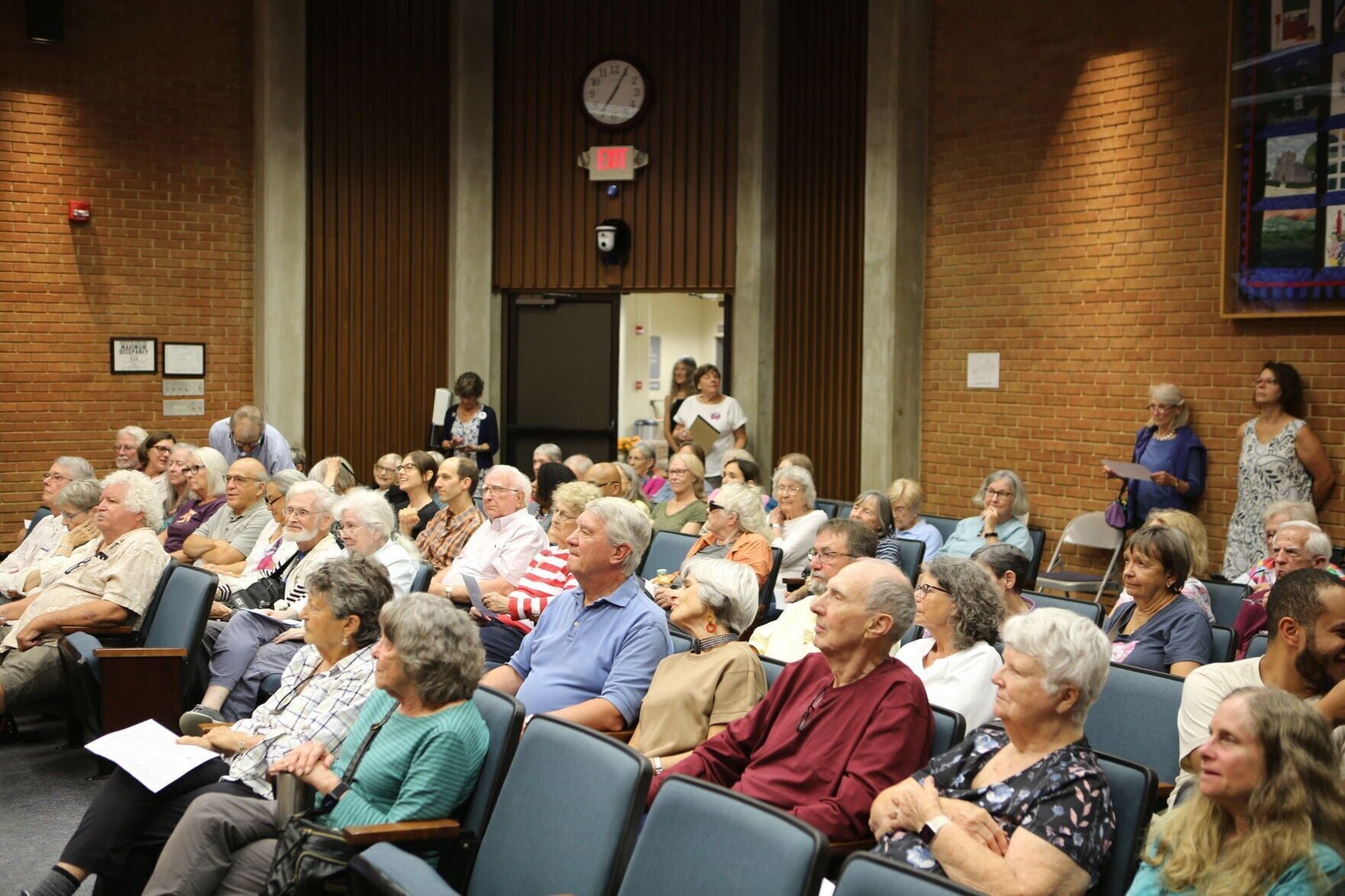
On Thursday, the Montgomery County chapter of the League of Women Voters, a nonpartisan voting-rights organization that has endorsed a yes vote on all three amendments, held an informational session on the proposals.
![]()
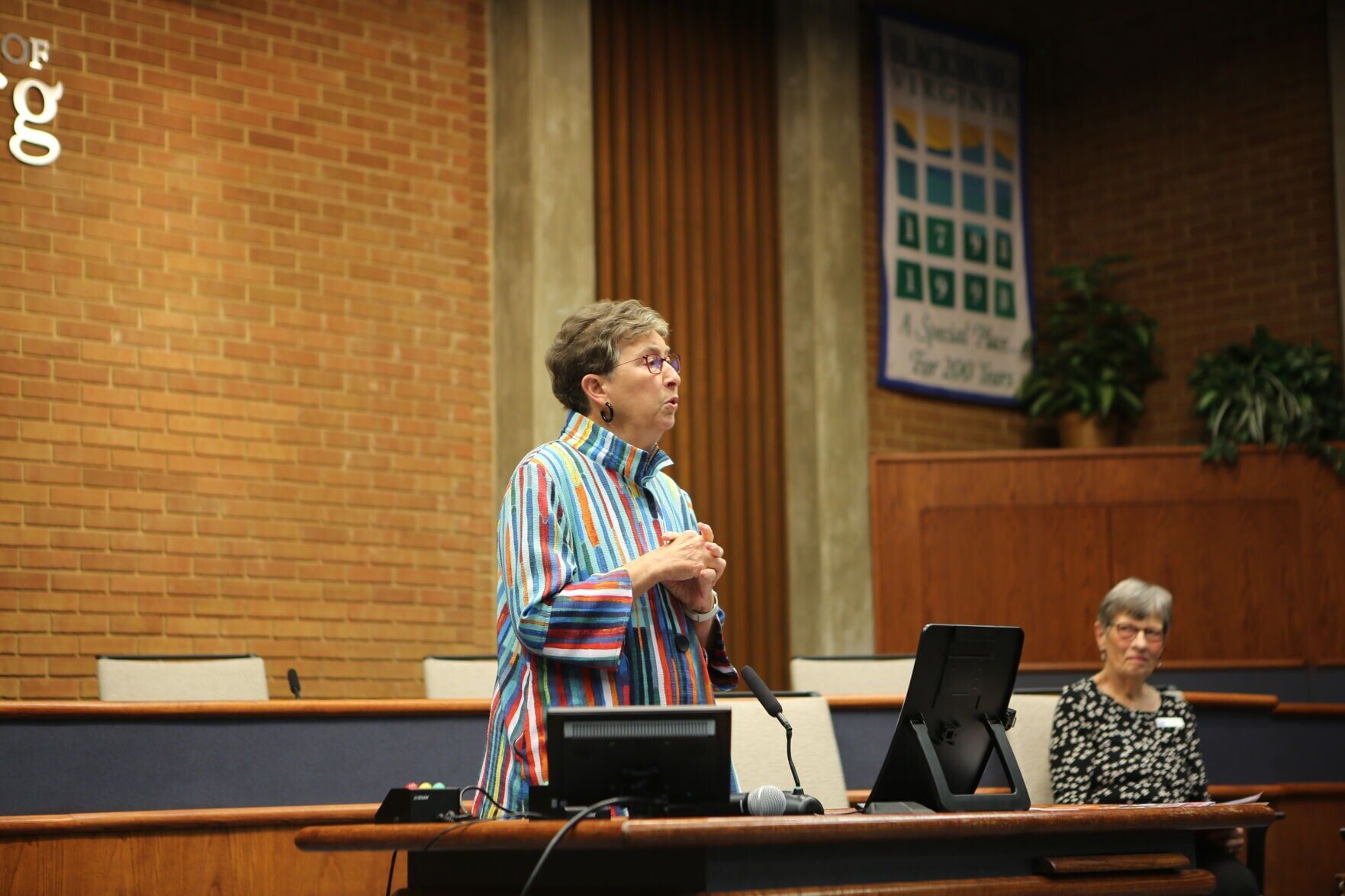
Attendees listen during the League of Women Voters presentation
on the constitutional amendments Thursday night in
Blacksburg.
ETHAN HUNT, The Roanoke Times
While Virginia law currently permits abortion and a U.S. Supreme Court ruling requires the state to allow adults of the same sex to marry, enshrining those rights in the state constitution would provide additional protection.
Instead of strengthening an existing state law or court ruling, the third amendment would rewrite the section of the Virginia Constitution that currently disenfranchises people convicted of felonies.
“Statutes can be changed, and they can be changed overnight by the General Assembly,” said Pat Hyer, a retired Virginia Tech administrator and member of the League of Women Voters. She added that Supreme Court rulings, as evidenced by the 2022 overturning of Roe v. Wade, can also be impermanent.
By contrast, amending the Virginia Constitution is a lengthy process, making the document difficult to change.
For a constitutional amendment to reach voters — the final step in the process — it must first be approved by the General Assembly. A regular General Assembly election must then be held, after which the newly elected assembly must approve the amendment again.
“Virginia has made it extremely difficult to change the constitution on purpose,” Hyer said. “It is amazing that three amendments have now made it through the process.”
Voters will see each amendment presented on the ballot as a question, with the option to vote yes or no. The Virginia Department of Elections refers to proposed constitutional amendments as “ballot questions.”
Reproductive health care protections — Amendment No. 1
The first amendment on the ballot would establish constitutional protections for reproductive health care, including abortion.
The first part of the question voters will see on their ballots — which is not the full text of the amendment — says the measure would “protect the freedom to make personal decisions about prenatal care, childbirth, postpartum care, birth control, abortion, miscarriage management and fertility.”
The second part of the question says the amendment would protect “doctors, nurses and patients from being punished for these decisions.”
Finally, the ballot question says the amendment would “allow for restrictions on abortion during the third trimester of pregnancy, except when the patient's health is at risk or the pregnancy cannot survive.”
The proposed amendment would not substantially alter Virginia's existing abortion laws.
However, Hyer said that it provides greater protection than Roe v. Wade by covering health care decisions beyond abortion, including postpartum care and fertility.
![]()
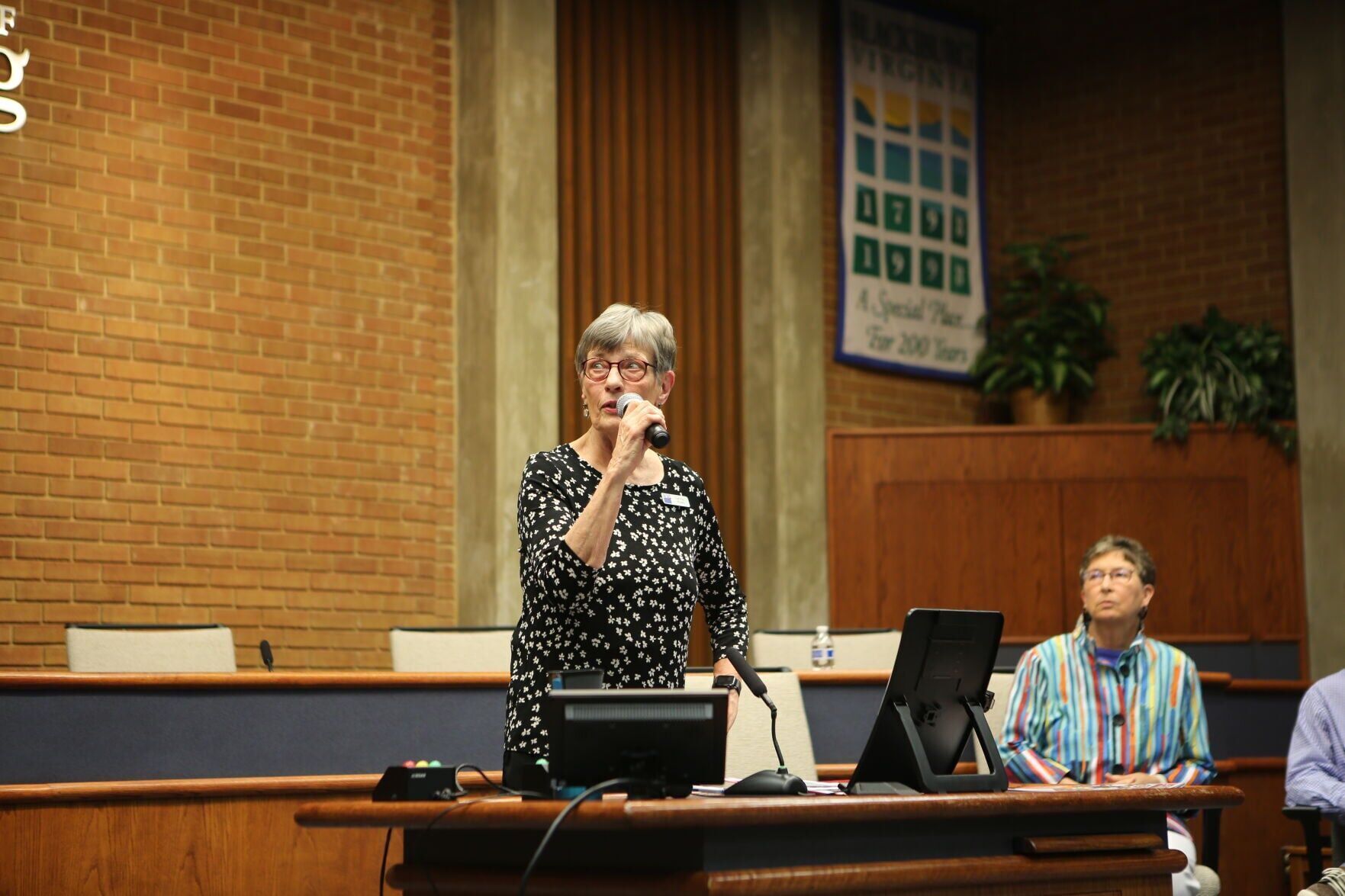
Pat Hyer
ETHAN HUNT, The Roanoke Times
“Why I support this amendment so much is because it covers a whole continuum of reproductive health care,” she said.
Virginia law currently allows abortion during the first and second trimesters. After the second trimester, an abortion is permitted if the procedure is performed in a hospital and the physician, and two consulting physicians, certify that continuing the pregnancy is likely to result in the woman’s death or substantially and irremediably impair the woman’s mental or physical health.
State law also protects people from extradition to another state for performing health care activities that are legal in Virginia. Thirteen states currently have total abortion bans, including Kentucky and Tennessee, which border Virginia.
The final provision in the amendment would allow the state to regulate abortion during the third trimester, with exceptions for health risks.
Hyer said that provision is a political concession that could improve the amendment’s chances of passage.
She added that the amendment, like existing law, does not require anyone to have an abortion or receive health care they do not want, leaving the decision with the patient.
Some Republicans have opposed the amendment. Former gubernatorial candidate Winsome Earle Sears wrote, “I am morally opposed to this bill; no protection for the child.”
Marriage under state law — Amendment No. 2
The second amendment on the ballot would amend the Virginia Constitution to recognize marriage between two adult persons regardless of sex, gender or race and require all legally valid marriages to be treated equally under the law.
Under Virginia law and the 2015 Supreme Court ruling Obergefell v. Hodges, same-sex marriage is legal in the commonwealth.
However, the state constitution still defines marriage as between a man and a woman. The proposed amendment would rewrite that section to align with state law and the federal ruling, using the language “two adult persons.”
![]()
Rude
ETHAN HUNT
The Roanoke Times
Carolyn Rude, a retired Virginia Tech professor and former president of the League of Women Voters who spoke alongside Hyer Thursday night, said there are two reasons Virginia needs the amendment.
“One is that we should align our constitution with practice and with what's going on nationally,” she said. “We should also protect Virginians from a possible overturn of Obergefell.”
The Supreme Court has not agreed to hear a case seeking to overturn Obergefell, but Justice Clarence Thomas has said the ruling should be reconsidered.
In his concurring opinion in Dobbs v. Jackson Women’s Health Organization, which returned the issue of abortion legality to the states, Thomas wrote that the court “should reconsider” Obergefell, calling it one of the court’s “demonstrably erroneous decisions.”
Rude said the amendment “gets the state out of the decision about who you can love and who you can make a commitment to, and we can treat all marriages equally.”
A majority of Republican lawmakers opposed the amendment when it was considered by the General Assembly, and some conservative activists have spoken out against it, including Family Foundation President Victoria Cobb.
“Every child deserves the best they can have, and that is a biological mom and dad, whenever possible,” Cobb said.
Voting rights and felony convictions — Amendment No. 3
The third amendment would automatically restore voting and other civil rights to people convicted of felonies once they have been released from incarceration. It would also explicitly state that Virginians have a fundamental right to vote.
Under the Virginia Constitution, most people convicted of a felony cannot vote unless their rights are restored by the governor. Virginia is one of three states where people with felony convictions can be permanently disenfranchised.
A federal court ruling earlier this year limited that disenfranchisement to 11 offenses that were felonies at common law in 1870, including arson, burglary, manslaughter, rape and murder.
Under the current law, enfranchisement varies between governors. In her first year in office, Gov. Abigail Spanberger has restored voting rights to about 66,000 formerly incarcerated Virginians, while former Gov. Glenn Youngkin restored voting rights to fewer than 10,000 people during his four-year tenure.
About 260,000 people remain disenfranchised because of felony convictions, roughly 120,000 of whom are Black people, according to the Sentencing Project, a prison-reform advocacy nonprofit.
Rude said the issue is one of fairness — and race.
“If the sentence is determined to be two years or five years, is it fair to punish the person for the rest of their life?” Rude asked attendees.
The constitutional ban on voting for people convicted of felonies dates to Virginia’s 1902 Jim Crow-era constitution, which was designed in part to disenfranchise Black voters.
Rude said the commonwealth “explicitly tried to limit the voting rights of Blacks, in particular, and poor whites for that matter, by instituting things like the literacy tests, or poll taxes and mass incarceration.”
While Virginia has eliminated poll taxes and literacy tests, Rude said, the felony-based restriction remains.
“Black people have disproportionately borne the burden of this policy of not restoring rights, and Virginia should be in sync with the rest of the country,” Rude said.
Some Republican lawmakers have opposed the amendment, including Sen. Mark Peake, R-Lynchburg, who spoke against it during Senate debate.
“Rapists, murderers, child pornographers — they’re having their rights restored just like somebody who wrote a bad check,” Peake said.
The third amendment would also change an existing voting prohibition from applying to people “found to be mentally incompetent” to people who “lack the capacity to understand voting” — clarifying the restriction.
Early voting begins Friday, and Election Day is Nov. 3.