RICHMOND — With two weeks left before Virginia's operating budget expires, General Assembly budget negotiators are preparing to meet Tuesday for the first time in more than 14 weeks in hopes of reaching an agreement on a new two-year spending plan to take effect on July 1.
House Appropriations Chairman Luke Torian, D-Prince William, confirmed on Monday that the 11 members of the budget conference committee — six from the House of Delegates and five from the Senate — are scheduled to meet at noon after the Senate Finance & Appropriations Committee hears public presentations on the state revenue outlook from the administration of Gov. Abigail Spanberger and a new Senate proposal for a budget compromise.
The conference committee hasn't met as a whole since March 6, when members met with Spanberger for breakfast near the end of the 60-day legislative session, which ended eight days later without a budget agreement. The assembly met again in special session on April 23, but again without a meeting of negotiators, as Torian and Senate Finance Chair Louise Lucas, D-Portsmouth, met privately to find a day to bridge a $1.9 billion revenue gap between the House and Senate budget proposals with additional money from the state's lucrative data center industry.
It hasn't happened, and now lawmakers are running out of time for a deal, after the House released a proposed budget compromise on Friday with Spanberger's support, and Lucas responded with the outline of a new competing proposal from the Senate.
One of those negotiators, Sen. Creigh Deeds, D-Charlottesville, said he has grown increasingly exasperated with the failure of the budget conferees to meet to reconcile differences in their proposals for revenue and spending over the next two years.
"We're in serious jeopardy right now," he said in a telephone interview on Monday. "I remain hopeful and confident that it's going to happen, but I'm frustrated."
Deeds said he was encouraged that House Speaker Don Scott, D-Portsmouth, said on Friday that the new House budget proposal is "not a take it or leave it deal" and that the Senate could contribute to a final plan.
"We've got to get together in one room," he said.
Lucas has been trying to build public pressure behind the Senate proposal — first unveiled on Feb. 22 — to repeal the state's 16-year-old sales and use tax exemption on purchases of computer equipment and software for data centers. She's conducting a "listening tour" in Hampton Roads, where she appeared on Sunday; Prince William County on Monday night; and Chesterfield County on Tuesday evening. She was not available for comment on Monday.
But Torian and Spanberger oppose outright repeal of the tax exemption, which Lucas and the assembly extended just three years ago for data center companies that make big investments in Virginia. They warn that repealing the tax break before its scheduled expiration in 2035 could damage Virginia's business reputation, undermine the state economy and deprive localities of data center investments that they want to help them pay for schools and other local government services.
The original House budget would have required data centers to meet stricter standards for environmental protection and invest more in clean energy in return for the tax break, but the new proposal would leave those issues to a proposed commission that would make recommendations by Nov. 1 for the assembly session that will begin in January.
The new House plan would rely on $1.5 billion in new revenues projected by the Spanberger administration in a newly released economic forecast for the current fiscal year and the two years beginning on July 1. Lucas and other Senate budget leaders have responded skeptically, saying most of the money would be available only one time and the state needs additional recurring revenues to pay for ongoing services.
![]()
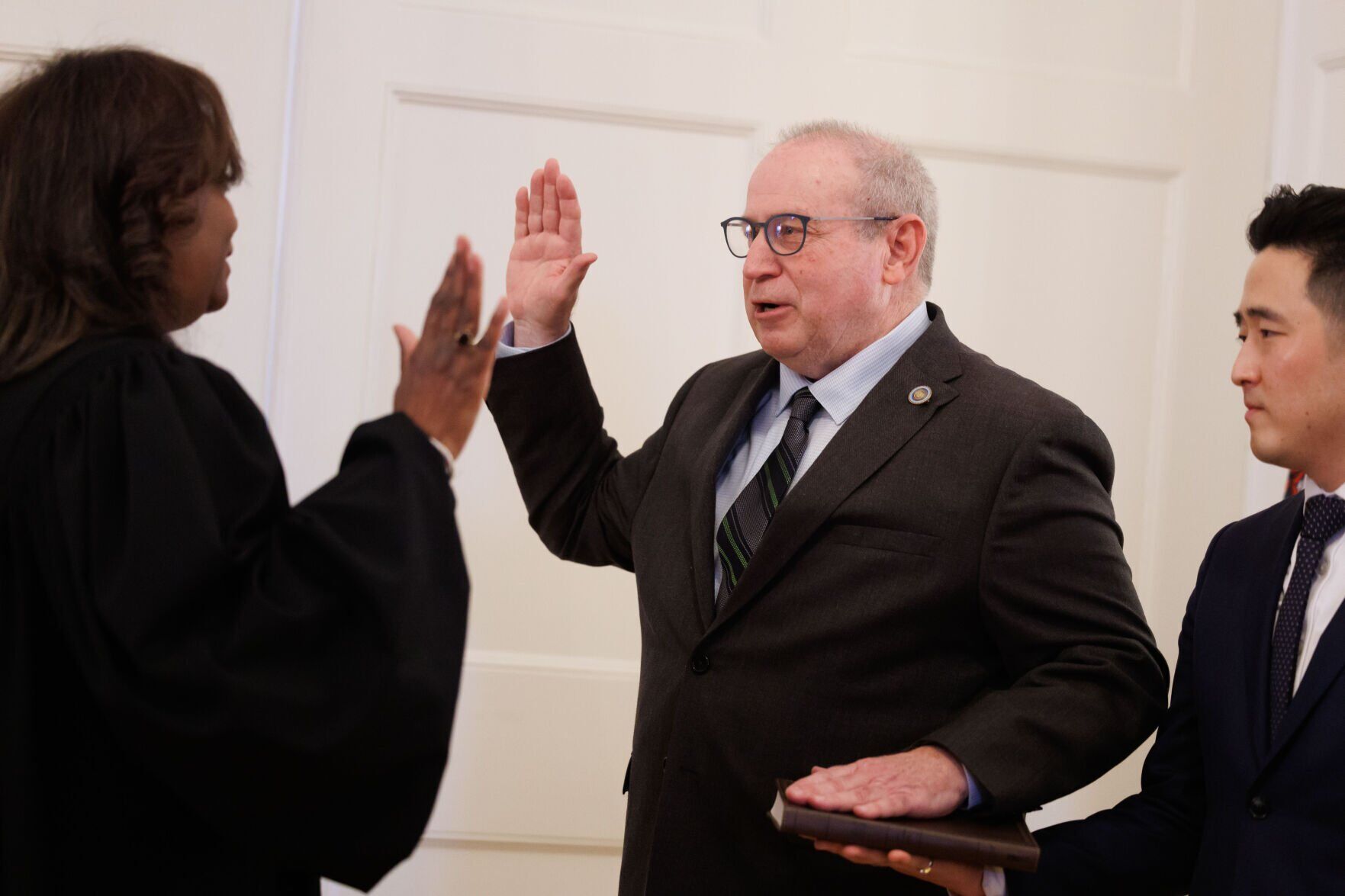
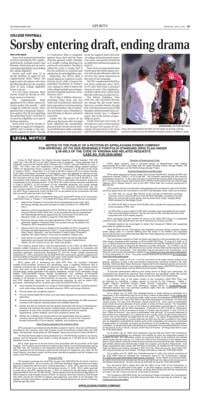
Secretary of Finance Mark Sickles, seen being sworn into his
role in January, will outline a new report on May state revenues
Tuesday.
ALLYSE PULLIAM, Times-Dispatch
On Tuesday, Secretary of Finance Mark Sickles, a former House budget negotiator, will outline a new report on state revenues in May — with one month left in the current fiscal year — that shows tax collections $837 million ahead of the budget forecast, which the governor and lawmakers could carry into the next two-year budget cycle.
But Sickles cautioned last week that most of the additional money comes from unpredictable sources, such as income taxes paid on stock market gains and lower-than-expected refunds to taxpayers.
The administration remains concerned about the U.S. economy under President Donald Trump, who it says has hurt the state's economy with deep cuts to the federal workforce and spending, and a war with Iran that has fueled inflation through higher energy prices. Virginia has lost 41,400 jobs in the current fiscal year, primarily in the federal government, manufacturing and the professional business services sector that includes federal contractors.
"While the most recent labor market data was positive, conditions remain weak both nationally and in the Commonwealth," Sickles said in his monthly revenue letter to the governor on Friday. "Meanwhile, surging inflation has put major strain on household budgets and brought (interest) rate hikes back into discussion at the Federal Reserve."
However, consumer sentiment rose in a survey on Friday, a week after reaching a record low, as gasoline prices began to subside with news of an impending deal between the U.S. and Iran to reopen the Strait of Hormuz for shipments of oil, fertilizer and other petroleum-based goods from the Persian Gulf.
Virginia consumers also continued to spend money on goods and services in April, as reflected in sales tax collections in May. Sales tax revenues were up by $32 million in May, compared to the same month a year earlier, and $133.8 million for the first 11 months of the fiscal year.
"Sales tax collections were unusually strong for the second month in a row," Sickles told the governor. "Unfortunately, some of this growth is being fueled by households spending down their savings while prices rise."