Franklin County is quickly approaching its goal of providing high speed internet to the vast majority of its residents. The 10-year- long effort is finally seeing success even as some early missteps still remain evident around the county.
"By the end of 2027, we will get to 90% of the households," said Rodney Gray, chief operating officer for Zitel, a regional fiber internet provider.
![]()
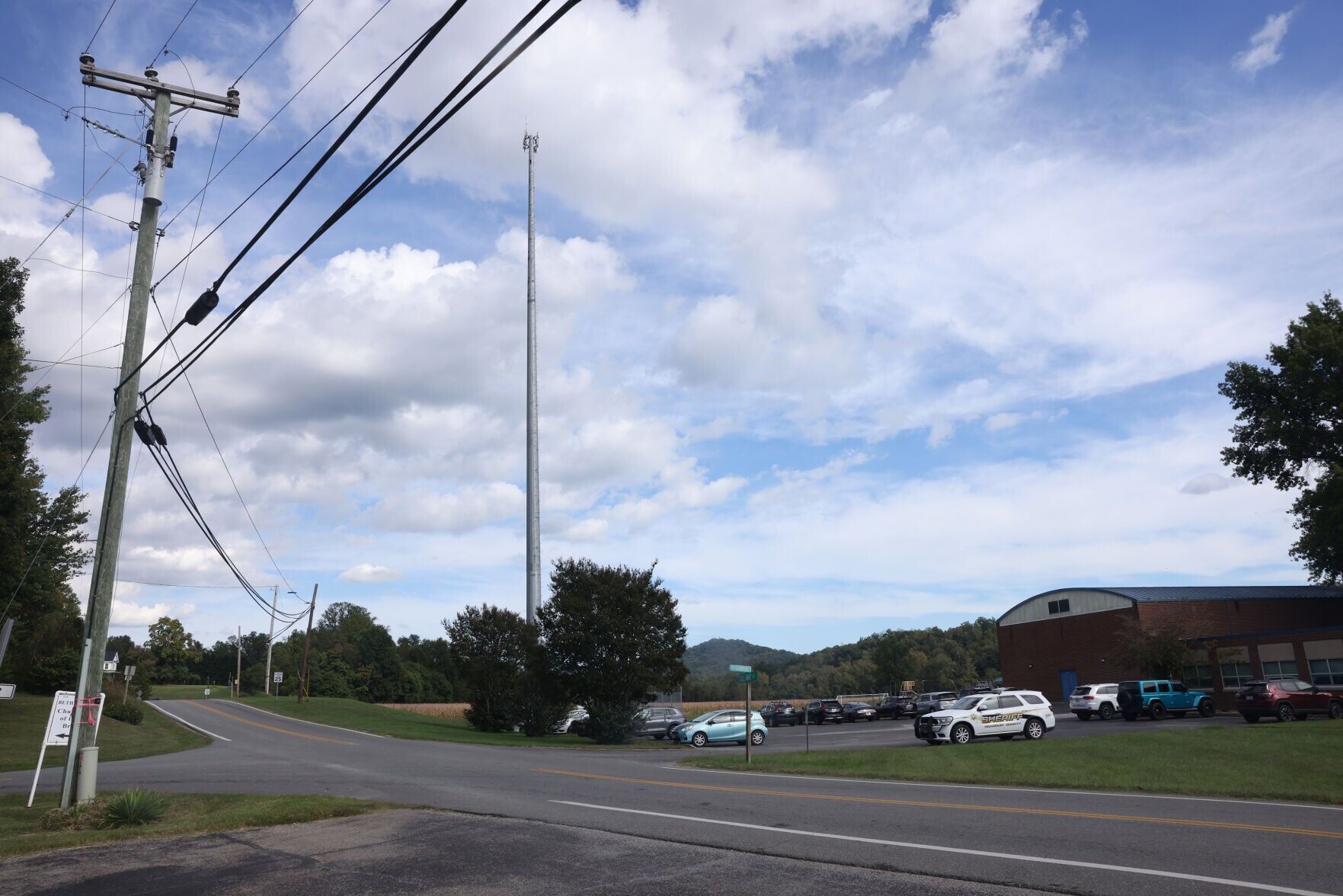
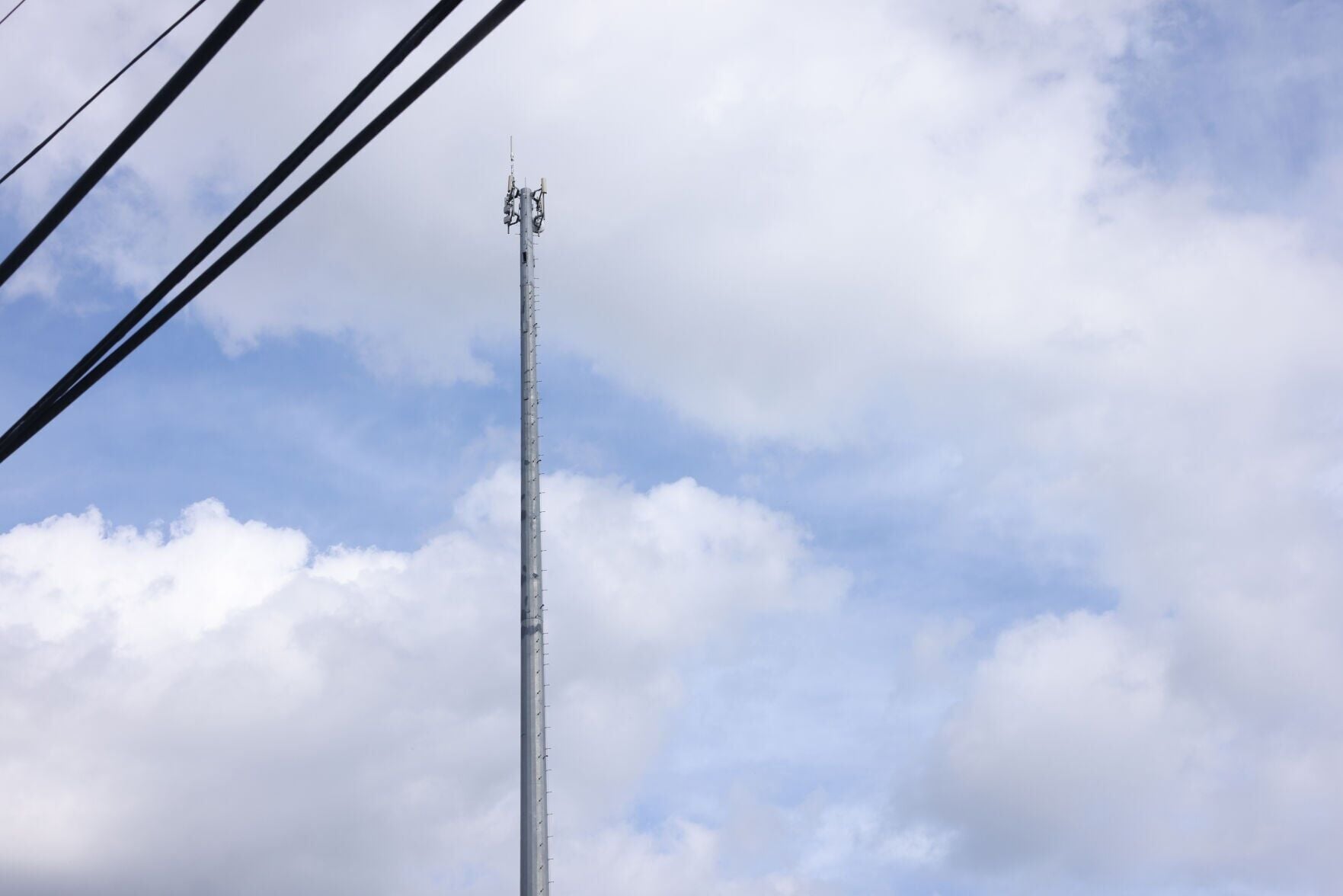
One of Franklin County's communications towers that is
mostly unused is seen on Sept. 30 along Callaway Road next to
Callaway Elementary School and across the street from the volunteer
fire department.
HEATHER ROUSSEAU, The Roanoke Times
Zitel is putting the final touches on the county's internet expansion, fulfilling the last two project grants that include bringing high-speed fiber lines into homes. Work is currently ongoing in the southern areas of the county to provide internet to the remaining homes.
Gray said Zitel is still waiting on state approval to complete the remaining 9% of homes they can reach. There will still be around 1% of homes in the county that will be too remote to connect.
Getting to those remaining households in Franklin County was stalled for at least a year, according to Franklin County Administrator Steve Sandy. The delay was due to Zitel being asked to take over the remaining projects after it was discovered that RiverStreet Networks would be unable to complete the projects due to financial constraints.
Zitel is the last internet provider working to expanded high-speed internet in the county. Shentel completed a project last year that provided broadband to more than 6,700 Franklin County homes.
Sandy said he expects there will be fewer than 100 homes in Franklin County that will unable to get access to fiber internet once work is completed by sometime around the end of 2027. Those homes may need to rely on satellite internet services, such as Starlink.
Much of the expansion of fiber lines in the county comes from state and federal funding in recent years. Franklin County, like many other localities, saw a major infusion of grant funding during the COVID-19 pandemic with programs like the American Rescue Plan Act.
Franklin County received more than $10 million in ARPA funds in 2021 with supervisors dedicating $7 million to expanding broadband internet. The funds came with a deadline of 2026, but Zitel has received an extension to the end of 2027.
Franklin County also received an $11.8 million grant from the Virginia Department of Housing and Community Development's 2022 Virginia Telecommunication Initiative. A similar grant awarded to the Western Piedmont Planning District Commission allocated another $5.9 million to the county.
Riverstreet received $44 million in federal funding from the Broadband Equity Access and Deployment program to provide internet access in multiple counties including Franklin. That is the project Zitel is current moving forward on.
While efforts to expand high-speed internet in Franklin County have been delayed over the years, Gray praised what will be accomplished once work is completed. He said the county's internet access will be one of the best in the state.
"The internet access that is going to be available to their industrial parks and their business complexes and to their small businesses and citizens is only rivaled in Richmond, Hampton Roads and Northern Virginia. It's faster than services in Roanoke and Lynchburg," Gray said.
That is due to fiber lines being the entire backbone of the internet service provided in Franklin County, according to Gray. He said other counties like Roanoke rely on coaxial cable that max out at around one megabit download speeds.
The fiber lines in Franklin County can reach download speeds of up to five megabits, Gray said. Those speeds could be a big incentive for companies looking to relocate who depend on fast internet speeds.
It was in 2017 that the Franklin County Board of Supervisors began looking at ways to expand broadband internet to some of the more rural residents the county. Work started to acquire state and federal grants available to expand internet services.
Those growing needs for high-speed internet came with significant costs. Sandy said digging fiber lines comes at an approximate cost of around $1 million a mile.
Gray said most internet providers are unwilling to spend that much money to run fiber lines to remote areas where only a handful of homes would hook up. That is why state and federal grants have been critical.
There have been other cost savings with Appalachian Power Co. agreeing to run fiber lines on power poles in the county. Gray said the partnership provides the power company with access to fiber lines while saving internet companies the cost of digging lines.
Much of the work done in Franklin County came as a result of a significant influx of state and federal funding starting in 2021. That funding, mostly due to COVID-19 relief efforts, forced the county to pivot from a broadband strategy it started in 2020.
That year, Franklin County received a $2.3 million grant from the Virginia Telecommunication Initiative to expand broadband using a fixed-wireless system. Franklin County partnered with Blue Ridge Towers and Briscnet to fund the remaining cost of the $4.6 million project.
While work was already underway to provide fiber lines to some areas of the county, the fixed-wireless plan would construct seven cell towers around the county that would carry equipment to beam an internet signal into homes. Some other towers in the county were also updated to provide the service.
The plan relied on line-of-sight to produce a good signal to the homes. Even then, the top speed was far lower than what the fiber lines provided.
![]()
One of Franklin County's cell towers that is mostly unused
is seen on Sept. 30 in Callaway.
HEATHER ROUSSEAU, The Roanoke Times
Sandy said the county's original plan was the build the original towers in phase one. Phase two would construct smaller towers around the county to strengthen the signal to reach more homes.
When additional state and federal funding came available with the COVID-19 pandemic, Sandy said the county decided to pivot to more high quality options for residents. Despite the change, the county had already signed a contract to complete the construction of the seven towers that are now mostly unused.
Those towers can be seen in Sontag, Callaway, Glade Hill, Snow Creek, Wirtz and a tower in Westlake constructed to look like a pine tree. All remain unused except for the Westlake tower, which now has Verizon service.
Sandy said the county's goal was to provide high-speed internet as fast as possible to as many people as possible and the fastest and most affordable way to do that was through fixed wireless. Their goal was to slowly add fiber lines as funds became available over a long period of time, then COVID-19 funds brought a lot of funds to the county very quickly.
"We knew that technology was eventually going to expire as people would get access to fiber," Sandy said of fixed wireless technology.
While fixed wireless is no longer an option with the services no longer in business, Sandy said the county is currently working with cellphone providers to increase cell signals in the communities. Improved signals have long been requested in areas such as Snow Creek, where large portions of the community have no cell signal can could benefit from a service provider placing equipment on the towers nearby.
Verizon has expressed interest in installing equipment on the Snow Creek tower, Sandy said. So far, they have not announced any official plans.
![]()
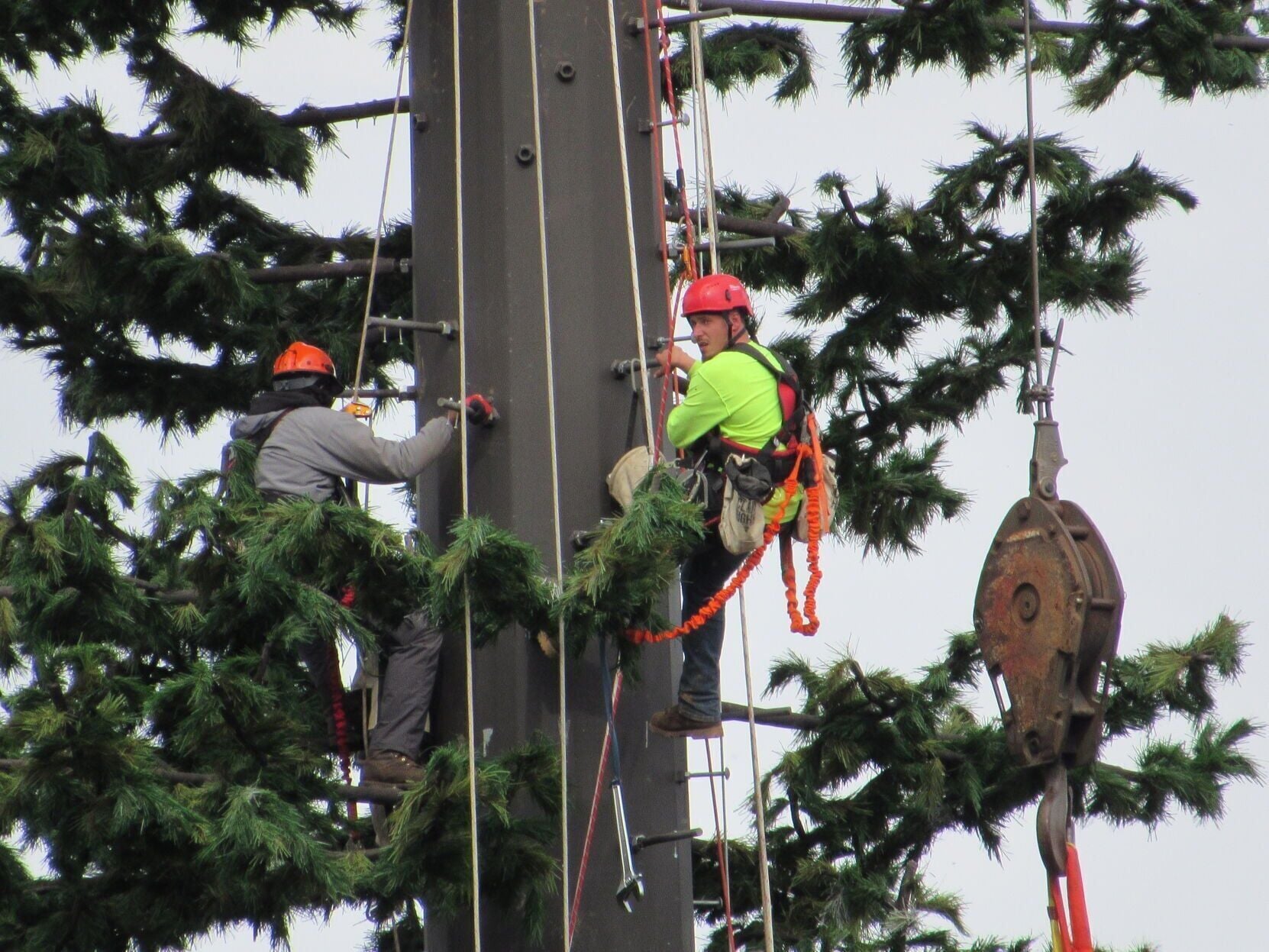
Workers were seen harnessed to the side of a communications
tower in Westlake in November 2022. The towers, originally built
for a wireless internet push, was later converted for boosting
cellphone coverage in the Smith Mountain Lake community. The
160-foot tower was equipped with fake tree limbs to reduce its
visual impact on the nearby Booker T. Washington National
Monument.
Laker Weekly, File 2022
Sandy said the county is facing similar issues finding cellphone companies to place equipment on the towers as they did finding internet companies to build fiber lines in the county. The cost to provide the equipment currently outweighs the financial benefit to the companies.
Much like what the county did in obtaining grants to incentivize internet companies to build, Sandy said the county is using a similar strategy with the cellphone towers. They are working to obtain BEAD grant funding to persuade companies to provide service to these towers.
"We've been pushing thus far and we have not had very much luck," Sandy said. "Unfortunately, to get companies to locate on the tower I think it's still going to take some more incentivization from the state to really make it worthwhile."
Until then, there will remain several unused towers in Franklin County waiting for a provider. They are the remains of a project abandoned before it was even really started as the county came into an influx of funds to better serve its citizens.