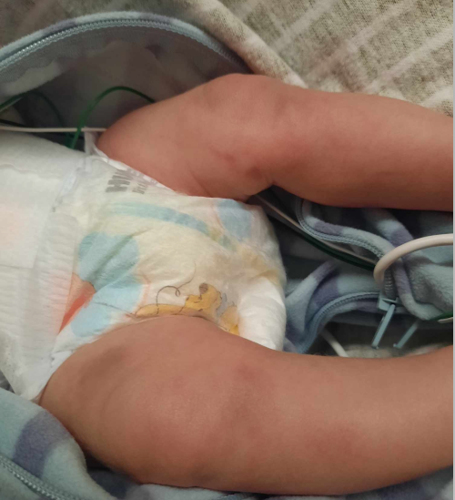
The state has suspended the license of Erin Strotman, the nurse charged with abusing newborn babies at Henrico Doctors’ Hospital, and it made new allegations against her.
kA 4=2DDlQE?4>D\:?=:?6\=:?<Qmk2 9C67lQ9EEADi^^C:49>@?5]4@>^E?4>D^2DD6E^65:E@C:2=^cg3h2`5h\bbg7\cdg7\2b6g\33bbe4hd6_57Qm':C8:?:2 7:?5D DJDE6>:4 AC@3=6>D 2E w6?C:4@ s@4E@CDV }xr&k^2mk^Am
According to the RAND Corporation, there has been a massive redistribution of wealth from the lowest 90% of income earners to the top 1% of income earners since 1975. More specifically, had the average worker's income simply kept pace with overall per capita economic growth since 1975, the income of the lowest 90% should have increased by $47 trillion more than it actually did. Only the top 1% met or exceeded the rate of economic growth.
No wonder there is a mass of working class folks who feel left behind in our world. And how is it that we can keep fooling ourselves that we live in a democracy, a society where the leaders govern only with the consent of the governed? I don't remember consenting to this total rip-off of average citizens.
As a retired middle school teacher and strong advocate for educational opportunities for all, I applaud the current national focus on higher education — its weighty ideology and monetary bloat. At long last, serious students and their hardworking families might hope for a reasonable path toward worthy academic pursuits.
Withholding federal funding from scientific research is indeed a concern. So, too, is the irresponsible management of college/university budgets. I was relieved to read in the Richmond Times-Dispatch on April 6 that the University of Virginia "has implemented a series of measures to cut costs and reduce its multibillion-dollar budget in the face of a rapidly evolving federal landscape."
It's interesting that the company which Republican candidate for governor Winsome Earle-Sears previously owned and served as president in Winchester, Shenandoah Appliance Plumbing & Electric, was a female-, veteran-, and minority-owned business that qualified to bid on federal projects as a Disadvantaged Business Enterprise, or DBE ("Youngkin and Earle-Sears were all in on DEI – until they weren't," April 17).
The DBE program aims to provide opportunities for small-, minority- and women-owned businesses in federally assisted contracts. Shenandoah Appliance Plumbing & Electric's status as a minority- and women-owned business therefore enabled her firm to bid either as a prime consultant or a sub-consultant within the federal DBE program.
At first glance, the headline of a recent article in the Richmond Times-Dispatch was jarring enough ("Arizona court looks to build trust with AI," March 24), as it used the words "trust" and "AI" in the same sentence. It was a little less disturbing when I saw that it meant using AI as a tool to build trust, not trusting AI itself.
After reading the article, I wondered who would subject themselves to a computer-generated human explaining a high-court ruling. Starting with their use in early computer games, computer-generated human faces have always been described as "creepy." Evolution has made humans highly attuned to nuances of other people's faces. When it looks wrong, this instinctively generates unease and suspicion.
After reading Michael Williams’ article on April 3 (“RVA’s monuments cannot rise again”), I offer a few suggestions that will hopefully become part of the conversation.
An almost 40-year career in the U.S. National Park Service (NPS) taught me a great deal about the value of monuments, statues and historic spaces, and how these can lead to important reflections on important ideas. Additionally, 12 years of teaching U.S. history in Virginia’s community college system also taught me something about what is meaningful and relevant to upcoming generations.
According to the RAND Corporation, there has been a massive redistribution of wealth from the lowest 90% of income earners to the top 1% of income earners since 1975. More specifically, had the average worker's income simply kept pace with overall per capita economic growth since 1975, the income of the lowest 90% should have increased by $47 trillion more than it actually did. Only the top 1% met or exceeded the rate of economic growth.
No wonder there is a mass of working class folks who feel left behind in our world. And how is it that we can keep fooling ourselves that we live in a democracy, a society where the leaders govern only with the consent of the governed? I don't remember consenting to this total rip-off of average citizens.
As a retired middle school teacher and strong advocate for educational opportunities for all, I applaud the current national focus on higher education — its weighty ideology and monetary bloat. At long last, serious students and their hardworking families might hope for a reasonable path toward worthy academic pursuits.
Withholding federal funding from scientific research is indeed a concern. So, too, is the irresponsible management of college/university budgets. I was relieved to read in the Richmond Times-Dispatch on April 6 that the University of Virginia "has implemented a series of measures to cut costs and reduce its multibillion-dollar budget in the face of a rapidly evolving federal landscape."
It's interesting that the company which Republican candidate for governor Winsome Earle-Sears previously owned and served as president in Winchester, Shenandoah Appliance Plumbing & Electric, was a female-, veteran-, and minority-owned business that qualified to bid on federal projects as a Disadvantaged Business Enterprise, or DBE ("Youngkin and Earle-Sears were all in on DEI – until they weren't," April 17).
The DBE program aims to provide opportunities for small-, minority- and women-owned businesses in federally assisted contracts. Shenandoah Appliance Plumbing & Electric's status as a minority- and women-owned business therefore enabled her firm to bid either as a prime consultant or a sub-consultant within the federal DBE program.
At first glance, the headline of a recent article in the Richmond Times-Dispatch was jarring enough ("Arizona court looks to build trust with AI," March 24), as it used the words "trust" and "AI" in the same sentence. It was a little less disturbing when I saw that it meant using AI as a tool to build trust, not trusting AI itself.
After reading the article, I wondered who would subject themselves to a computer-generated human explaining a high-court ruling. Starting with their use in early computer games, computer-generated human faces have always been described as "creepy." Evolution has made humans highly attuned to nuances of other people's faces. When it looks wrong, this instinctively generates unease and suspicion.
After reading Michael Williams’ article on April 3 (“RVA’s monuments cannot rise again”), I offer a few suggestions that will hopefully become part of the conversation.
An almost 40-year career in the U.S. National Park Service (NPS) taught me a great deal about the value of monuments, statues and historic spaces, and how these can lead to important reflections on important ideas. Additionally, 12 years of teaching U.S. history in Virginia’s community college system also taught me something about what is meaningful and relevant to upcoming generations.