

Virginia Tech defensive end Cortez Harris lines up for a drill during an Aug. 13 practice in Blacksburg.
Virginia Tech defensive end Cortez Harris lines up for a drill during an Aug. 13 practice in Blacksburg.
Virginia Tech defensive end Cortez Harris lines up for a drill during an Aug. 13 practice in Blacksburg.
Virginia Tech defensive end Cortez Harris lines up for a drill during an Aug. 13 practice in Blacksburg.
Just two days after Supervisor Mike Meredith told the public that Project Flash had ended, he stunned the audience at Tuesday's Franklin County Board of Supervisors by abruptly resigning.
"I have broken trust and I don't want to be the reason that this county is not to move forward in the right direction as it moves into economics and everything like that. It is 100% my fault," Meredith said.
After holding the seat for less than a year, Meredith stood up and walked out of the boardroom after making his statement.
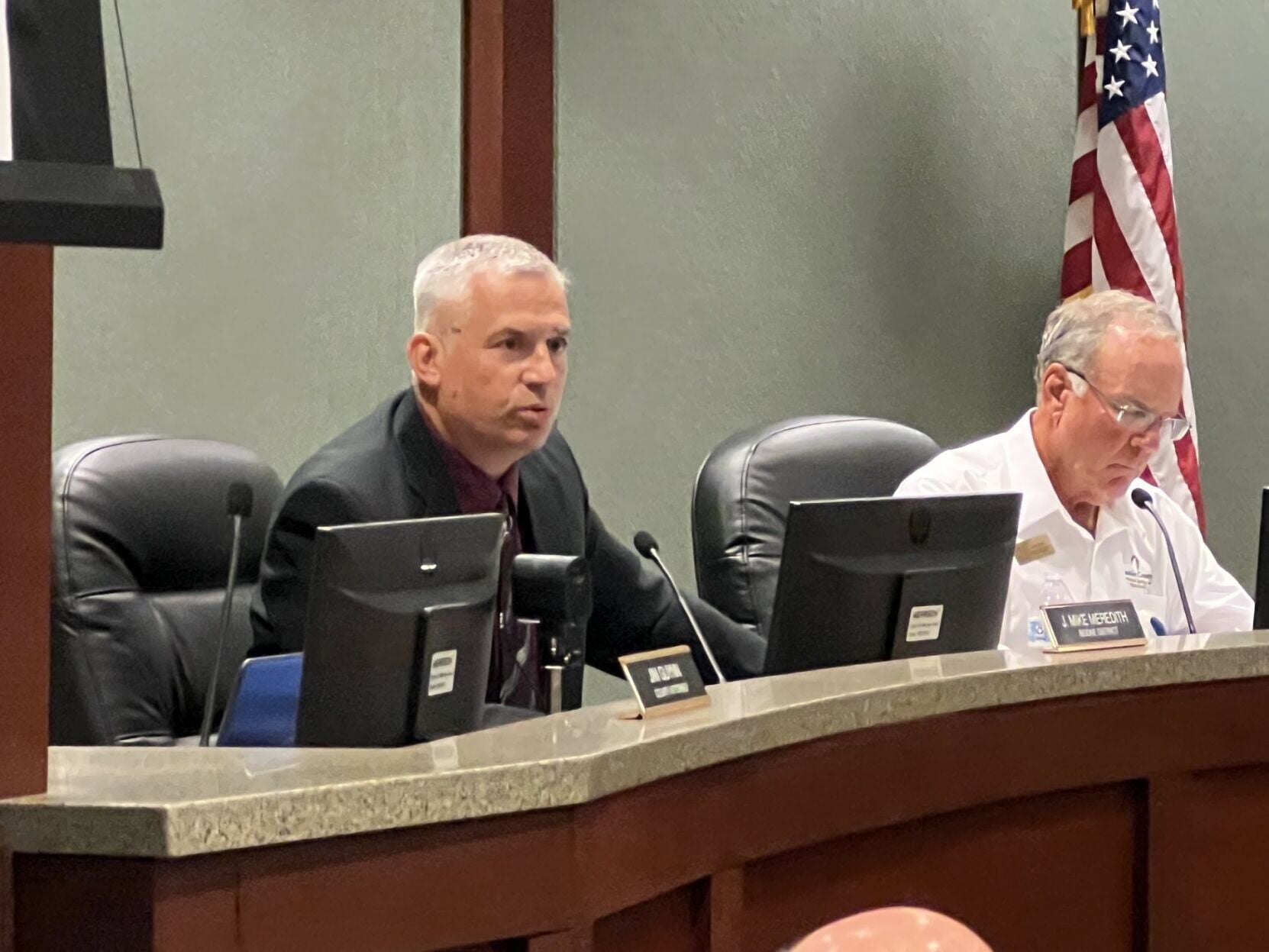
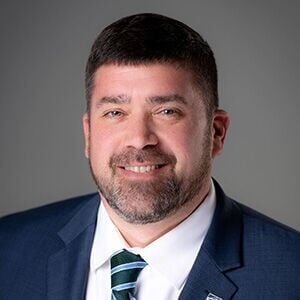
Boone District representative Mike Meredith (left) announced his resignation at Tuesday's Franklin County Board of Supervisors meeting. The announcement came days after he revealed that Project Flash had ended.
On Sunday, Meredith made the surprise announcement at a town hall meeting in Moneta that an ongoing negotiation between Franklin County and data center developer Crusoe, referred to as Project Flash, was not moving forward.
Meredith, the now former Boone District representative, told The Roanoke Times on Wednesday that the decision to step down from his seat came after discussions with other board members during a closed session meeting on Tuesday before the start of the 6 p.m. meeting. It was there the discussion of resigning first came up, he said.
"The discussion came up about my comment at the town hall at Scruggs, and they informed me that was actually confidential material and I should not have released that," Meredith said about his statement from Sunday that plans for a data center in Franklin County, known as Project Flash, was not moving forward.
Documents obtained by data center opponents this year through the Virginia Freedom of Information Act indicated that county officials had signed nondisclosure agreements with the developer.
Meredith said he saw no harm in the comments at the time since Project Flash had been written about in the media and online with the discussion over documents obtained through FOIA. He added that his statements didn't reveal the name of the company or anyone involved.
In the closed session discussions on Tuesday, Meredith said supervisors discussed how revealing that information could be detrimental for the county moving forward as it could harm trust in the county not releasing confidential information. That is when Meredith said he suggested resignation.
"So I asked the question, if this is going to hurt our county and our citizens moving forward as we are expanding and bringing in new industry, then I'll resign," Meredith said of Tuesday's discussion. "I don't want to be the fault of anything not coming to this county. They said it would and you should. And I said, well, then when we go back out there I will resign."
Meredith said he took the position representing the Boone District to help the people of Franklin County. He was willing to step down after making the mistake of revealing confidential information if it helped the county move forward.
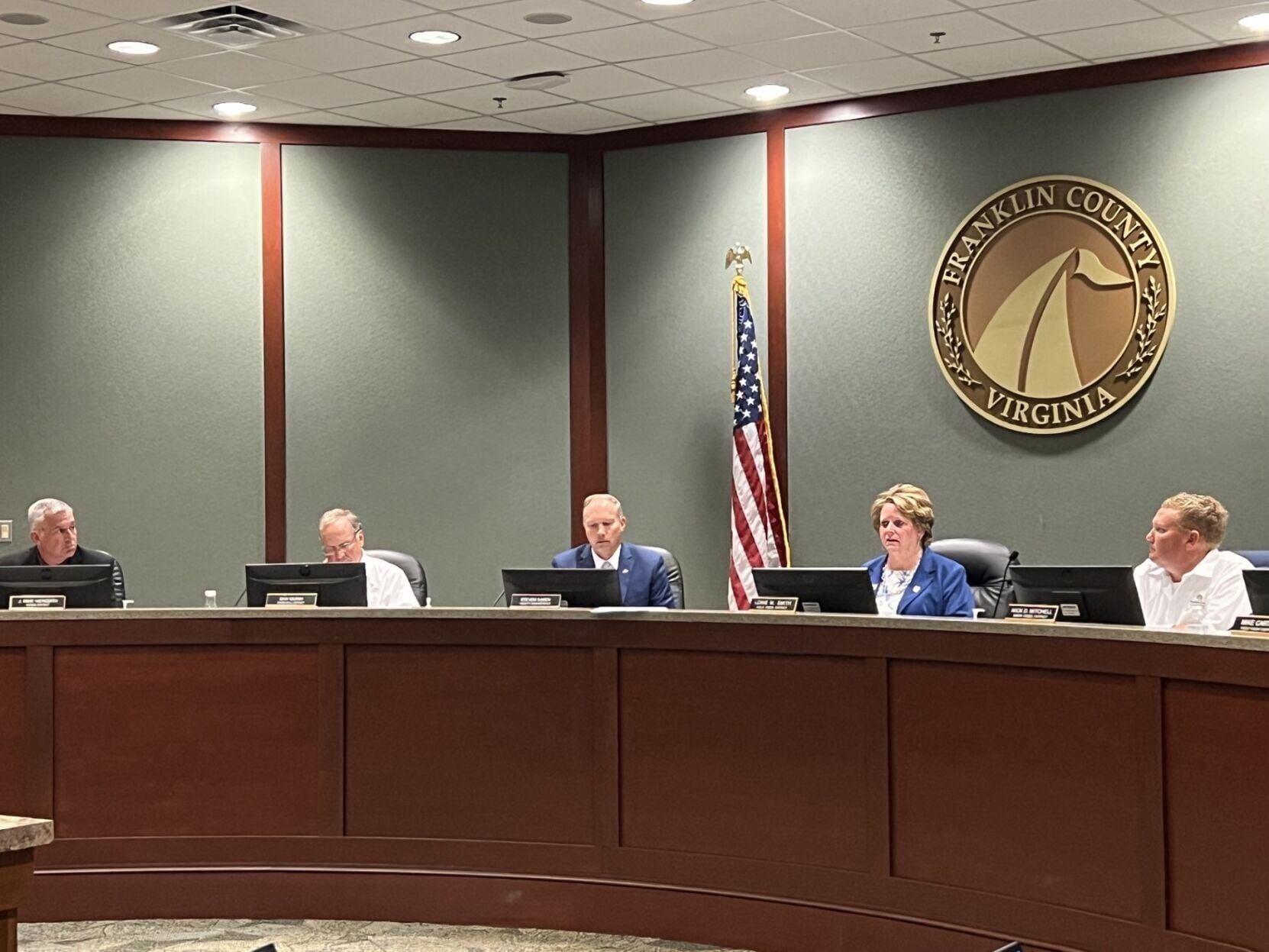
No one on the Franklin County Board of Supervisors commented on Project Flash on Tuesday. Both County Administrator Steve Sandy and Board Chair Lorie Smith declined to comment after the meeting.
Meredith's decision disappointed residents in attendance at Tuesday's meeting. Some expressed their support for him and his decision to inform the public that Project Flash, a data center proposed for the county's Summit View Business Park, was over. Others wondered why there was no mention of the data center project.
"Supervisor Meredith came to our town hall community meeting ... and he told us Project Flash was essentially dead. Yet tonight we haven't heard from one of you guys. You haven't acknowledged that announcement, you haven't explained the status, any of the agreements, any of the money connected to it. There hasn't been one word," said Kim Jones, chairman of the Franklin County Community Coalition, said during the public comment period.
Other speakers questioned why Meredith was resigning when he was the one that provided them with information on Project Flash and its status.
"I'd like to point out right now that as far as losing trust, Mike Meredith had the trust of everyone in this room except you guys," said Dave Campbell, referring to supervisors.
Project Flash and the potential of a data center coming to the county was still a concern of most of the dozen or more speakers at Tuesday's meeting. A majority of the more than a dozen speakers announced they were still opposed to data centers.
Emails from The Roanoke Times to data center developer Crusoe on the status of Project Flash have not been returned.
The Franklin County Board of Supervisors gave no comment on Project Flash at Tuesday's public meeting.
Christina Sizemore, with the Franklin County Community Coalition, said after the meeting that Meredith was able to give closure to the community on Project Flash as the board still refused to acknowledge it. A lot of residents would still be angry, she added.
"We would have continued to show up here talking and worrying about a data center and demanding a response from the county. So the question comes back to what was actually in the nondisclosure agreements that truly prevented the county from saying what is going on after it was inadvertently made public?" Sizemore asked.
Meredith told The Roanoke Times he is grateful for residents' comments supportive of him, as well as the emails and phone calls he has received after his resignation.
"It means a lot," Meredith said of the well wishes. "It lets me know that, hopefully, I was doing the right things during my time on the board. All I can say is, sometimes the best intentions aren't necessarily the right choices."
Jason Dunovant (540) 981-3324

Kim Jones, chair of the Franklin County Community Coalition, speaks to the Franklin County Board of Supervisors about the lack of information …
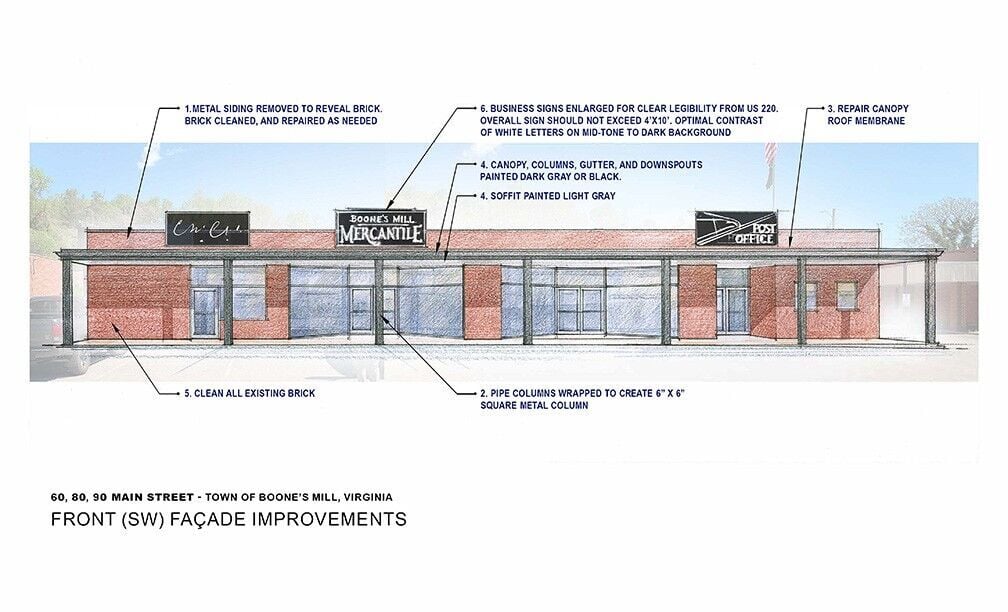
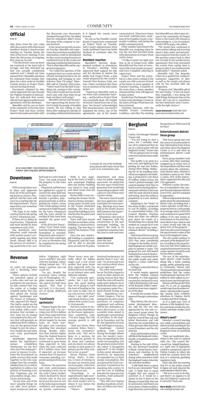
A concept for one of the buildings along Boones Mill's Main Street that is part of its revitalization plan.
Boones Mill's downtown will soon be getting a new look as renovation work on many of its buildings is set to start early next year.
BOONES MILL — The revitalization of Boones Mill's historic downtown is hitting the next phase with recently unveiled concept plans soon to be turned into a reality.
Efforts have been underway since February of last year when the town was awarded a $860,438 grant from the Virginia Department of Housing and Community Development. The town applied for the grant in June of 2024 through a partnership with the Western Piedmont Planning District Commission.
"Right now we are at the point of getting streetscape concepts done," said Boones Mill Town Manager B.T. Fitzpatrick.
The work involves multiple buildings along the town's Main Street. Fitzpatrick said the buildings are more than a century old, and plans are to return them to something closer to what they were back then.
Proposals are to remove some additions to the buildings over the years, such as metal siding, while also making some repairs. The goal would be to show as much of the building's original architecture, Fitzpatrick said.
The work will also include sidewalks, landscaping and multiple street lamps along the street. Additional parking will also be part of the update.
Not all buildings along Main Street will see the updates. Fitzpatrick said one business owner has decided not to participate in the revitalization, leaving one building void of any work.
With concept plans now in place and approvals from all of the participating business owners, Fitzpatrick said the town will soon be accepting bids for the improvements. That is expected to start sometime next month.
"We hope to be under construction by late spring of 2027," Fitzpatrick said.
If there are no delays in construction, Fitzpatrick said work should be done sometime in early 2028.
The downtown revitalization could coincide with another project currently ongoing near Main Street. Boones Mill is in the process of constructing a park from a two-acre field next to Carter Bank & Trust. The bank donated the property to the town in 2024.
Fitzpatrick said the town has applied for a grant to convert the open field into Carter Park, which would include a pavilion, playground and trails as well as parking for visitors. Seven Oaks Landscaping created a proposal to build the park for the town. Fitzpatrick said the town should be notified if they have been awarded the grant next month.
If the $154,000 Preservation Trust Fund Grant from the Virginia Outdoors Foundation is awarded, Fitzpatrick said constructing Carter Park could begin as soon as November and be completed in the spring of next year.
Work is also ongoing in the town to build a new municipal building after the former building was found to have mold and other issues that fell beyond repair.
Boones Mill is now renovating the former North America Homes manufacturing plant located next to the former municipal building. The town purchased the building in 2011 shortly after the plant went out of business.
Town staff have moved into the second floor of the building as construction is ongoing. The first floor is used by the business Titan Trains.
Once the new municipal building is completed, Fitzpatrick said the town will be able to provide more security for its police department and more room for public meetings and events. He added that the new space would have generators that would help in providing residents with a place to stay if there were a power outage.
The town council would also once again have a dedicated place for town meetings. Meetings have been held at the nearby Boones Mill Volunteer Fire Department in recent years.
Fitzpatrick said work is well underway with the construction of the new municipal building. He expects the work to be completed sometime later this year or early next year.
Jason Dunovant (540) 981-3324
The fate of Roanoke's aging Berglund Center didn't become much clearer during a city council discussion about the property Monday night.
But, city officials again beat the drum on the message that something needs to be done with the facility, which faces more than $30 million in deferred maintenance. Whether it will be the future home of a casino or not, the city is at "critical mass" with the Berglund Center, City Manager Valmarie Turner said.
Turner
"I'm not trying to start a scare, but I certainly want you all to understand that we are at a critical point with the Berglund Center," Turner said. "We are going to have to make some very hard decisions really soon."
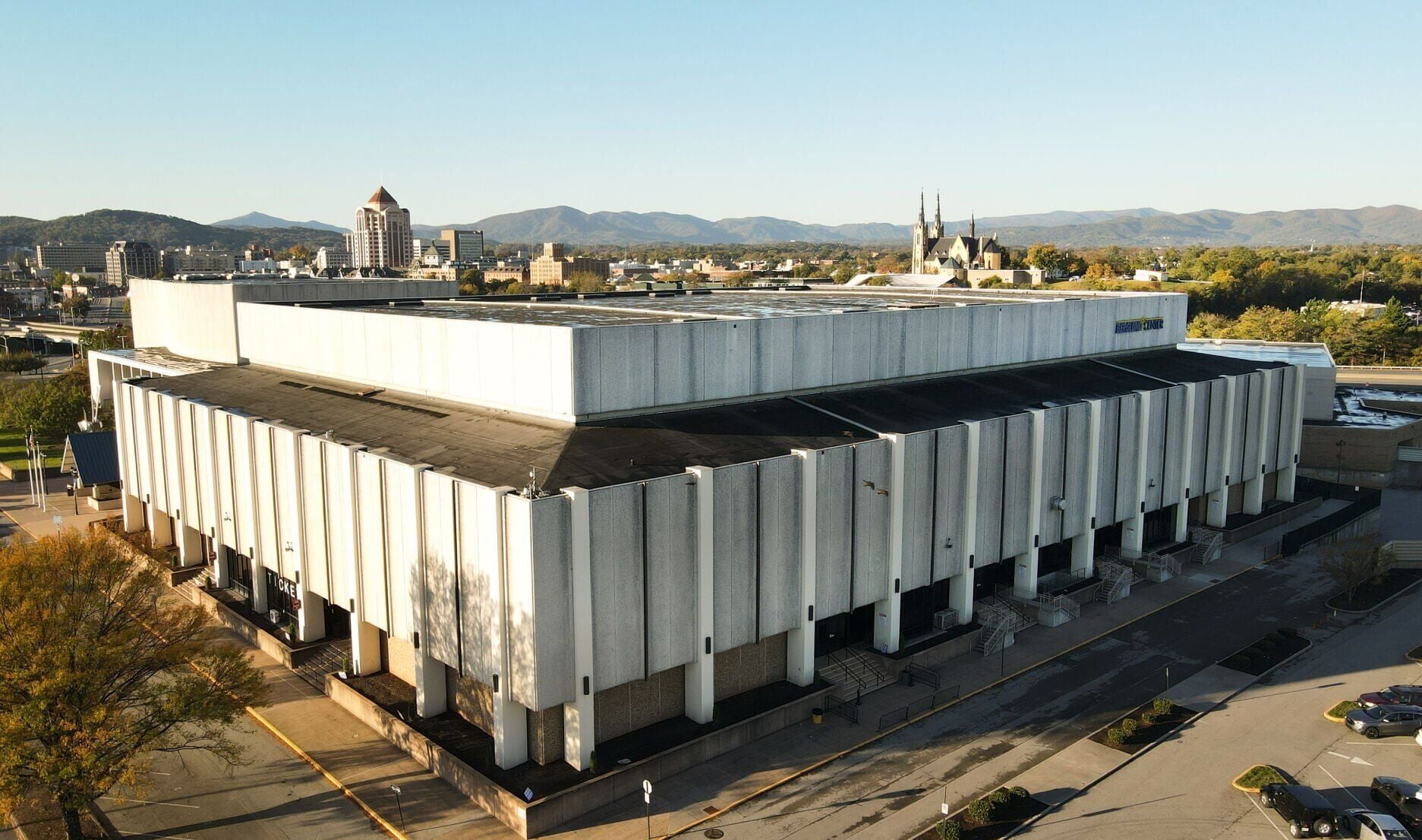
The Berglund Center is shown in Roanoke. The Roanoke City Council is exploring the possibility of having casino gambling there as part of a redeveloped entertainment district that would include a new hotel and hundreds of potential hospitality jobs. Many questions remain about the project.
The facility is in need of a new roof, new lighting in the parking lot and new boilers, among other things. Replacing the 28 air handling units, which are original to the building, is projected to cost about $9 million. Robyn Schon, the venue’s general manager, told council members that they've had to resort to buying replacement parts off eBay to fix issues with the main electrical panel and wiring, since the system is proprietary to a now-defunct company.
Replacing it, the "brain" of the entire facility, is projected to cost $5 million, according to a presentation Schon, City Council Member Phazhon Nash and other city officials gave about the results of a monthslong focus group that worked on a proposal to turn the 26-acre site into an "entertainment district" including a casino.
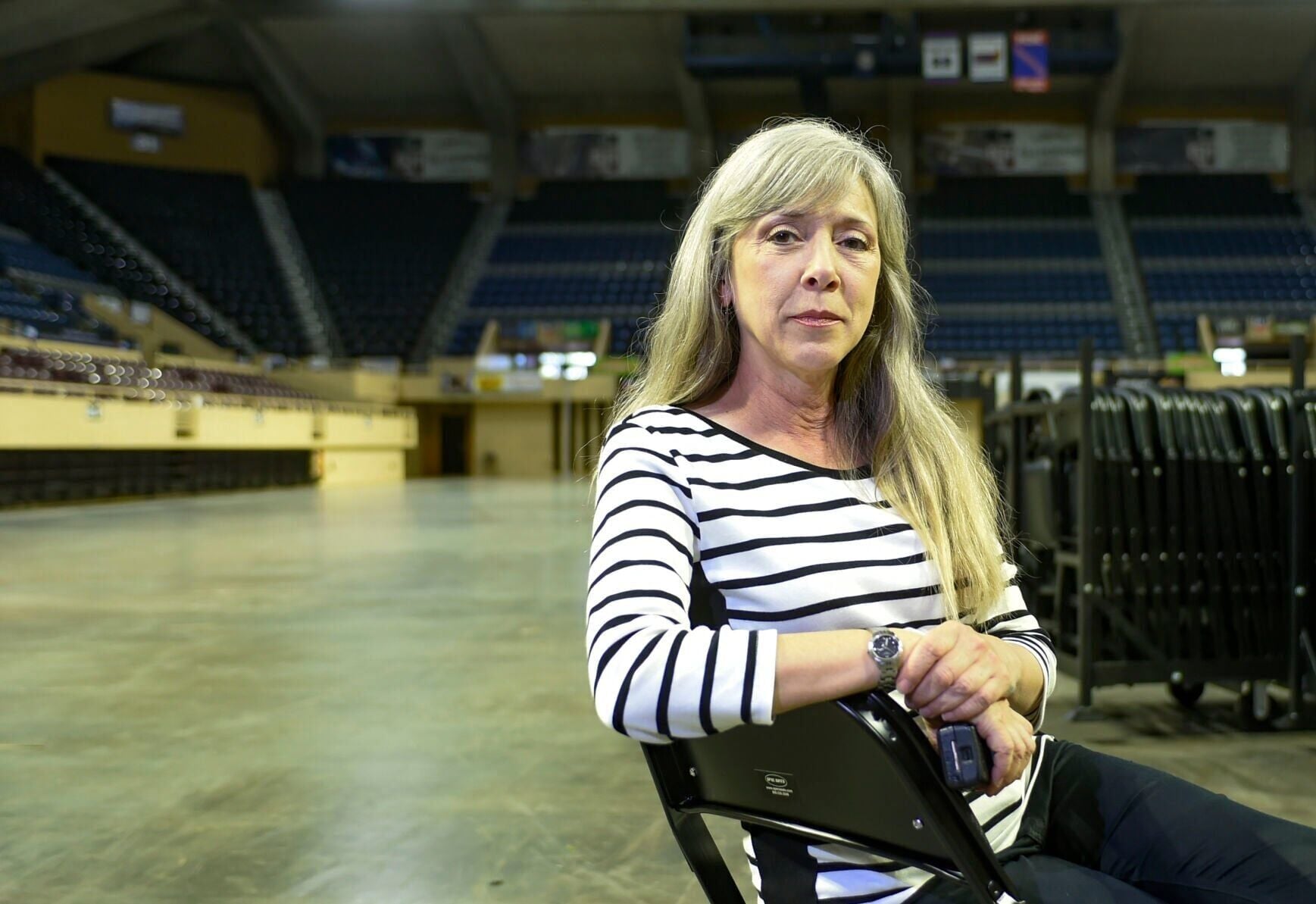
The Berglund Center’s General Manager Robyn Schon has been with the facility for almost half of the 50 years the arena and theater have been open.
Nash formed the focus group after the city announced in fall 2025 they were considering changes to the facility, including bringing in an outside company to operate a casino. The proposal was met with heated backlash from some in the Roanoke Valley, concerned about the public health and safety impacts a casino could have on the city.
Getting a casino deal done is no small task.
It would require approval from the Virginia General Assembly, if a state legislator can even be convinced to carry a bill in Richmond (so far none of the Roanoke Valley's representatives have been supportive of the idea).
It would also require citizen approval through a referendum vote.
Nelson
Marc Nelson, the city's economic development director, said the city was also approached by one non-casino based group about the Berglund Center, though he told the council they only had initial discussions and told them the city would follow up if they got more direction from council members and the city attorney.
Nash said he believes there is still life in the Berglund Center, despite, or maybe because of its ugly origins.
Nash
Starting in the mid-1950s, the city destroyed hundreds of Black-owned homes, businesses and churches in the Gainsboro neighborhood during urban renewal to build the Berglund Center, Interstate 581 and other facilities.
"I still think there's a place for it in our community," Nash said. "I think that as much tragedy that was caused to construct it, it would be a shame to tear it down in the lifespan of some folks who saw it constructed. And then to see it torn down, I think would be a huge disservice and would beg the question of: What was it all for then?
That focus group met over the course of several months to hear information from Schon and others about the Berglund Center as it is and what an entertainment district could look like.
Focus group members took a survey after their meetings wrapped up, in which 36% of the respondents said they were neutral about the entertainment district idea, whether it included a casino or not. With a casino, 36% of the respondents supported the idea and 27% opposed it.
Without a casino, the number of respondents who support the entertainment district rose to 45%, and 18% remained in opposition.
Nelson emphasized a few key points about the entertainment district idea, including that a casino operator would hire a projected 800 to 1,000 people at an average salary of $55,000 and would have to spend $300 million of its own money in investments in the entertainment district area. Nelson said a casino would only take up about 10% of the property — they have discussed it being in the special events center at the back of the Berglund Center.
The city would continue to own parts of the Berglund Center, according to the presentation, but that $300 million in required investments from the casino operator would be used for the entire complex.
The rest of the entertainment district could include things like a hotel, parking garage, public gathering areas or restaurants, Nelson said. The presentation also included projections that the casino would generate between $135 million to $180 million in revenue in years one through four.
Nelson said they project that only 7% to 9% of spending would come from Roanoke residents, with the bulk of spending coming from residents elsewhere in Virginia, North Carolina and West Virginia.
As it is right now, 95% of patrons at the Berglund Center come from outside the city, Schon said their studies have shown.
Monday's council meeting was solely a presentation and did not include anything for the council to vote on regarding the Berglund Center or a potential casino.
There are headwinds elsewhere in the state to contend with, too. The council discussed Gov. Abigail Spanberger's April veto of legislation related to a proposed casino in Fairfax County, in which she noted her concern about the lack of a statewide gambling regulatory body.
Nash said after the meeting that it's on the entire council to figure out next steps for the entertainment district idea.
"We're in a rush to do this, and there's an urgency to do this, but I think it's a rush to do it correctly," Nash said.
Nora Shelly (540) 981-3331

Sports betting is booming across the United States, transforming from a niche activity into a multi-billion-dollar industry. With betting apps…
RICHMOND — With a protracted budget battle behind them, Gov. Abigail Spanberger and the General Assembly's money committees are looking for future sources of revenue to offset cuts in federal government spending on safety net programs and a declining labor market.
Those options include the potential repeal of a state sales and use tax exemption for purchases by data centers that was the center of a budget standoff earlier this year that pitted the Senate against Spanberger and the House of Delegates, who opposed the repeal. The battle ended on the day before the last fiscal year ended, with a compromise that includes a new state tax on energy consumption by data centers that will generate an additional $600 million a year for the general fund budget to pay for education, healthcare and other core state government services.
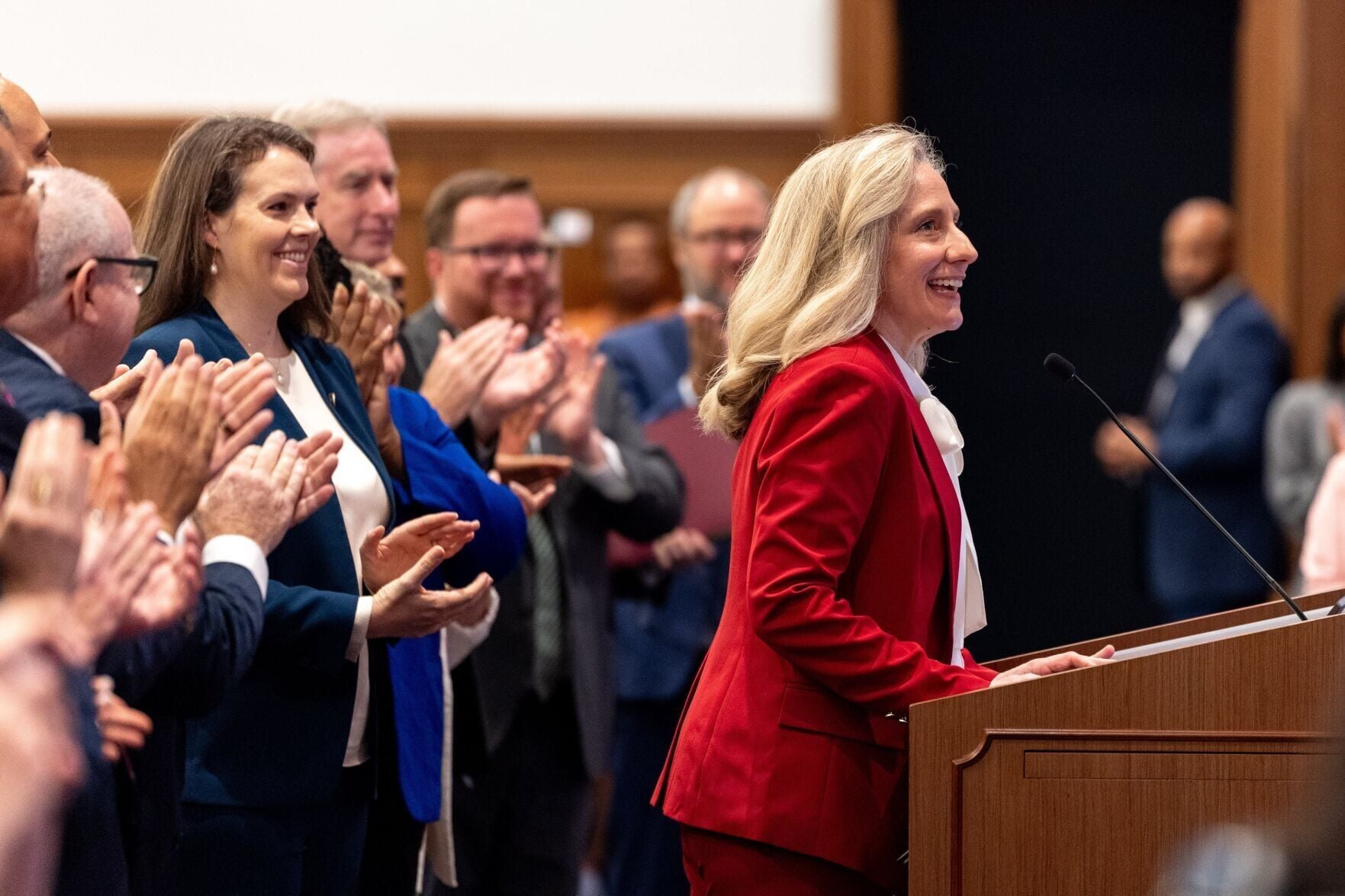
Gov. Abigail Spanberger delivers a speech to the assembly money committees Wednesday.
Spanberger appeared before the legislature's money committees Wednesday for the first time since becoming governor in January to celebrate the investments in public services they made together in the two-year budget that the assembly adopted June 29, as well as legislation to address her priority of lowering costs that Virginians pay for prescription drugs, electricity and housing.
"In my view, one of the most valuable things we can offer local government, businesses and our fellow Virginians right now is stability," she said, with her husband, Adam, sitting behind her. "It's being a partner you can count on."
"So yes, despite the economic chaos coming out of Washington, Virginia remains resilient," she said in her half-hour speech. "But that is not luck; it is the product of steady, deliberate choices."
Virginia began the new fiscal year July 1 by carrying over $938.8 million more than expected from the previous fiscal year, driven largely by income taxes on stock market gains and consumer spending that remained strong despite inflation that remains higher than the Federal Reserve Board wants. Revenues continued to grow faster than expected in July, when the state collected $78.2 million more than it expected, an increase of more than 3% based on consumer spending, corporate and payroll income taxes.
However, the governor and state policymakers are keeping a wary eye on the state's labor market, which declined by about 44,000 jobs in the last fiscal year because of cuts in the federal government workforce and spending on private contractors. Those losses were partially offset by higher wages and a real estate market that grew faster than expected with the Federal Reserve unwilling to cut interest rates until inflation subsides.
“I'm cautiously optimistic, but I just don't have any good feeling that we're going to have the level of funding in the out years to take care of our core services. So that's where I am right now,” said Senate Finance Committee chair Louise Lucas, D-Portsmouth.
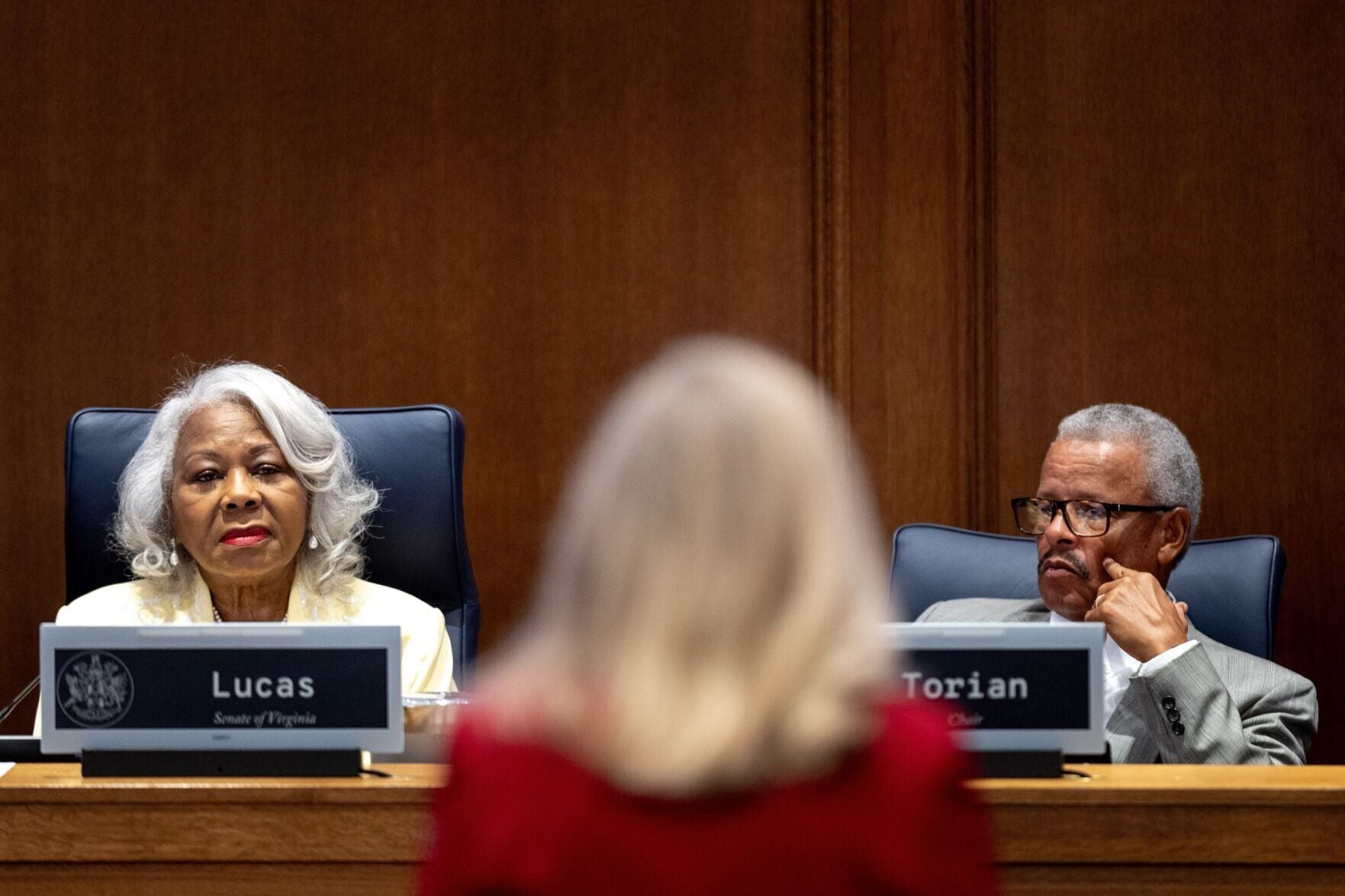
Sen. Louise Lucas, D-Portsmouth, left, and Del. Luke Torian, D-Prince William, listen as Gov. Abigail Spanberger delivers a speech to the assembly money committees on Wednesday.
Del Terry Austin, R-Botetourt, senior Republican on the House Appropriations committee, said, “I’m just happy that the revenue growth is still there."
"And you know, these economic times, there's never any certainties," Austin said. "But we've been in a posture for that revenue growth to be there and continue, and you know you always wonder at what point is it going to go the other way, but so far, so good."
House Finance Chair Vivian Watts, D-Fairfax, is wary of relying on income tax revenue paid on stock gains, which was a big part of the surplus in the last fiscal year.
“Everything is so unpredictable right now," said Watts, who compared the stock market now to where it was before the crash in 1929.
“There’s definitely irrational exuberance, far greater than it was," she said. "So we have got to be very cautious about where we are right now."
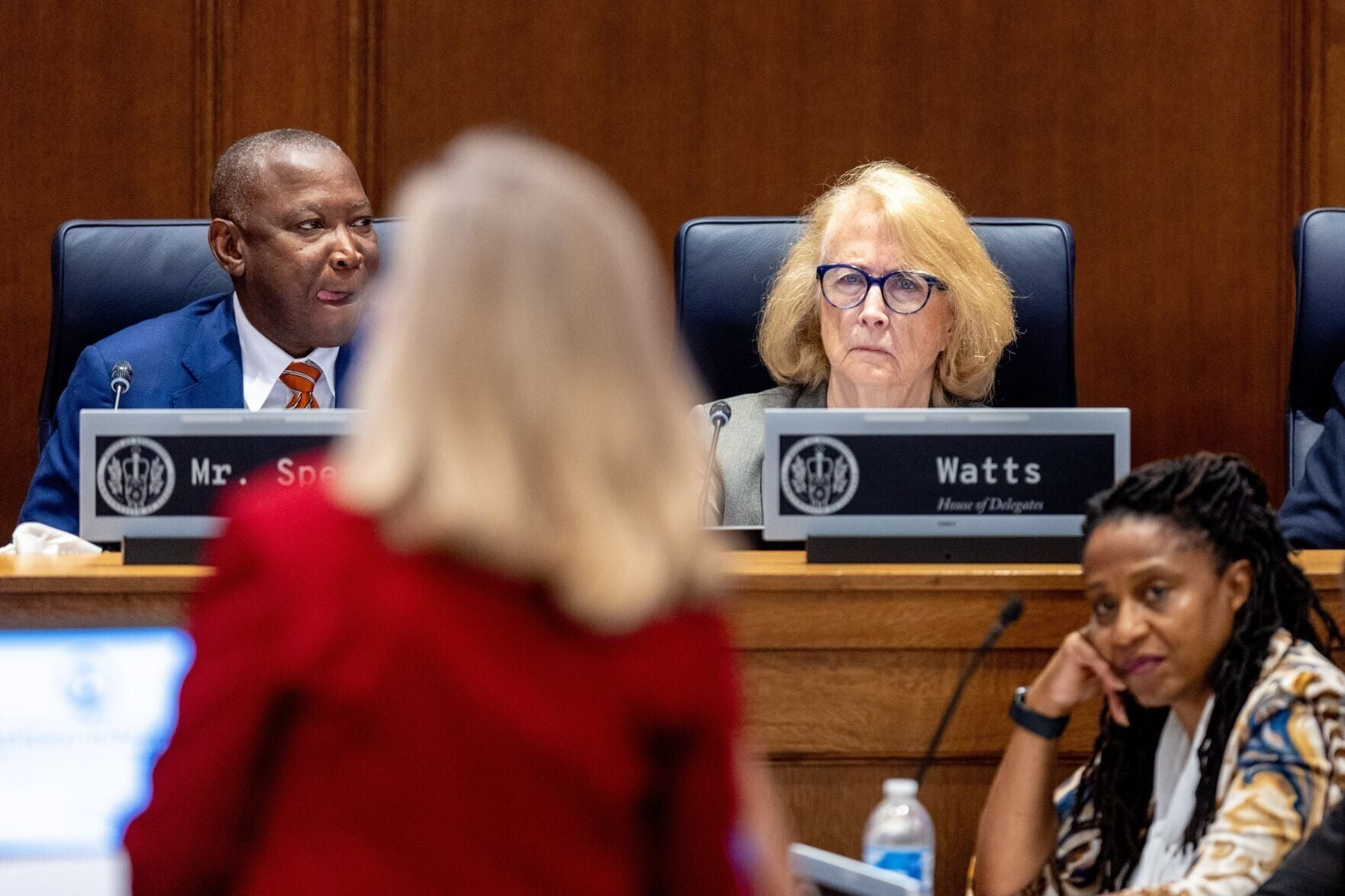
Del. Vivian Watts, D-Fairfax, listens as Gov. Abigail Spanberger delivers her speech Wednesday.
The Joint Subcommittee on Tax Policy began its work on other options for raising revenue that they think the state will need to make up for federal cuts to Medicaid and other safety net programs under President Donald Trump and the Republican-controlled Congress. The tax exemption for data center purchases of computer equipment and software will be the centerpiece of those discussions, as the assembly looks ahead to Spanberger's presentation of revisions to the budget in December and the 45-day legislative session that will begin in January.
Spanberger clashed publicly with Lucas during the budget debate over the Senate's insistence on repealing the data center tax exemption, but the governor praised what she called "a thoughtful approach" in the budget to data center demand for electricity by imposing an expanded tax on their energy consumption. She also praised the State Corporation Commission for requiring data centers to pay the cost of building new electric transmission facilities, built primarily to serve them.
"This will save Virginia families hundreds of millions of dollars over time," she said.
The governor also emphasized legislation that the assembly adopted, which she signed into law, to require stricter air pollution emissions by diesel generators that provide backup power to data centers and public accounting of the water they use to cool their equipment, develop noise regulations to protect their neighbors' quality of life and ensure that data centers pay for the infrastructure costs to serve them.
"And looking ahead to next year, there is more to be done — and Virginia should be leading the nation in setting the highest standards for data center energy usage, water consumption, community benefit, and we should be driving innovation across all sectors," she said.
Spanberger lightened the typically ponderous tone of a revenue discussion when she referred to the budget as one “we passed together, it felt like just the other day.” Then she ad-libbed an addition to a line about her administration’s several listening tours by noting: “I'll be honest, I don't always get the same reception everywhere I go.” (The governor was booed recently at the Old Fiddler's Convention in Galax in deep Southwest Virginia.)
Spanberger also said sending a daughter off to her first term in college made the governor think she was just finishing her own first semester of the eight she's allowed. One lobbyist commented afterward that the governor brought a rare human touch to the revenue speech.
In contrast, the tax policy subcommittee meeting was all facts and figures as legislators chart a path forward on data centers.
In its first meeting Wednesday, the joint subcommittee elected House Appropriations Chairman Luke Torian, D-Prince William, as its chairman and Lucas as vice chair. She has conducted a listening tour this year in seven localities affected by data centers — with more to come — and proposed that the subcommittee hold at least one meeting this year in a community, rather than at the General Assembly Building in Richmond.
The sales tax exemption cost the state $1.9 billion in forgone tax revenue last year — about the same amount it loses under a longstanding tax exemption for purchases by manufacturers.
Virginia already had a tax on energy consumption, but the new budget creates a higher rate for data centers. The data centers will begin to pay the new tax next month, based on energy consumption from July 1 through Aug. 31.
Nicole Riley, director of Virginia government affairs for the Data Center Coalition, called the meeting "a valuable and important reminder of the thousands of good-paying jobs, billions in tax revenue, and responsible operations that are associated with Virginia’s data center industry."
"We share Gov. Spanberger’s and legislative leaders’ goals of ensuring that Virginia can capture the significant economic opportunities presented by data center development while protecting the interests of residents and communities across the Commonwealth," Riley said.
“Clear, predictable, and workable standards can help localities and companies plan and invest with confidence as they explore opportunities to secure billions of dollars in investment, create jobs, and strengthen local economies," she said. "One-size-fits-all policies that stifle investment and job creation are clearly not the path forward."
Lucas was unmoved by the presentations, citing citizen concerns that they are "being steamrolled" by state and local governments.
"I don't intend to back down on this issue," she said.
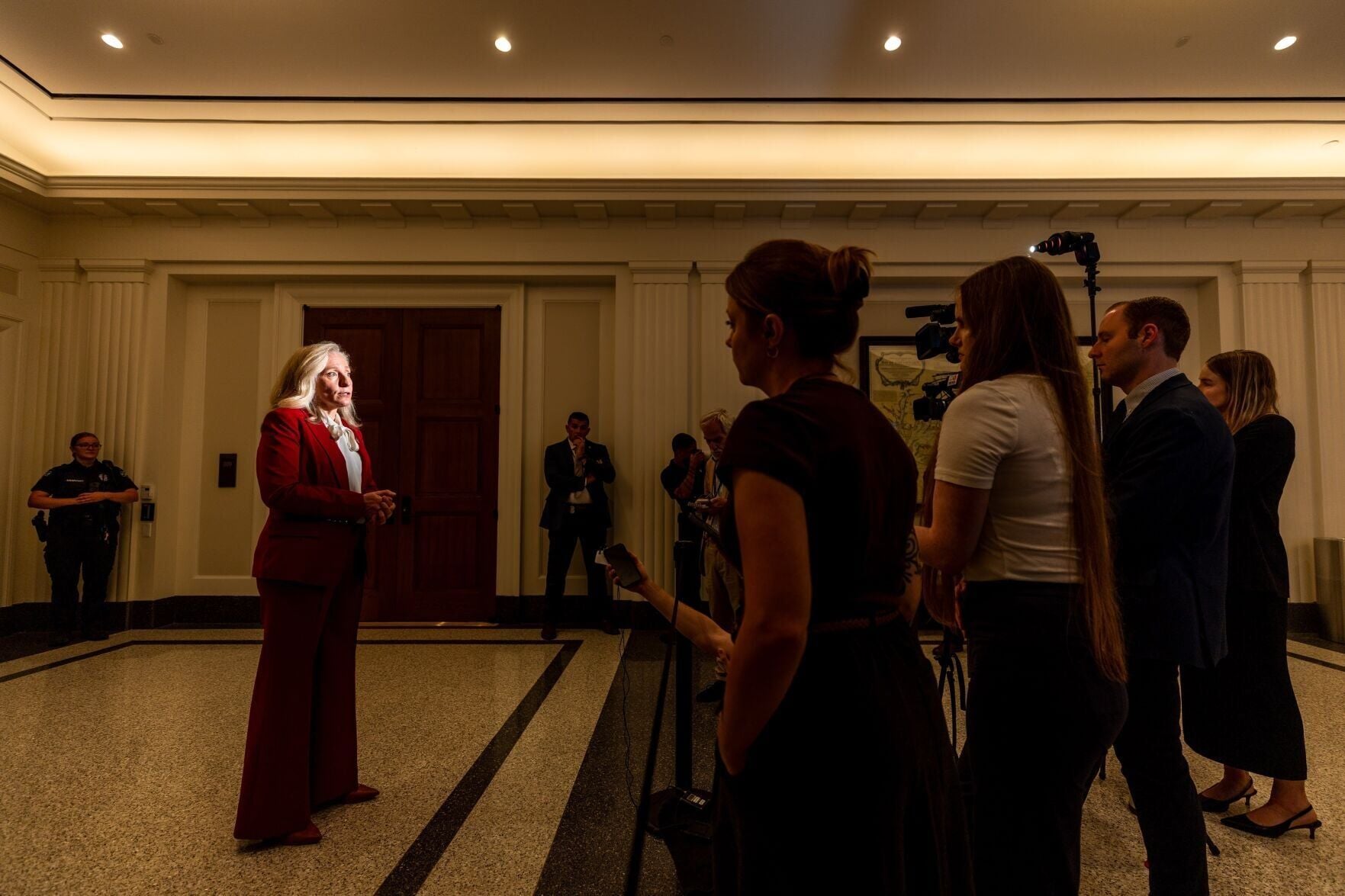
Gov. Abigail Spanberger speaks to members of the press following Wednesday's speech to the assembly money committees.
Spanberger, who served three terms in Congress for Virginia's 7th District, also took aim at Trump and Congress for the damage she said they have done to Virginia under a sweeping package of tax cuts adopted last year in the so-called "One Big Beautiful Bill" that she said "made the deepest cuts to Medicaid and (the Supplemental Nutrition Assistance Program) in history."
As a result, she said, "Virginia families are facing hunger, and hundreds of thousands risk losing their medical coverage."
"We also know that this is just the beginning, because this law will continue to shift monumental costs from the federal government to the states — to our state’s budget — while eking away at our country’s healthcare system as additional elements go into effect year over year — with some of the most damaging elements cynically set to go into effect after the 2026 and 2028 elections," she said.
The new two-year budget includes more than $500 million to deal with the effects of federal cuts to Medicaid, SNAP and other safety-net programs, including $150 million to help Virginians pay premiums on health insurance they buy on the state-run marketplace. Congress declined to extend enhanced federal subsidies for premium assistance, which expired at the end of last year.
"The reality is that state funds simply cannot make up the gap the federal government is leaving us," Spanberger said. "But we can be pragmatic, and thoughtful, and steady in how we govern through it. And I can pledge that our Commonwealth will do everything in our power to contend with these catastrophic federal policies."
Del. Joe McNamara, R-Roanoke County, said Spanberger's message isn't consistent with the state's financial performance.
“I think a central message from the governor and the secretary of finance was our economy has been destroyed by a combination of actions out of Washington and our former Republican administration, and the reality of the situation is we had a $1 billion budget surplus, which is largely the result of actions that occurred prior to her administration,” McNamara said after the speech. “We have a revenue stream … which is more than double the rate of inflation."
First Gentleman Adam Spanberger listens as his wife, Gov. Abigail Spanberger, delivers a speech to the assembly money committees.
But Del. Kirk McPike, D-Alexandria, said his constituents have felt the direct effects of spending cuts by Trump and the so-called Department of Government Efficiency that Elon Musk led last year.
"We're seeing firsthand the impacts of the DOGE cuts and the loss of federal employees," McPike said after his first gubernatorial budget speech.
He said the part of the legislature's work in its next session is "making sure that those workers are whole, our economies are sustained, and that Virginia evolves, too."
Michael Martz (804) 649-6964

BLK RVA Community Awards; Williams on Petersburg’s gamble; Local farmers see growing demand