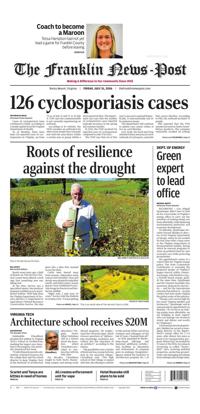

VDH reports Virginia cyclosporiasis cases up to 126
Cases of cyclosporiasis have continued to climb, according to a weekly update from the Virginia Department of Health.
As of Monday, there have been 126 reported cases of cyclosporiasis in Virginia, up from 79 as of July 15 and 37 as of July 4. VDH says the commonwealth is not currently experiencing an outbreak.
According to its website, the VDH considers an outbreak to be when more people than usual get sick with the same illness within a certain area or group within a short period of time. The department also says that the number of cyclosporiasis cases reported typically increases in the spring and summer months.
In 2025, the VDH received 116 reported cases of cyclosporiasis compared to only 35 in 2021.
The VDH says that 66 of this year's cases were acquired domestically, 31 internationally and 29 by unknown means.
The department will continue to update case counts online at 10 a.m. each Monday.
Last week, the Food and Drug Administration announced a new outbreak of Cyclospora, a parasite that causes diarrhea. According to PBS, the outbreak included 72 people.
PBS reported that the FDA remains focused on Taylor Farms' lettuce products. The company voluntarily recalled all iceberg lettuce from Mexico in response. The recalled product was already distributed and sold in several states, including Virginia, according to VDH.
The Walmart-owned Marketside brand has recalled two of its products in response to the national outbreak. The products recalled include an "Iceberg Salad 12-oz or 24-oz" and "Shredded Lettuce 8-oz or 16-oz," with Best if Used By dates of July 18 to August 3, 2026.
The recalled Marketside brand products were also sold and distributed in Virginia.
Last July, the CDC's Foodborne Diseases Active Surveillance Network, which operates with the Food and Drug Administration, scaled back. According to the Center for Infectious Disease Research and Policy at the University of Minnesota, the FDASN now only requires reporting of illnesses caused by Salmonella and E. coli.
Prior to the change, reporting illnesses related to Cyclospora was required. Today, it is optional. According to CIDRAP findings, reduced federal funding was widely cited as the reason for the change.
Symptoms of cyclosporiasis include a watery diarrhea with frequent, sometimes "explosive," bowel movements. Other symptoms include a lack of appetite, weight loss, bloating, increased gas, stomach cramps, nausea, vomiting, muscle aches, low-grade fever and fatigue. These symptoms usually appear within one week of exposure.
Some people infected with cyclosporiasis don't have any symptoms.
If someone is experiencing symptoms of cyclosporiasis, they should report it to their primary care physician. That physician should then report the case to the CDC and the local health department.
Gwyndolyn Miles (804) 649-6340
Related

Richmond Jazz and Music Festival; Jefferson’s Tuckahoe home on sale; What Virginia exports