
Student questions Virginia Tech's ties to defense sector, president's compliance with Trump edicts
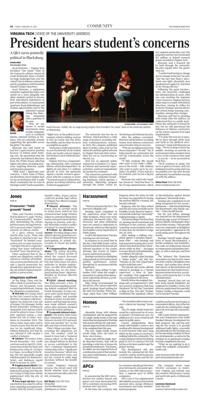
BLACKSBURG — Virginia Tech President Tim Sands’ State of the University address veered off script Wednesday when a student on stage challenged him over the school’s ties to defense contractors and its compliance with President Donald Trump's directives.
Asad Khurram, a sophomore computer engineering major, was seated on a stool alongside two other students invited to discuss their educational experiences as part of the address. As Sands posed questions about philanthropy and student opportunities tied to the university’s annual Giving Day, Khurram responded with a question of his own.
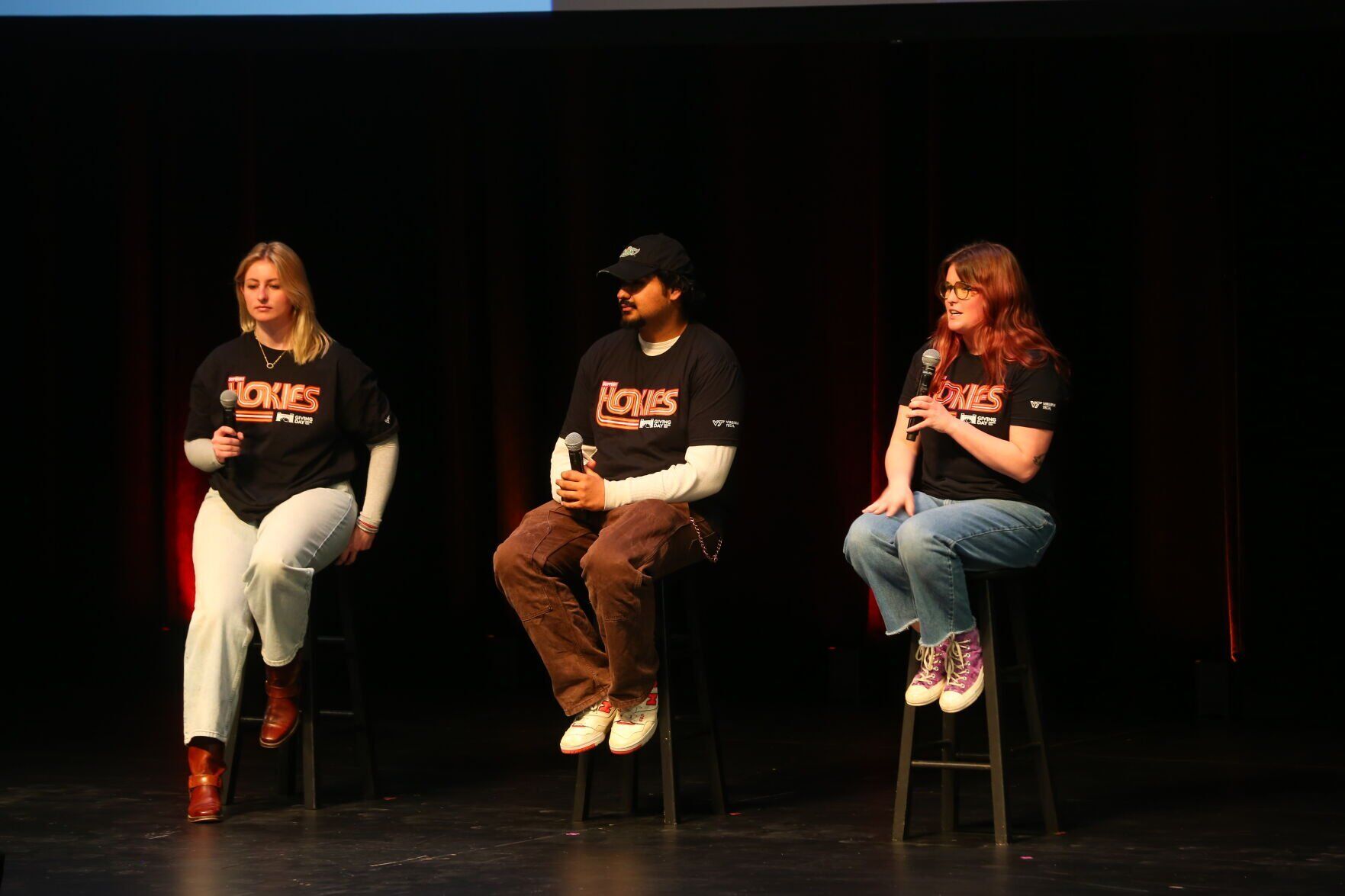
Asad Khurram, middle, sits on stage during Virginia Tech President Tim Sands’ State of the University address on Wednesday.
“Why do you choose to accept investments from certain companies such as Lockheed Martin, Element Systems or Siemens, who are currently, actively supporting the genocides across the globe?” he asked.
Khurram also told Sands he had lost a paid research position because of federal grant funding cuts. He questioned why the university has followed directives from the White House affecting higher education, including measures targeting diversity, equity and inclusion programs.
“Well Asad, I appreciate your concerns. I share some of them, not all of them, but at Virginia Tech we are an institution that is really about community but we exist in the larger world,” Sands responded. “Right now, in the political environment, which is shifting, we have to stay on course and stay down the middle, and do what we can to accomplish our goals.”
“Inclusion is really important to us, as is the diversity of our student body, our faculty and our impact, but we have to do it within the law,” he added.
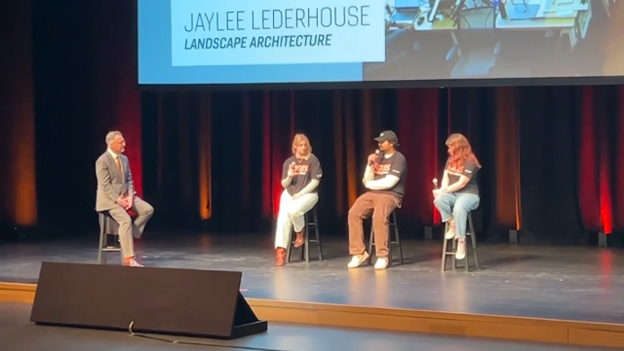
Asad Khurram, second from right, asks questions to Virginia Tech President Tim Sands, left, during Wednesday's State of the University presentation in Blacksburg.
Virginia Tech has a longstanding relationship with Lockheed Martin, which developed the F-16 fighter jet and other U.S. military aircraft. In 2016, the university signed a master research agreement with the company to foster “increased research collaboration, greater recruiting initiatives and technical engagement.”
The university also has ties to Siemens, which produces a wide range of products, including military communications systems. In 2010, the company published plans to build a solar array for the university and later gifted software to Virginia Tech and other universities for use in constructing an electric car.
Tech has no apparent public connection to Element U.S. Space & Defense and university representatives could not immediately be reached for comment.
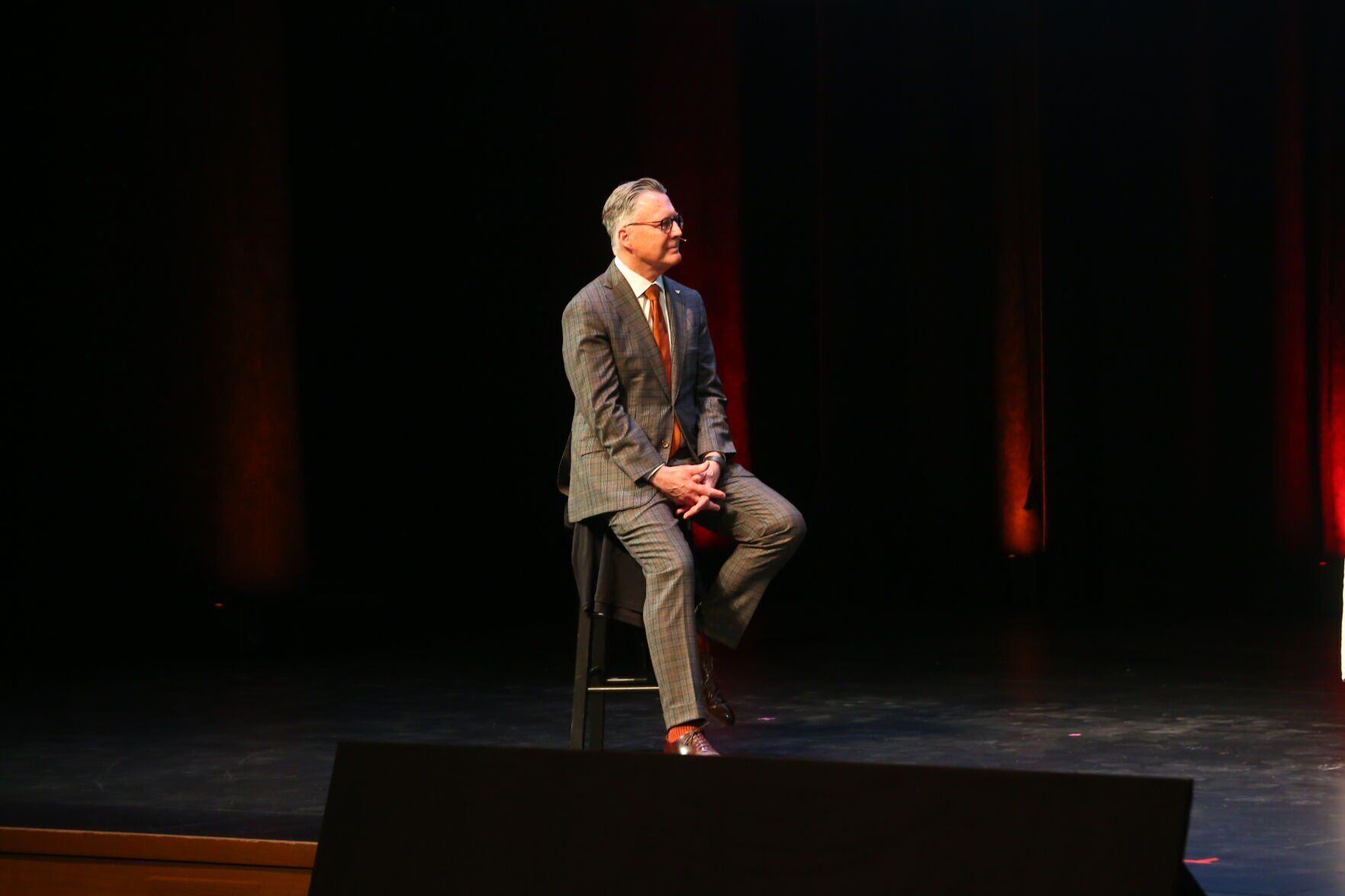
Virginia Tech President Tim Sands speaks with the students on stage during the State of the University address on Wednesday.
The school has partnered with other defense companies including Raytheon, which operates a university fellowship program through the Hume Center for Technology and National Security.
After the address concluded, Khurram said he believes accepting money from defense contractors raises broader ethical concerns.
“Why are we taking money from these companies?” he said. “Yes, it helps benefit our community, but not the communities across the world.”
“It kills students like myself who want to just make a difference in the world — kills children who want to grow up to be students,” he added. “It just ends in a lot of death, and I’m not a big fan of that.”
Khurram also asked why Sands has chosen to “bend the knee” to the Trump administration, which has targeted universities over DEI programs and last year terminated $21 million in federal research grants awarded to Virginia Tech.
Khurram said a research job he held through the university became unpaid after the grants were cut.
“I understand having to change due to changes in the law,” he said. “But the fact that there’s absolutely zero fight, absolutely zero speaking back against it, that kind of sits wrong with me.”
Following the grant terminations, the university challenged the administration in court, with one case reaching the Supreme Court. However, Virginia Tech has taken steps to comply with federal directives, closing its Office for Inclusive Strategy and Excellence and several living-learning communities, among other changes.
Khurram said that in speaking with Sands after the address, he understood that as a public institution the university is bound by law, but he still questioned the influence of defense contractors on the school, separate from legal requirements.
“I’ve done this now for 12 years. We’ve been through shifts back and forth in the political environment,” Sands told Khurram on stage. “We try to keep it down the middle, ensuring we provide an environment where students have access to the resources they need — as you do — to be successful in their lives.
“We’ll continue to adapt, but we’re so glad you’re here, and I am looking forward to seeing what you accomplish over the next decade and beyond,” he said before moving on with the address.
Ethan Hunt (540) 381-1678
Related

Virginia Tech President Tim Sands answers student Asad Khurram's questions about the university's compliance with Trump administration executi…