

Virginia Tech board postpones vote on Living-Learning Program amid pushback
BLACKSBURG — The Virginia Tech Board of Visitors, facing concerns from students, faculty and Blacksburg’s mayor, postponed voting Monday on a resolution that would take steps toward dismantling the university’s Living-Learning Program and could accelerate undergraduate enrollment.
The proposed resolution, brought forward by board member Nancy Dye, would reassign all on-campus beds currently reserved for upperclassmen to incoming freshmen and first-year transfer students. It also directs the university to evaluate the efficacy of the Living-Learning Program, noting that its elimination would “produce a significant number of available beds” and generate “significant cost savings.”
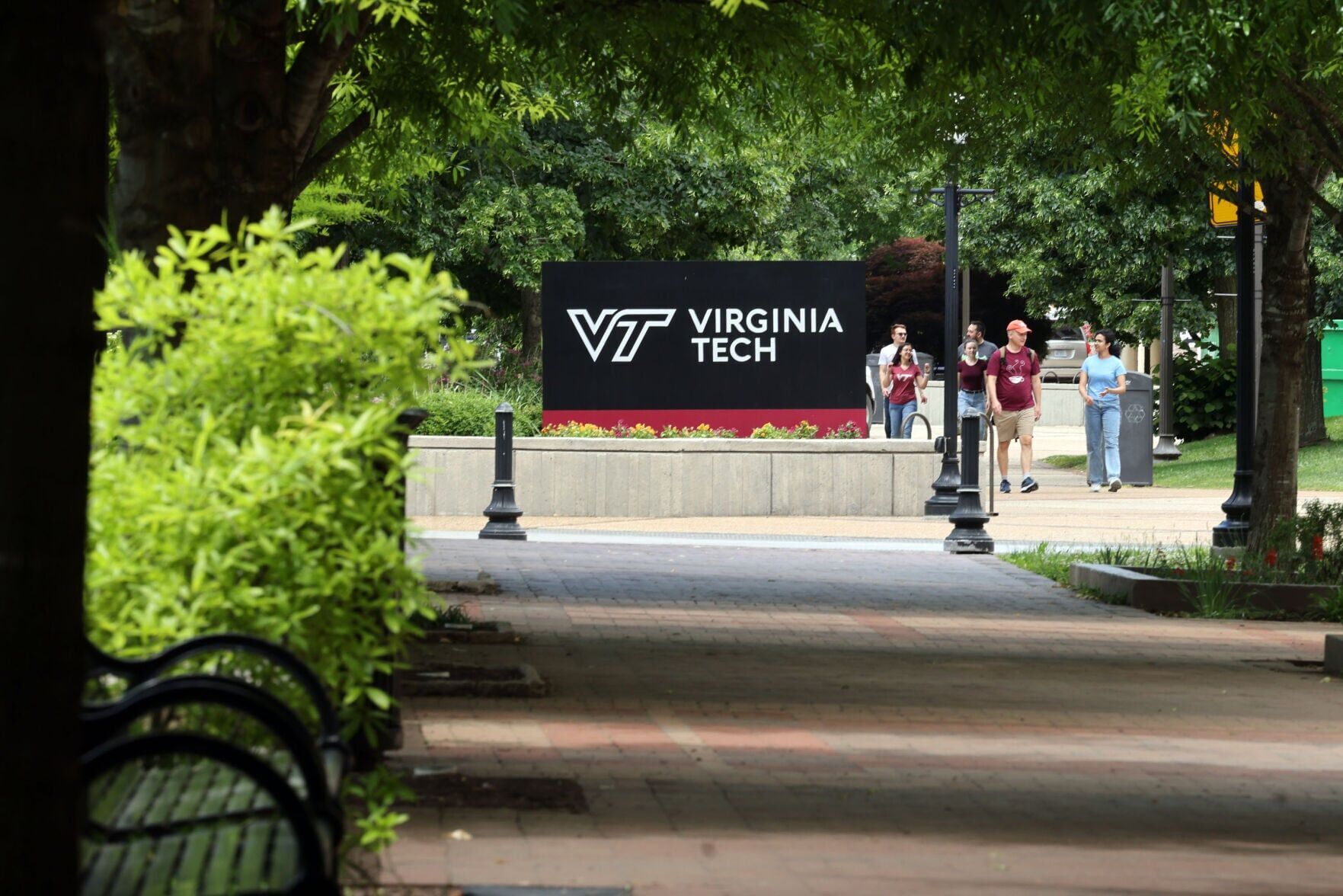
Pedestrians walk from the Virginia Tech campus toward downtown Blacksburg and College Avenue. The university's board of visitors on Monday postponed voting on a resolution that would take steps toward dismantling its Living-Learning Program and could accelerate undergraduate enrollment.
If enacted, the change would affect 22 Living-Learning Communities and four Living-Learning Residences that together house about 3,300 students. The Corps of Cadets, Honors College and the Casa Maderni program in Switzerland would be exempt from the changes.
Living-learning programs are common at universities and provide shared residential spaces and communities for students with similar academic majors, interests or identities. Last year, the board eliminated two residences — Ujima House for Africana studies and Lavender House for LGBTQ+ students — as university leaders worked to comply with diversity, equity and inclusion directives from the White House.
During Monday’s discussion, Dye and board member Jeanne Stosser argued that the roughly $1.5 million program duplicates services already available through other campus support programs and student clubs. Stosser also said that prioritizing housing for first-year students would allow the university to move more quickly through planned dorm renovations, a shift that could also create capacity for additional undergraduate growth.
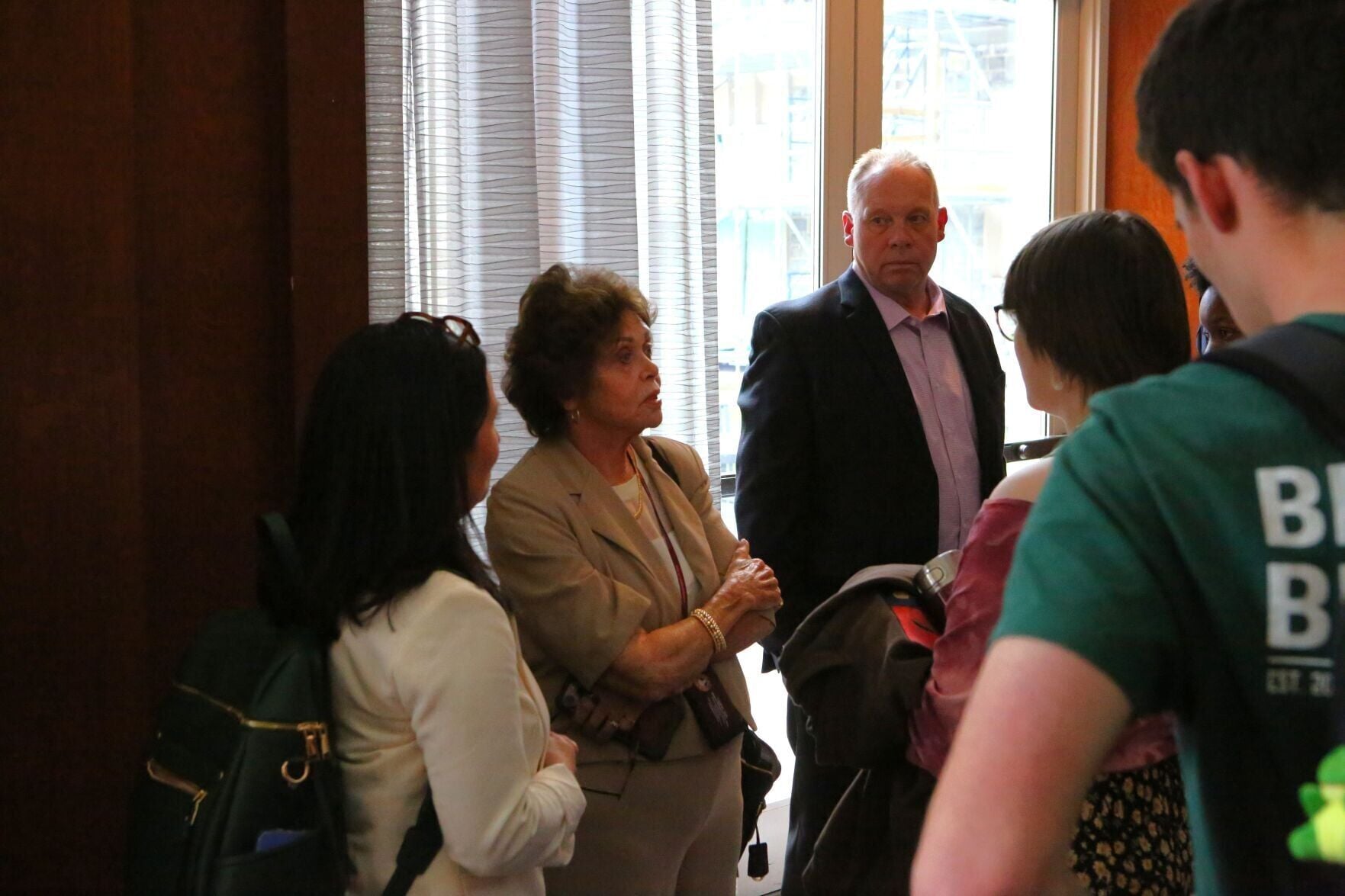
Jeanne Stosser, middle, speaks with a student following the Virginia Tech Board of Visitors meeting Monday.
Students, staff, faculty and provost push back
Virginia Tech Provost Julie Ross said eliminating the “in-demand” Living-Learning Program would put the university at a “competitive disadvantage” in enrollment, noting that many of Virginia Tech’s peer institutions, including the University of Virginia, offer similar opportunities.
Vice Provost for Enrollment Management Juan Espinoza said growing the freshman class at a faster rate would strain departments, particularly the university’s most popular majors, which are “not in a position to grow right now.”
To fill additional seats, the university would also need to make significant investments in recruitment to attract enough applicants, Espinoza said.

Virginia Tech President Tim Sands, right, stands during a recess.
Several speakers, including Faculty Senate President Justin Lemkul, also challenged Dye’s and Stosser’s claims that cutting the program would provide “significant savings.”
“The board acts swiftly to authorize a $229 million expenditure in September for an ever-escalating athletics arms race,” Lemkul said. “Now we’re to believe that there is a, quote, ‘significant savings’ to be had in a popular, impactful residential program that operates with a budget of less than 1% of that investment.”
More than a dozen students, most of them members of the Living-Learning Program, attended Monday’s proceedings.
Rowan Voight, a senior and member of the Studio 72 arts and creativity Living-Learning Community, said the proposed resolution felt like a “betrayal.”
“When I got to campus I was in a really vulnerable place,” Voight said. “Being able to find the community that I have found in Studio 72, it’s just an immense part of why I am who I am today, and why my experience at Virginia Tech has been so good.”

The Virginia Tech Board of Visitors postponed voting on the resolution Monday.
Town officials raise concerns
Last week, Blacksburg Mayor Michael Sutphin sent a letter to university leaders raising concerns that the proposal, if passed, would burden the town’s housing market.
“Taken at face value, the resolution suggests the university may substantially increase its freshman class size,” Sutphin wrote. “Any such increase would generate corresponding off-campus housing demand in later years as those students move into the community.”
Sutphin said the proposal diverges from the board’s established annual growth target of 1% to 2% and warned it would strain town-funded utility and transportation systems.
On Monday, Stosser — CEO of SAS Builders, a New River Valley development company — disagreed, saying off-campus housing is “not an issue.”
“In the next three years, there’s a lot of housing that’s going to be off-campus,” she said. “And Blacksburg has ample utility capacity to take care of all of those.”
The board will reconsider the resolution at its next meeting in June.
Ethan Hunt (540) 381-1678
Related

Coverage of the March 25, 2025, protest by students and faculty of the Virginia Tech Board of Visitors' decision to dissolve the university's …