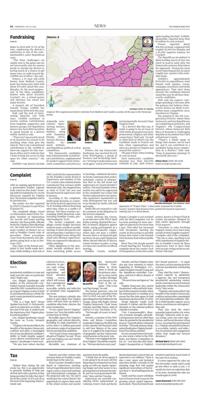
Virginia voters won't have to wait until Super Tuesday to pick a Democratic presidential candidate in 2028.
The Democratic National Committee's Rules and Bylaws Committee proposed Virginia as the sixth state on the early presidential primary calendar in 2028, with the election scheduled on Feb. 29 — leap day. It will follow Democratic presidential primaries in South Carolina, Nevada, New Hampshire, New Mexico and Michigan under the calendar that the committee adopted on Friday.
The decision means that Virginia won't have to compete with other states for the attention of presidential candidates, as it did on Super Tuesday in early March.
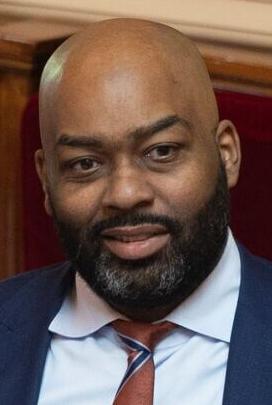
"The main thing is moving it up before Super Tuesday," said Sen. Lamont Bagby, D-Henrico, chairman of the Democratic Party of Virginia, after the committee vote on Friday.
"It's a great opportunity for presidential candidates to come and really earn the votes of a particular state," Bagby said.
Gov. Abigail Spanberger and leaders of the Democratic-controlled General Assembly formally asked the DNC committee in January to grant Virginia a waiver to hold its presidential primary within the party's early presidential nominating window.
"This is a huge deal," House Speaker Don Scott, D-Portsmouth, said in an interview on Friday. "At the end of the day, it underscores the importance that Virginia plays in national politics."
Gov. Abigail Spanberger shared the news on X.com, formerly Twitter.
"Virginia's electorate reflects the breadth of the modern Democratic coalition and offers a meaningful test of any presidential candidate's ability to build durable support across diverse constituencies and regions," Spanberger's tweet read.
"We also have robust election administration, extensive in-person early voting, same-day voter registration, and broad absentee voting access, which will ensure that a presidential primary will be accessible, orderly, and reflective of sustained voter engagement," she wrote.
The new primary calendar also makes it more likely that Virginia voters will have their say before a candidate effectively clinches the party nomination.
"It was a great win for Virginia," former Gov. Terry McAuliffe said in an interview on Friday.
McAuliffe argues that Virginia's geographic and cultural diversity, including its large population of active-duty U.S. military personnel and veterans, makes it an important test for presidential candidates.
"You've got to have a message for all parts of Virginia," he said. "If you can't win Virginia, you can't win the general election."
McAuliffe was chairman of the Democratic National Committee in 2004, when it shook up the primary calendar to move South Carolina, Michigan and Nevada to the front of the calendar. "This is the next big change," he said.
The former governor, who led the national party committee from 2001 to 2005, was part of the Virginia delegation that lobbied for the change, along with Bagby, former Virginia Democratic Chair Susan Swecker and Mike Henry, chief of staff to U.S. Sen. Tim Kaine, D-Va.
"We brought all assets to bear," he said.
Swecker, a member of the DNC Rules and Bylaws Committee, nominated Virginia as the fifth state on the calendar, but the panel voted to add New Mexico at the same time as it juggled the importance of geography and key Democratic constituencies in the party vote.
"We have a very engaged electorate in Virginia," she told the committee. "We have elections every year."
Swecker said that Virginia voters also pay close attention to what's happening in Washington, D.C., under President Donald Trump and the Republican-controlled Congress, and how it affects all parts of the state.
"We are in tune and rigorous," she said.
Virginia Democrats also control the governor's office and both chambers of the General Assembly, which the national party is counting on to ensure that the state agrees to hold the primary election on Feb. 29, 2028.
Senate Majority Leader Scott Surovell, D-Fairfax, said the state's elevation on the national political calendar is overdue.
"Our Commonwealth's diversity, economic strength, and political importance have too often been taken for granted in the presidential process," Surovell said in a statement on Friday. "This early primary designation finally gives Virginia the platform it has always merited."
He was among Democratic leaders who wrote a letter to the DNC Rules and Bylaws Committee on Jan. 26 — just nine days after Spanberger's inauguration as Virginia's first female governor — to argue the state's case for moving up in the national presidential nominating process.
They cited the state's "demonstrated capacity to administer a rigorous, fair, and transparent presidential nominating contest and its consistent record of national leadership within the Democratic Party," they wrote.
"Virginia's electorate reflects the breadth of the modern Democratic coalition and provides a meaningful test of presidential candidates' ability to build durable support across diverse constituencies and regions," they said.
They also cited the state's expanded opportunities for voters through "extensive early in-person voting, same-day voter registration, and broad absentee voting access, ensuring that participation in a Virginia presidential primary is accessible, orderly, and reflective of sustained voter engagement rather than single-day turnout dynamics."