
Virginia’s new liquor law reshapes rules for Richmond bar-restaurants
RICHMOND — A major legislative change to Virginia’s liquor laws is reshaping how Virginia bar-restaurant hybrids do business.
House Bill 975 took effect July 1, replacing decades-old food-to-beverage sales requirements that determined whether restaurants could keep their mixed-beverage licenses.
For hospitality businesses that rely more on cocktail sales than dinner service, losing a mixed-beverage license could effectively put them out of business.
Supporters say the law doesn't make it easier to open bars. Instead, it gives hospitality businesses with more complex operating models greater flexibility by no longer forcing them to fit the financial profile of a traditional sit-down restaurant.
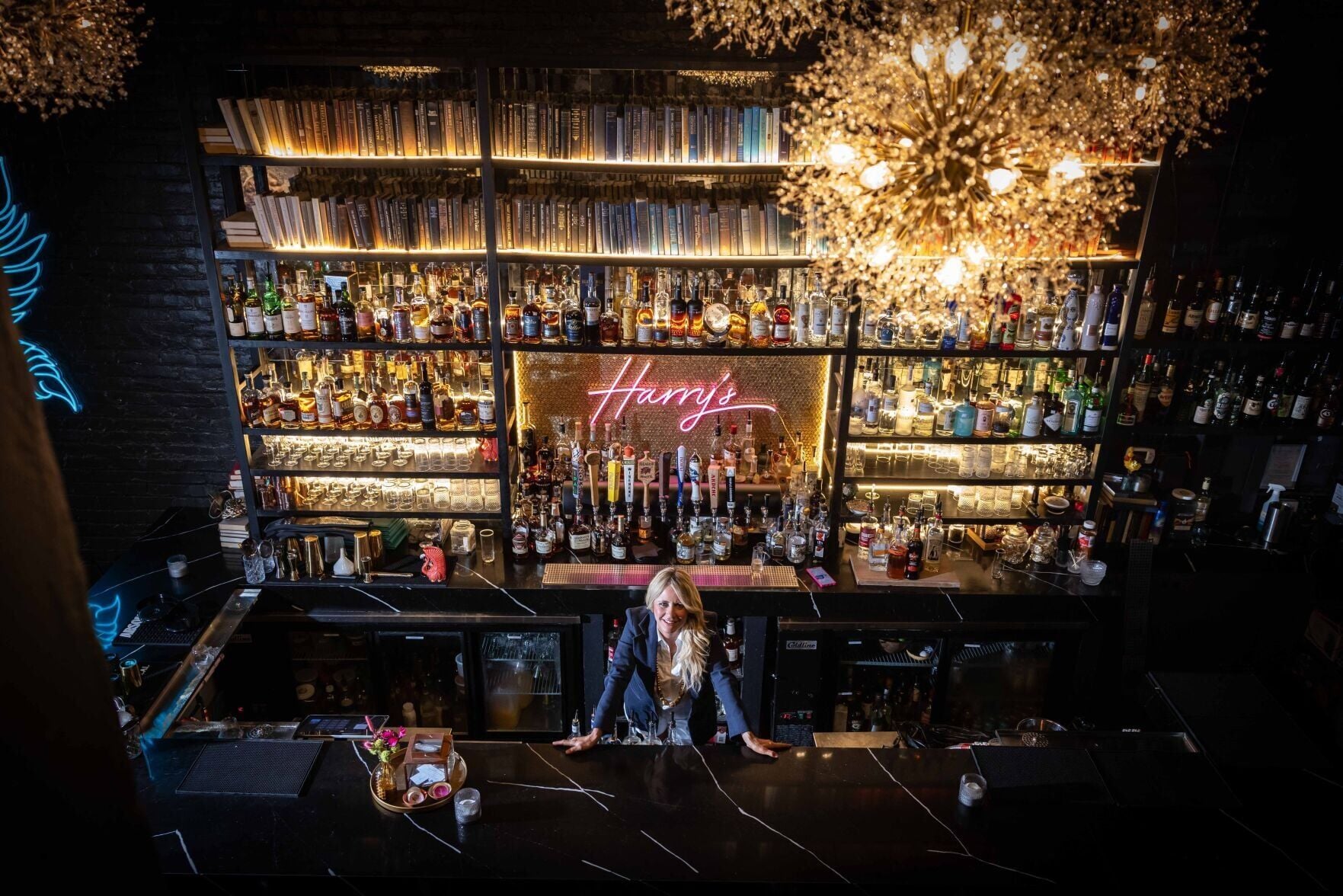
Natalie McNamara poses for a photo at her bar, Harry’s at Hofheimer, on June 30. Prior to the new liquor law, McNamara's restaurant had to discount food to sell enough to meet the minimum sales requirement.
What was the food-to-beverage ratio that governed Virginia’s liquor laws?
Before HB 975, restaurants and caterers with mixed-beverage licenses had to show that at least 45% of monthly sales came from food and nonalcoholic beverages, while mixed drinks could not exceed 55% of total monthly sales.
The requirement traces its roots to Virginia's post-Prohibition liquor laws and had remained largely unchanged since the 1980s. Owners of more complex hospitality businesses explained that the old liquor laws forced money-wasting business decisions simply to meet the 45% minimum on food sales, while capping liquor sales they needed to make to stay in business.
Natalie McNamara is CEO and managing partner of Harry’s at Hofheimer in Scott’s Addition. The three-story, 14,000-square-foot venue combines a restaurant, bars, private event space and a rooftop with its own bar that draws large crowds during warmer months. While customers may come for dinner, an event or rooftop cocktails, Virginia’s previous rules evaluated the business like a traditional restaurant.
That became a problem two years ago when Harry’s failed Virginia ABC’s annual Mixed Beverage Annual Review, or MBAR, partly because of a reporting error and partly because its business model didn’t produce the required food-to-beverage sales ratio.
Each year, Virginia ABC uses the MBAR to determine whether mixed-beverage licensees comply with the required sales ratios. A failed review could ultimately jeopardize a business’s mixed-beverage license.
“I was failing it because I have a very complicated business," McNamara said. "I'm being compared to a typical restaurant when I'm a three-story building and a destination that people come to to have a drink on the rooftop.”
In her case, the MBAR was forcing the restaurant to discount food so it could sell enough to meet the minimum sales requirement.
One example, she said, was selling late-night pizza on the rooftop — not because customers were asking for it, but because the business needed additional food sales.
“Last year, one of my strategies was to sell pizzas on the roof when it got a little bit later and people didn't want to eat. We still needed to serve food, though, and I lost so much money on labor and cost of goods to serve that stupid pizza. It wasn't a good business decision, but I had to make these types of decisions just to appease ABC and this old bill,” she said.
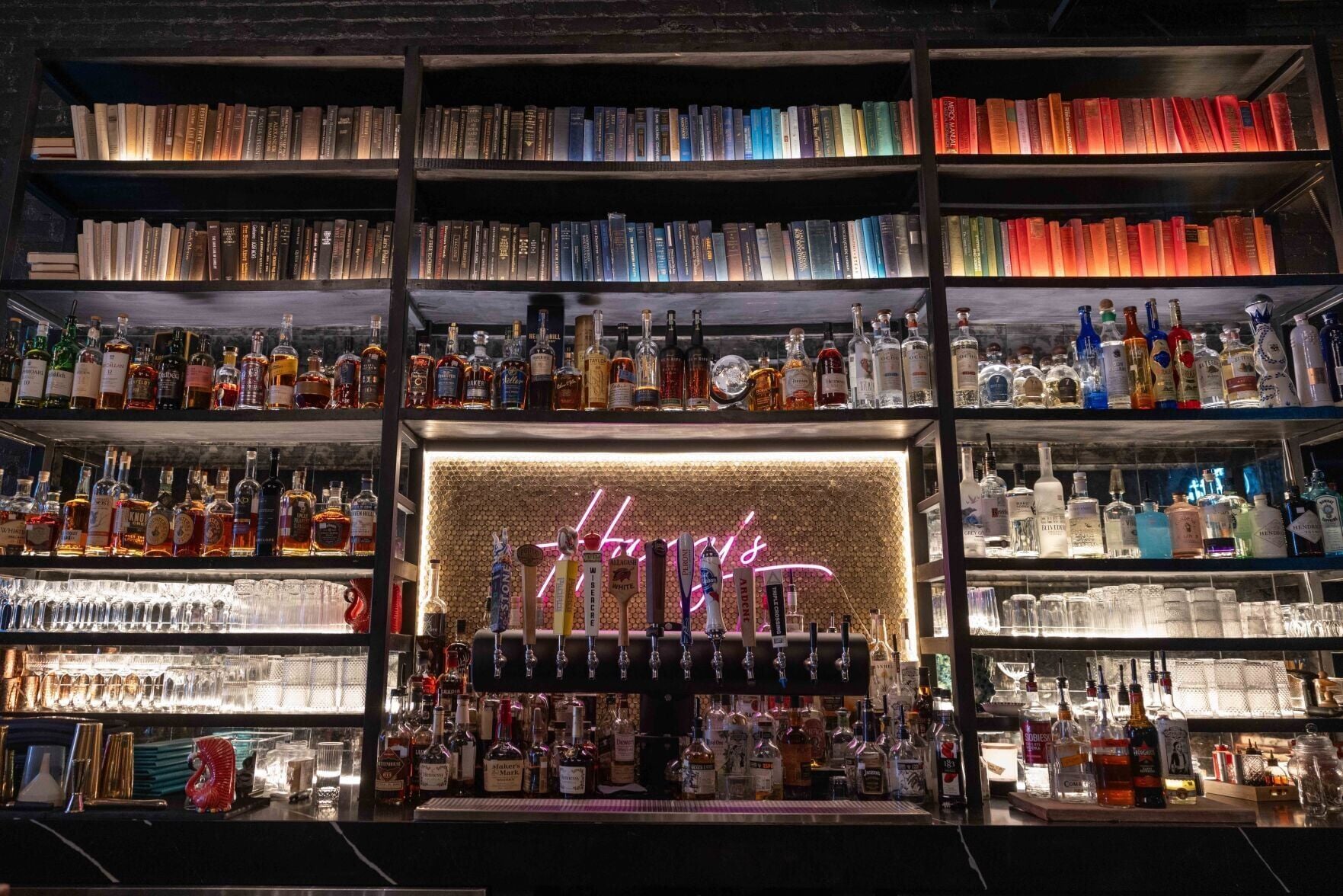
The bar at Harry's at Hofheimer on June 30. House Bill 975, which took effect on July 1, is changing how establishments like Harry's at Hofheimer do business.
How the new food-to-beverage ratio works
HB 975 changes that system.
Rather than applying one standard to nearly every restaurant, the law creates different requirements based on a business’s average monthly food sales.
Businesses averaging at least $48,000 in monthly food sales no longer have to meet a food-to-beverage ratio, and the cap on mixed-beverage sales is eliminated.
Those averaging at least $25,000 but less than $48,000 must maintain a 30% food-to-70% liquor sales ratio.
Those averaging at least $4,000 but less than $25,000 generally remain under the existing 45%-food-to-55% liquor ratio, although some smaller venues may qualify for the 30% standard.
The bill also requires restaurants to maintain at least as many table seats as counter seats.
Eric Terry, president of the Virginia Restaurant Lodging and Travel Association (VRLTA), said, “VRLTA supported the legislation this year as the fundamentals of the restaurant industry have changed dramatically. Alcohol consumption is down significantly and with the rise of fast-casual restaurants, many offer spirits-based drinks to patrons. In addition, many of our select service hotels were having issues with the MBAR ratio as well. As Virginia’s Restaurant and Lodging Association for over 75 years, we represent all businesses, not just a few who want to stifle competition.”
For smaller operators, the shift brings relief rather than reinvention.
“We’ve already built our business around managing those food-to-drink ratios, so HB 975 doesn’t really force us to change how we operate day to day,” Kevin Liu, owner of The Jasper, a cocktail bar in Carytown, said. “What it does is take away that yearly anxiety of being off by a fraction of a percent and facing big consequences.”
For McNamara, the change means operations can better reflect how customers actually use the space instead of being built around fear of an annual compliance calculation.
Mike Byrne is the director of operations at the Tobacco Company Restaurant and the director of the Richmond Restaurant Association. He is against the new laws. He said, “What you’re taking is a very healthy industry that is being challenged by the cost of food, and by the cost of labor, and you’re eliminating a lot of that overhead for the bar operator who doesn’t have to have that staff and that investment.”
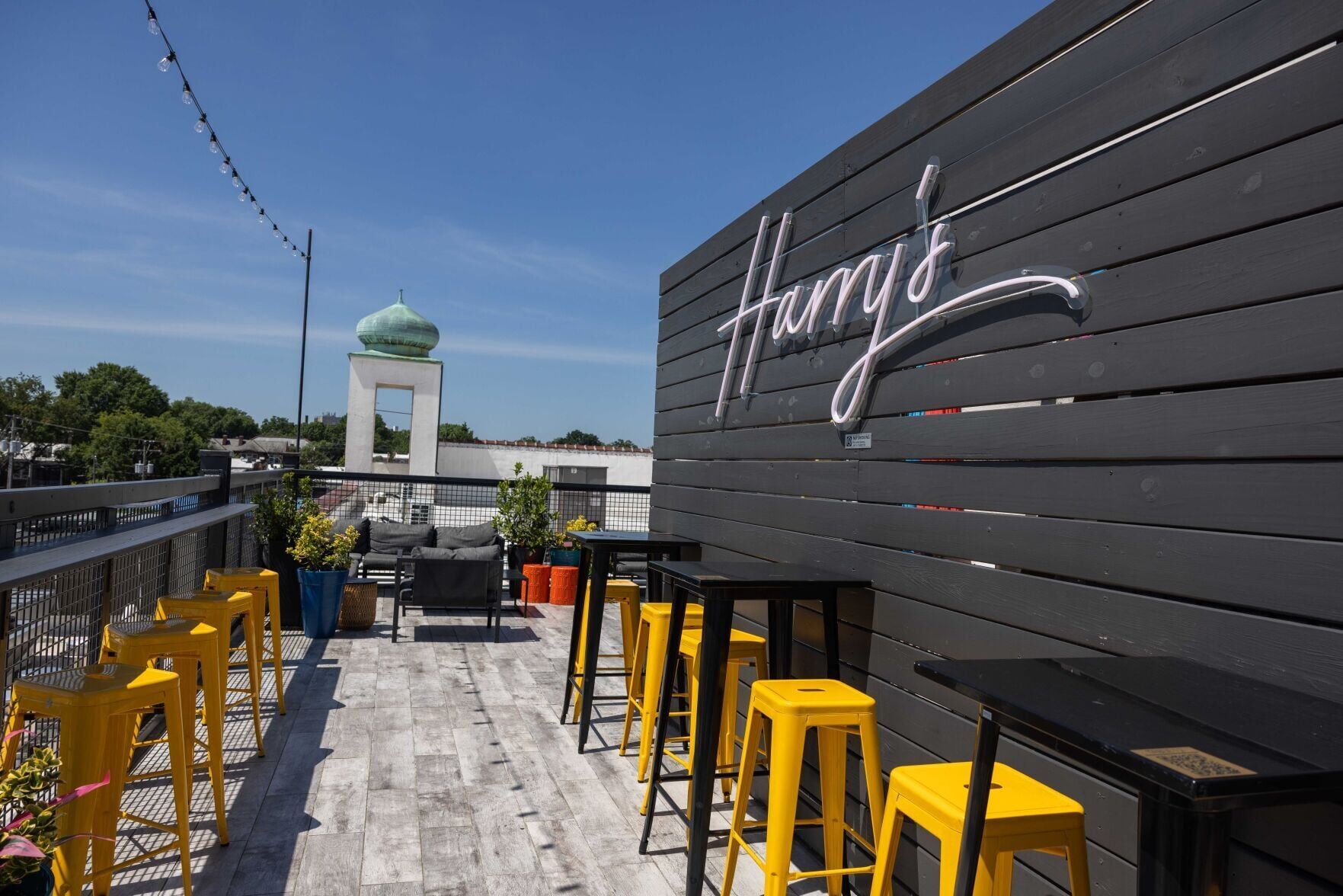
The rooftop bar at Harry's at Hofheimer on June 30. To make additional food sales and meet the minimum requirement last year, CEO Natalie McNamara said the restaurant sold late-night pizza on the rooftop.
Complaints about the old ratio rule, and HB 975
Supporters of the change argue the former rule pushed restaurants into costly, inefficient behavior.
Owners could feel compelled to expand menus, staff kitchens or design specials around compliance rather than customer demand.
McNamara framed the old system bluntly: “Now, I can make decisions based on what is good for my business and to keep my employees employed — not just to meet some law.”
HB 975, she said, gives operators more control over drink-heavy nights, events and programming without the same fear that one annual review could shut down the business.
Critics, however, have questioned whether loosening the ratio could change the business model by blurring the lines between bars and restaurants.
Byrne said, “eliminating the ratio [changes] the model. If I don’t have to worry about the ratio, then I open up a bar and I serve sandwiches, pizza, I serve food for two or three hours, and then I shut down, and I’m just a bar until close.”
He continued, saying, “Bubba opens a bar from 10 p.m. until 2 a.m., and didn’t have any of that overhead, so the guy who has the restaurant with the inventory, the staff and the training now has to charge more to pay his bills. He’s at a distinct disadvantage because the bar-only operator is operating on probably 8% payroll, whereas the restaurant operator is working on a margin of maybe 35% to 40% payroll.”
Tommy Herbert, director of government affairs for the VRLTA, said, “Mr. Byrne has raised these concerns before, but the idea that an operator could average $48,000 per month in food sales by selling pizzas or sandwiches for a few hours a day is simply not in the realm of reality.”
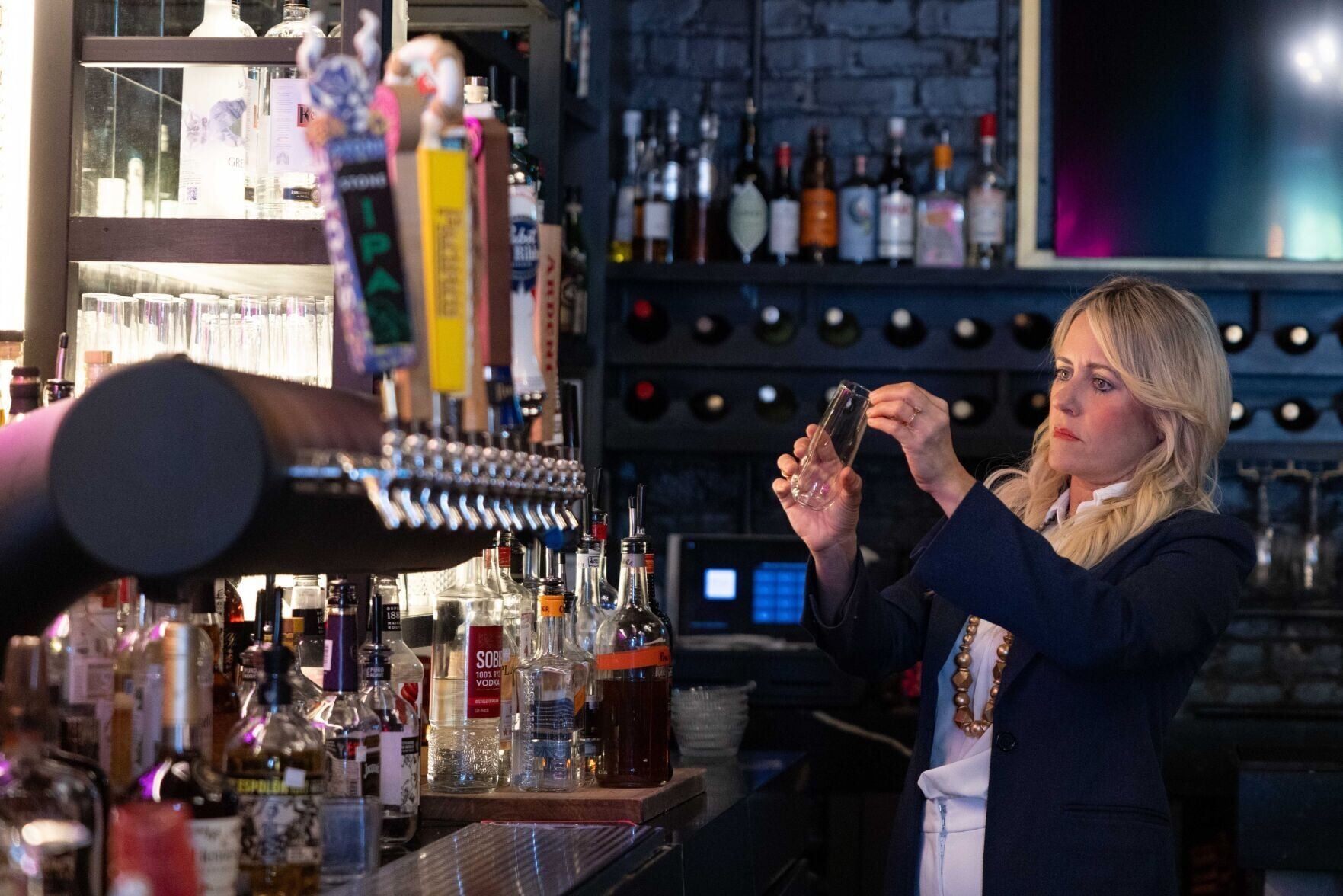
Natalie McNamara poses for a photo at her bar, Harry's at Hofheimer, on June 30. For McNamara, the new liquor law means that operations can better reflect how customers use the space instead of being built around fear of an annual compliance calculation.
Does Virginia ABC plan to track bill's impact?
Virginia ABC remains central to the new system.
Virginia ABC will continue overseeing annual compliance reviews under the new law. It also must study how the revised standards affect food sales and compliance, then report its findings to the General Assembly by Nov. 1, 2027.
Byrne feels that the new law will shift Virginia from a restaurant-centered cocktail model to a bar-heavy landscape, giving low-overhead bars an edge and putting full-service, food-focused restaurants under more economic pressure.
McNamara believes much of the debate surrounding HB 975 stems from misunderstandings about what the law actually does.
"When you get all these people that don't actually understand the bill, they start having assumptions and beliefs, and opinions that aren't correct."
Beginning July 1, restaurants will start finding out what the law changes in practice. For operators like McNamara, the answer isn't whether they can sell more alcohol — it's whether they can make business decisions based on customers instead of compliance formulas.
Related

Natalie McNamara, of Harry’s at Hoffhiemer talks about the challenging the MBAR (Mixed Beverage Annual Review) ratio for bars and restaurants

Check out these new restaurants, breweries and ice cream shops that have opened in Richmond.