
VA250 begins where the state's history starts: tribal nations
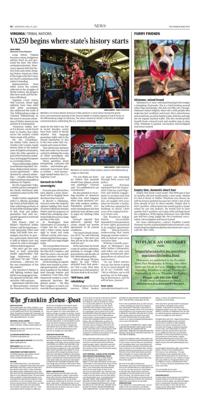
Long before Virginia became a colony, Indigenous nations lived on and governed the land. The state’s semiquincentennial observance opened with that history front and center, bringing Native American tribes to the stage as the first voices for VA250’s celebration of the nation’s founding.
Representatives from tribes across the country reflected on the struggles of Native nations, the progress they have made and the distance still ahead.
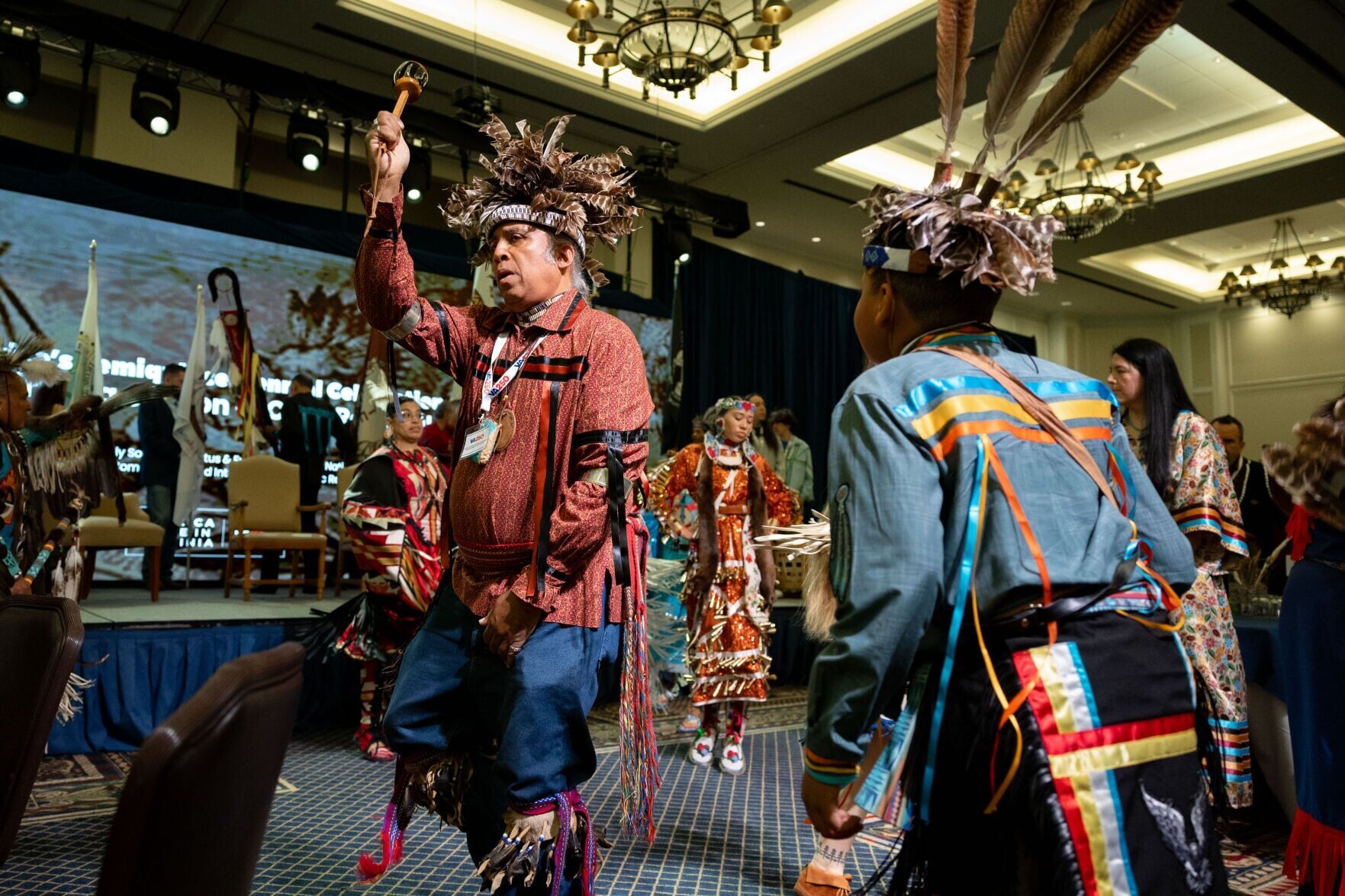
Members of various Native American tribes perform a ritual dance during the grand entry and ceremonial opening of the America Made In Virginia Signature Event Series at the Williamsburg Lodge on Saturday. The event, hosted by VA250, is the first of multiple commemorations celebrating the U.S. semiquincentennial.
Supreme Court Justice Neil Gorsuch, whose legal opinions have long sided with tribal sovereignty, also addressed the room at The Williamsburg Lodge in Colonial Williamsburg on the need to increase awareness of Native American law and how it is interpreted.
"American Indian law," as it is known, can be traced back to treaties that tribes across the modern United States made with settlers.
For the Chickahominy Indian Tribe, based in Charles City County, treaty history dates to the earliest years of English colonization, when the tribe operated as part of the Powhatan confederacy and engaged Europeans as a sovereign nation.
Those relationships shifted as settlement expanded. Violence, displacement and successive agreements — often dictated by colonial authorities — steadily reduced the tribe’s land base and political influence in Virginia.
For the Suquamish Tribe, a similar pattern emerged in the Pacific Northwest after sustained contact in the 19th century.
Under treaties negotiated with U.S. officials, including the Treaty of Point Elliott, the tribe ceded large portions of its land while retaining rights to fish, hunt and gather, guarantees that were frequently ignored or restricted for decades.
Kirk Francis, chief of Maine’s Penobscot Indian Nation, said the legal framework governing tribal land today still limits how sovereignty functions in practice, particularly where land is held in federal trust and cannot be sold or leveraged without federal approval.
“We don’t get the same kind of land ownership wealth opportunities that large landowners typically have,” he said. “Those restrictions … still exist. It’s the very foundation of the documents.”
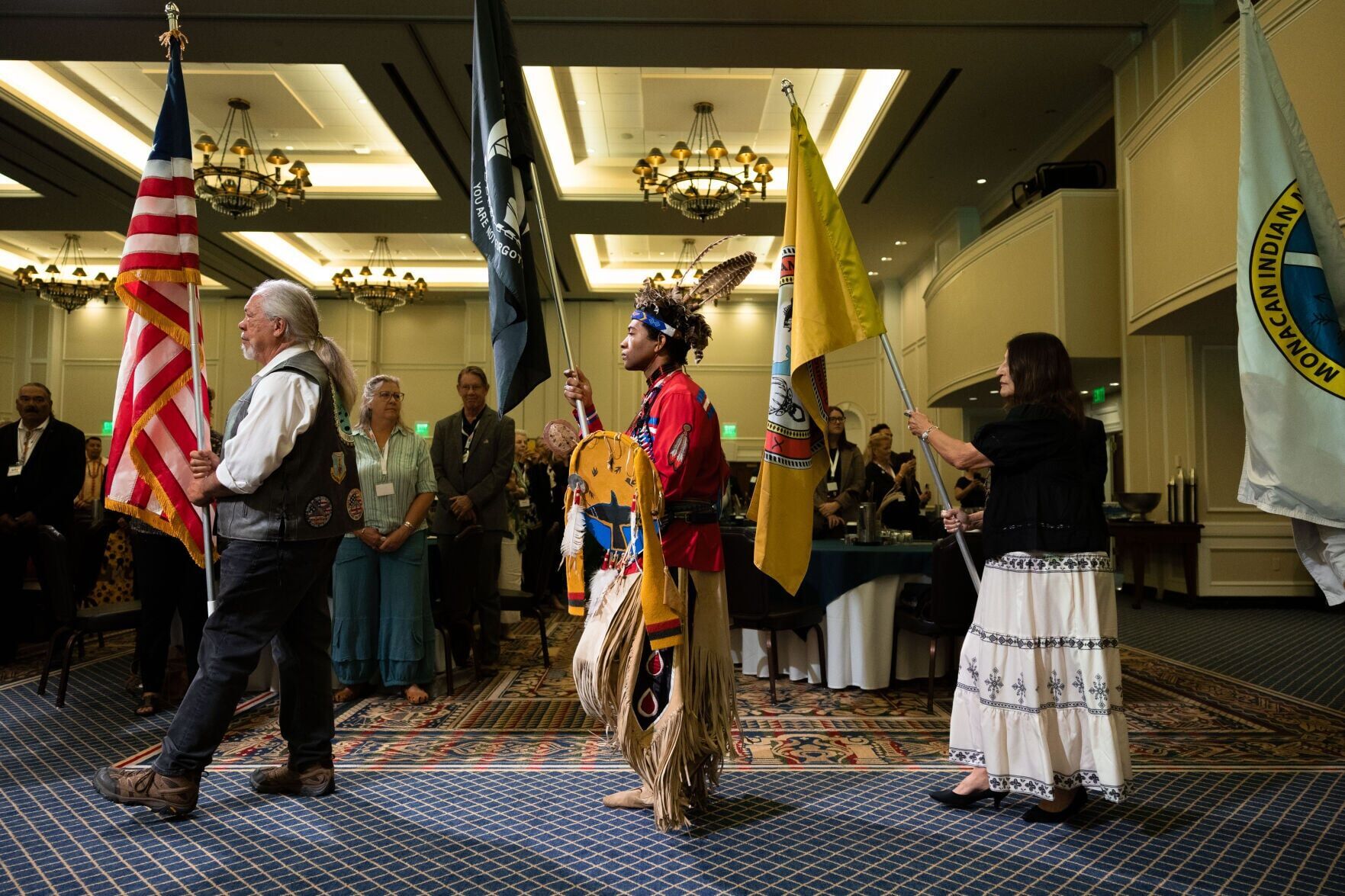
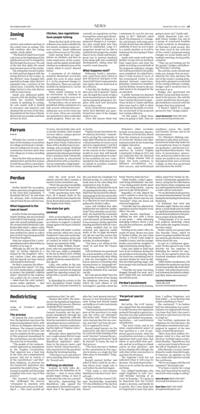
Members of various tribal nations carry flags during the grand entry and ceremonial opening of Saturday's event. Representatives from tribes across the country reflected on the struggles of Native nations, the progress they have made and the distance still ahead.
The Penobscot Nation is still fighting modern legal battles over language in treaties agreed to in the late-18th and early-19th centuries.
Agreements with the state of Massachusetts reserved the Penobscot River and its lands for the tribe’s use. But in recent decades, courts have been asked to decide whether that language guarantees rights only to the islands themselves or also to the river water that surrounds and connects them.
That distinction between land and water has become central to defining the scope of tribal sovereignty and resource authority today.
Those questions about interpreting centuries-old treaties — and whether governments must honor them as written — have increasingly landed before the U.S. Supreme Court.
Gorsuch on tribal sovereignty
In recent years, few justices have played a more prominent role in shaping those decisions than Gorsuch.
In McGirt v. Oklahoma, Gorsuch wrote the majority opinion holding that much of eastern Oklahoma remains Native land for purposes of federal law, reshaping criminal jurisdiction across a large portion of the state.
In Washington State Department of Licensing v. Cougar Den Inc., he sided with a tribe’s treaty-based right to travel and trade without certain state taxes, reinforcing that those agreements still carry legal weight today.
The core problem Gorsuch returns to is plenary power — the idea that Congress, and later the courts, can override treaty promises when they become inconvenient.
At the founding, he argued, tribes were treated as sovereign governments, with relations handled at the federal level through treaties and commerce. Over time, that framework eroded as courts embraced doctrines like plenary power — the idea that Congress or courts can override those agreements.
“Do you think our framers believe that anybody should have plenary power over anything?” Gorsuch said. “It’s antithetical to our Constitution.”
He also pointed to recurring tensions in American Indian law: what happens when treaty promises collide with modern realities. Population growth, economic development and state authority have all been used to argue for limiting tribal rights.
Gorsuch rejected that approach, arguing that courts should not rewrite agreements to fit current conditions.
“You want to break a treaty, you do it,” he said referring to Congress. “But don’t you dare ask me to do your dirty work for you.”
At the same time, he struck a note of cautious optimism, pointing to stronger tribal governments and decades of self-determination policy.
“We’re all equal. We have rights,” he said. “Who’s excluded from that promise? Not a soul. Now, have we lived up to that promise? We have work to do on that.”
'Still here, still rebuilding'
While progress has been uneven, tribal leaders say gains are emerging through both courts and policy.
Leonard Forsman explained that the Suquamish Tribe has used litigation and federal engagement to reclaim land tied to pre-independence treaties. At roughly 200 acres when he became a leader, the tribe has expanded its holdings to about 1,800 acres of its original 8,000-acre treaty area.
The Penobscot Indian Nation successfully defended its interpretation of river rights guaranteed in its original agreements with Massachusetts, underscoring that treaty language remains enforceable in federal court even centuries later.
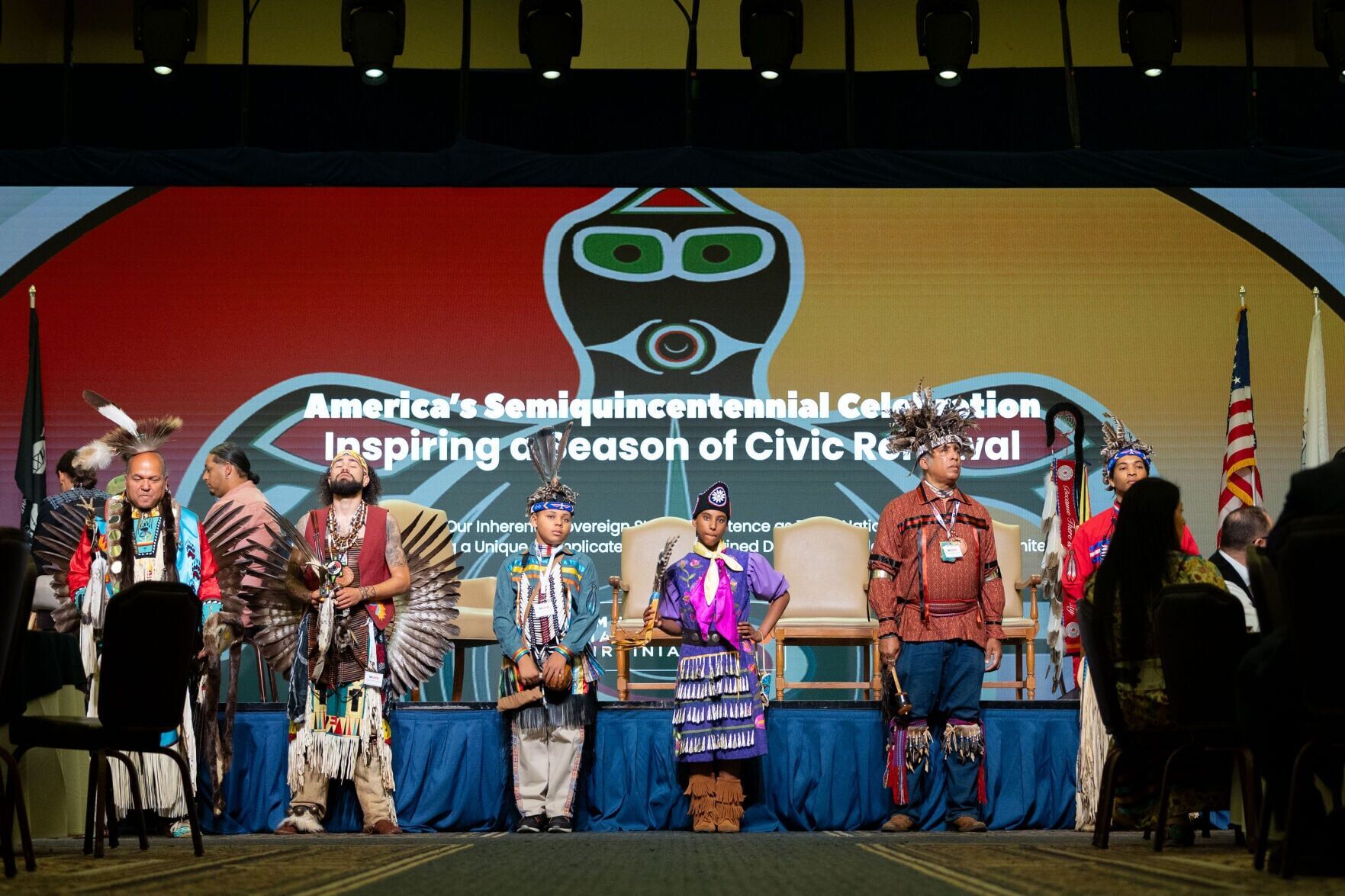
Members of various tribal nations stand at the Williamsburg Lodge on Saturday.
Whitney Gravelle, president of Michigan’s Bay Mills Indian Community, said tribes are only now gaining momentum after generations of cultural loss and recovery.
“As our tribal nations rise up, the future is going to be so much greater for all of us,” Gravelle said. “We’re still here, we’re still growing, we’re still engaging in governance, and we will be here, forever.”

In October, the Richmond Times-Dispatch will be marking 175 years since its first issue in 1850. Here's a look at some of the many photos from…
Sean Jones
Related

Chief Stephen Adkins speaks about Chickahominy government during a VA250 Event in Williamsburg, Va., Saturday April 25, 2026.