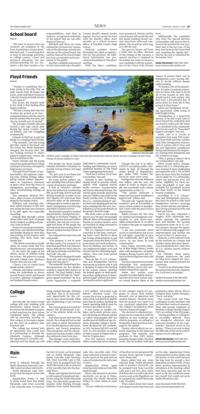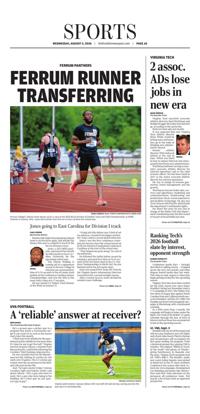

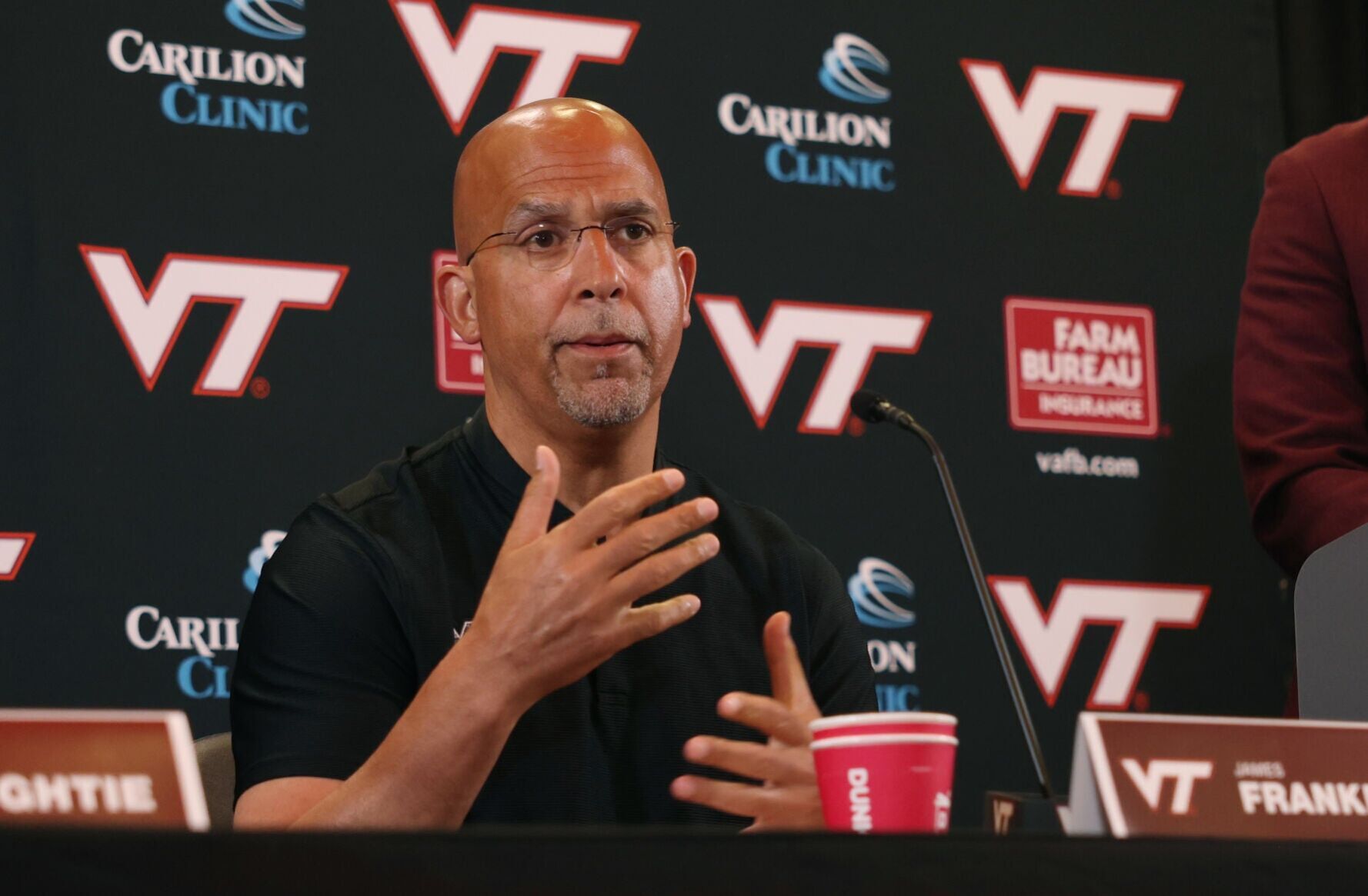
Virginia Tech football coach James Franklin will open his first season with the Hokies at home on Sept. 5 against VMI.
Virginia Tech football coach James Franklin will open his first season with the Hokies at home on Sept. 5 against VMI.
Virginia Tech football coach James Franklin will open his first season with the Hokies at home on Sept. 5 against VMI.
Virginia Tech football coach James Franklin will open his first season with the Hokies at home on Sept. 5 against VMI.
MONETA — Recent rains are slowly helping to improve drought conditions in the region as well as the historic low water level at Smith Mountain Lake.
Representatives from Appalachian Power Co. were in attendance at Monday's Tri-County Lakes Administrative Commission meeting. It was one of several groups the company has met with in recent months to provide information on the ongoing drought conditions that dropped Smith Mountain Lake's level by more than six feet in recent months.
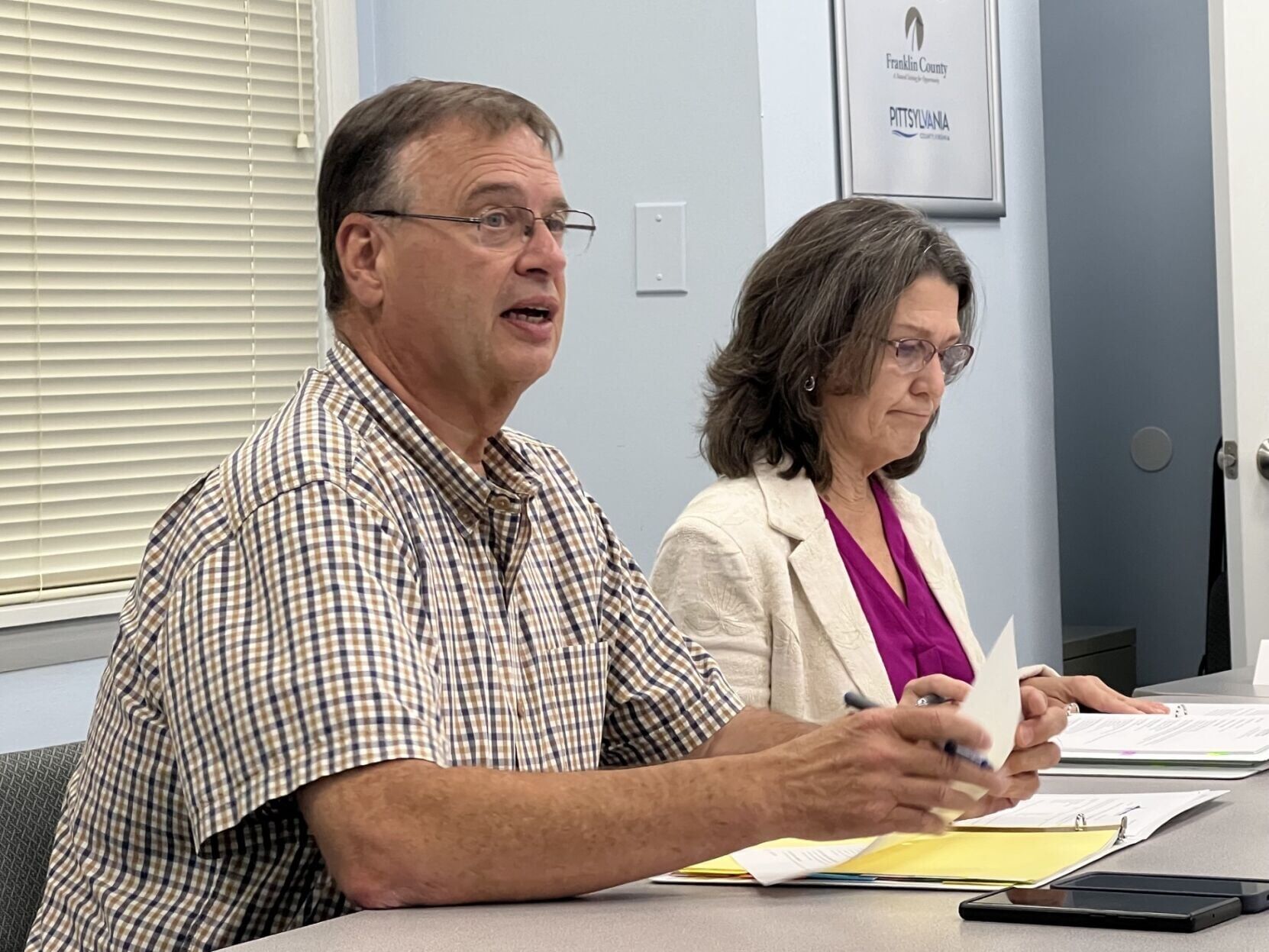
Tri-County Lakes Administrative Commission Chairman Edgar Tuck and Executive Director Kristina Sage listen to a report from representatives of Appalachian Power Co. on Monday.
Rains along with steps taking by Appalachian Power to reduce to flow of water out of the Smith Mountain Project have increased the average lake level by more than a foot in recent weeks. The power company has reduced outflow from Leesville Lake into the Roanoke River three times since April with the most recent one put in place on July 22.
Appalachian Power representative Rob Mann said, with the recent reduction, the company is releasing the least amount of water allowed by their Federal Energy Regulatory Commission license into the Roanoke River. A minimum outflow is required for fish habitats and recreation downstream.
The Smith Mountain Project includes Smith Mountain and Leesville lakes. Water that flows into Smith Mountain Lake through the Roanoke and Blackwater rivers is released through the Smith Mountain Dam into Leesville Lake to produce electricity.
Smith Mountain Lake businesses feel the impact of low lake levels
Appalachian Power is able to pump water back into Smith Mountain Lake from Leesville Lake using the dam. As much as two feet of water can be pumped out of Smith Mountain Lake before Leesville Lake becomes full. Once Leesville Lake is full, water must be pumped back into Smith Mountain Lake or released at the Leesville Dam into the Roanoke River.
Mann said Appalachian Power is still required to produced electricity using the Smith Mountain Dam. The electricity production requires water flowing through turbines from Smith Mountain Lake into Leesville Lake. That water reduction is based on electricity needs on the grid and can reduce the lake level by half a foot or more.
Appalachian Power again reducing water releases from SML amid drought
Mann said demand to produce electricity can go up at times, requiring the Smith Mountain Project to come online to meet needs.
"We are a little bit at the mercy of the other factors going into this on how much capacity is generated," Mann said.
Mann added that any water released from Smith Mountain Lake to produce electricity can be pumped back from Leesville Lake and is not lost. Also, water that flows into Leesville Lake from sources such as the Pigg River can be pumped into Smith Mountain Lake, he added.
When asked about how much of an impact recent rains have had on the lake, Appalachian Power representative Joshua Blake said five inches of rain could increase the lake level by around a foot depending on where it falls. Dwain Bever, another representative in attendance at the meeting, added that those amounts may not be exact as the dry conditions mean less runoff that could end up in Smith Mountain Lake.
Jason Dunovant (540) 981-3324

Tyler Routon, senior officer with the Virginia Department of Wildlife Resources, urges people heading out on Smith Mountain Lake to be extra c…
She was 5 years old, standing with her mother and siblings in the Dominican Republic when bullets sprayed through a nearby courtyard.
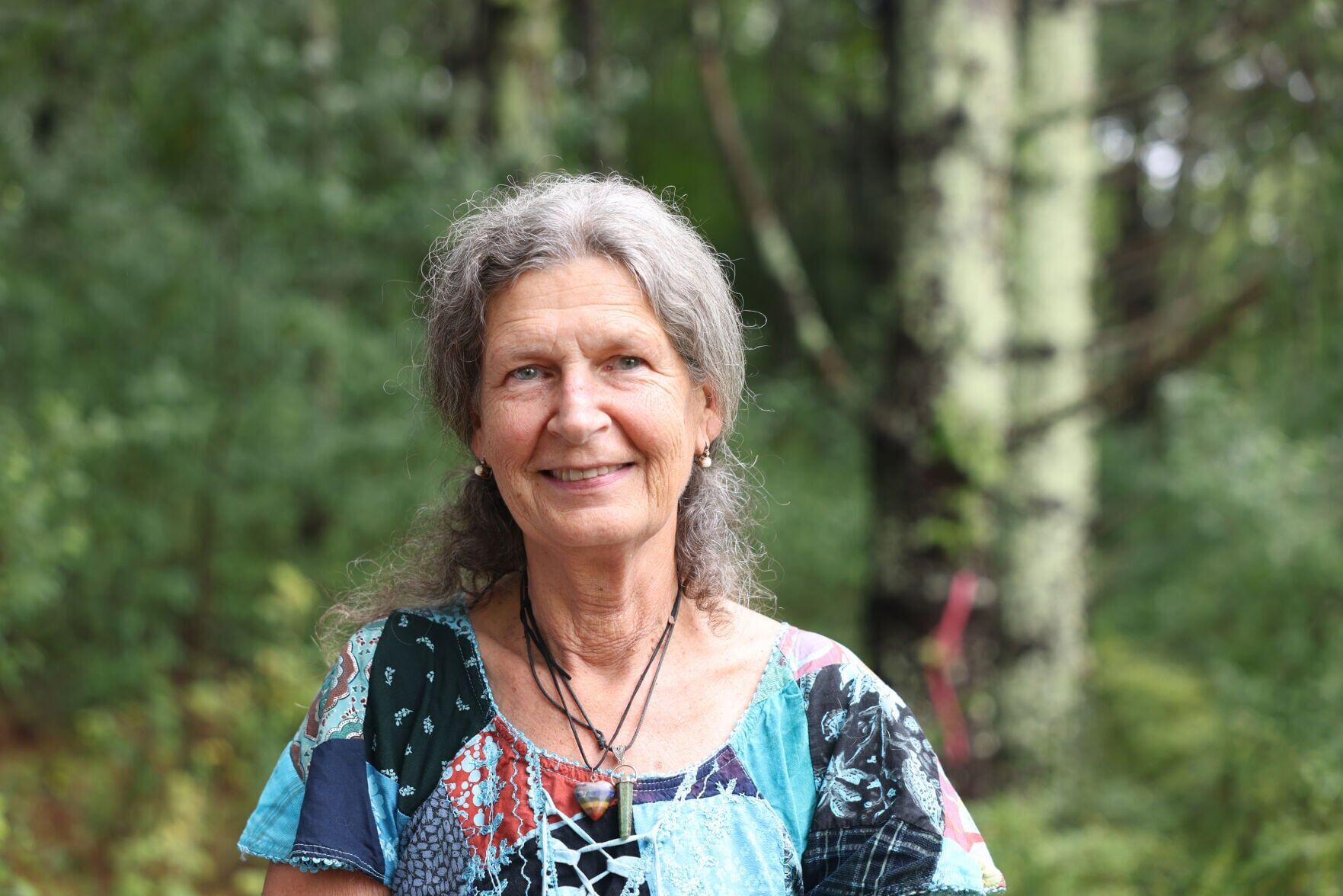
Tara Orlando, founded the volunteer-based nonprofit Floyd Friends of Asylum Seekers in 2018. As increasingly strict immigration policies come into play Orlando wants to also focus outside of courts and give traumatized asylum seekers an opportunity to heal through nature.
“I'll never forget April 30th, 1965 … I was 5, and the bullets stopped like three or four people prior to us.”
Although born in the United States, Orlando was raised in the Dominican Republic during a time of political violence.
Tara Orlando said she witnessed events that no child should see.
Her commitment to serving asylum seekers in her hometown through the nonprofit she began, Floyd Friends of Asylum Seekers, has been somewhat of a calling.
As frightening as those memories remain, Orlando said they do not compare with what many of the asylum seekers she serves have endured.
“Trauma is something that I keep seeing in the folks that we help, trauma from all shapes and forms, from individual trauma to collective trauma to family trauma to you name it.”
One lesson she learned early in her work is that healing often begins outdoors.
“We had a young lady who was 13 when she arrived as an unaccompanied minor, and she came to join her mother who was here, and she was actually sort of suicidal”
The teenager, Orlando said, had started a new high school after fleeing her home country, had no friends, and was struggling academically.
Orlando invited her to join her family on a camping trip in Florida.
“The moment I saw this young girl take a look at the beach and the ocean, her whole demeanor changed. She became alive. She was looking forward to what's going to happen next. I mean, she had an intention in life,’
Today, Orlando said, the young woman has graduated from college and hopes to become a therapist to help trauma survivors.
Through Floyd Friends of Asylum Seekers, she organizes camping trips, fishing outings, hikes, giving asylum seekers opportunities to experience moments of peace away from the stress of immigration proceedings, and often overwhelming feelings of anguish.
One volunteer, Michael Williams, offers 25 acres of riverfront property the families enjoy.
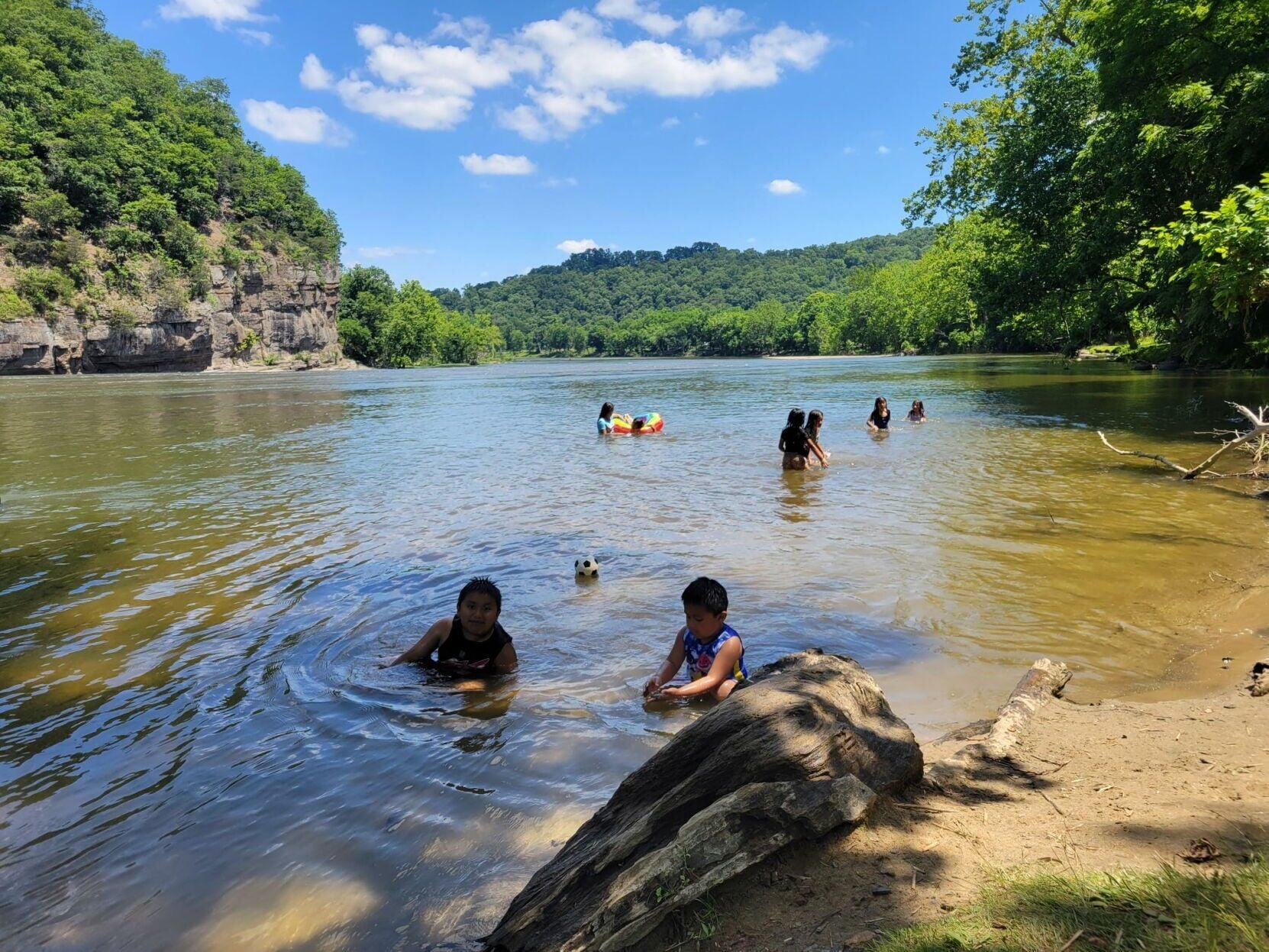
Children catch crawdads at Foster Falls that they would then cook for dinner during a camping trip with Floyd Friends of Asylum Seekers in June.
Williams said watching children splash barefoot in the river and seeing the kids have freedom to be kids again was especially rewarding.
Orlando flips through a photo album filled with faces of people she has helped, recalling each person’s story in detail.
Tara Orlando shares an image from her photo album taken before she founded Floyd Friends of Asylum Seekers. She would meet asylum seekers at the Roanoke bus station as they traveled across the country to their sponsor homes, greeting them with home made meals, toys for children, and personal hygiene supplies.
Stories of corrupt governments, extortions and repeated beatings and families fleeing for their lives and arriving at bus stations with nothing, torn shoes shoes and bloody feet.
“This fellow was beaten so badly where he comes from that he's blind in one eye,” she remembered.
As she turns the pages of the album, stories of children bring her to tears. She points to a young girl with a blank stare, sharing a horrific story she was told.
“There's a lot of cruelty these people endure, intense."
Orlando and fellow volunteers bring the individuals to places around Floyd County and beyond to receive a glimmer of happiness and healing through nature.
The people she meets inspire Orlando and fellow volunteers to provide transportation and legal support.
“It's just a joy to see them just have a little dab of dignity. “
For many asylum seekers, she said, spending time outdoors offers a sense of normalcy and hope.
A look at Orlando’s calendar shows her dedication, handwriting fills up each large slot for each day driving hundreds of miles in her 2013 Mazda CX5 with more than 400,000 miles on the odometer, taking people to medical appointments, immigration court hearings and other essential services.
She transports people to medical appointments, immigration proceedings in Northern Virginia, to yoga, the grocery store and outdoor activities. She said she is encouraged that many of the people she has helped are now earning driver's licenses and purchasing vehicles of their own.
Her end goal is for them to be self sustainable.
“Our purpose is not to meet all their needs. Our purpose is to help them find their way wherever there’s difficulty for them, then we will step in and make sure that they don't fall,” she said.
“The system is designed to make them fail, and we’re designed to make sure they don’t.“
The nonprofit funded legal fees downpayments for five families seeking to appeal their denials of asylum. The final family's funds were secured through an “emergency appeal fundraiser,” by True Colors Appalachia, a nonprofit dedicated to community crowdfunding and following an article published Monday in The Floyd Times highlighting their need.
“Each one is intense. Each story is incredible,” she said.
Orlando is now working on raising funds to provide asylum seekers with ongoing mental health services, transportation and trauma informed therapy. Her current goals include sponsoring trips for children and adults to the North Carolina Zoo, to Washington, D.C., and purchasing 10-person tents and sleeping pads for two more camping trips this year. Contributions can be made directly on the group's donation page.
The work comes as the asylum process has become increasingly difficult. Many of the people Floyd Friends of Asylum Seekers serve are terrified of being returned to countries they fled.
The U.S. Supreme Court issued a decision in late June, overturning lower-court blocks to allow the Trump administration to end Temporary Protected Status (TPS) protections and work authorizations for Haitians and Syrians. It also implements higher costs and stricter rules for citizenship applications, visas and work-permit applications.
Then on July 27, U.S. Citizenship and Immigration Services announced an interim rule it said is designed to reduce the backlog in the asylum system, allowing the federal agency to send pending asylum applications to immigration judges without first interviewing the asylum applicant.
Though the rule is in effect, USCIS is accepting public comments by Sept. 28 through the online portal at Regulations.gov under DHS Docket No. IDUSCIS-2026-0199-0001.
Immigration attorney Mikhayla Rae Adkins said the new rule makes it easier to deport people and essentially ends asylum opportunities in the U.S.
“The asylum interview is important because it establishes a legal record,” Adkins said.
The new rule “signals the government's goal of forwarding as many asylum seekers to immigration courts with the goal of mass deportations."
Adkins focuses her free time on visiting rural immigrant communities to give know-your-rights presentations in an effort to address the gaps in organizing resources.
“I am very passionate about access to information and access to civil rights, especially in areas that traditionally don't get that access. So you know, in rural communities.”
Ahoo Salem, executive director of Blue Ridge Literacy, works daily with immigrants, including refugees fleeing trauma and trying to achieve long term safety and stability.
The local organization provides citizenship test preparation, English literacy classes and community integration support.
Salem says asylum cases shouldn't be taken lightly. Removing interviews from asylum seekers would deprive them of the chance to present their case in immigration court, leaving officers to decide without deeper understanding.
"It requires a lot of documentation. It's quite a traumatic experience for those who have to recall all of the reasons of why they would need to seek asylum, why they have a documented fear of persecution for their life if they go back to their home."
Salem says immigrants are facing uncertainty while trying to build bright future.
“Immigration is a long-term journey, to be able to get a job, to move toward the credentials that you need to make your life better ... to contribute to the community that you are a part of. These don't happen overnight,” she said.
Salem said it is crucial to remember that many TPS recipients from Haiti and other nations hold other immigration statuses, such as a green card or visas, and the new legislation complicates hiring and retentions for employers, hurting both immigrants and the workforce at large.
"This is going to impact all of our communities," she said.
Other recent policy changes address the U.S. citizenship process, making it more challenging and expensive with a 75% to 80% price increase from the standard cost to apply for U.S. citizenship, which was previously $725. Fee waiver eligibility for lower-income households is now only available for household income less than 400% of the Federal Poverty Guidelines.
According to U.S. Citizenship and Immigration Services, fees must be raised to fully fund immigration services, ensuring they are fast and fair, and upholding a strong national security and American values.
USCIS has also reinstated a tougher 2020 citizenship test, which expands the question pool and doubles the passing requirement from six to 12 correct answers, because the agency says it will more fully engage civic empowerment and further the success of the U.S. democracy.
However, a 2026 national study by the Institute for Citizens and Scholars shows that most Americans would fail the test. Only 36% of U.S. citizens passed without studying.
For Orlando, those policy changes underscore the need for long term support for newcomers that extends beyond the courtroom.
“I want to see what makes them fly and just help them fly, whatever it is. Each one is so unique.”
Heather Rousseau (540) 981-3394

In June, asylum seekers enjoyed a day on the river with the non-profit Floyd Friends of Asylum Seekers.
SALEM — Several changes are coming to Roanoke College soon, President Frank Shushok announced in a presidential update last week, including the establishment of a new school focused on health, the sunsetting of several programs and a potential partnership to develop the Elizabeth Campus.
The college will offer clinical and allied health programs through a new School of Health Sciences and Health Innovation, which the board of trustees on July 21 authorized the college to establish, Shushok wrote. It will begin a nationwide search for a dean this fall, and more details will be released soon.
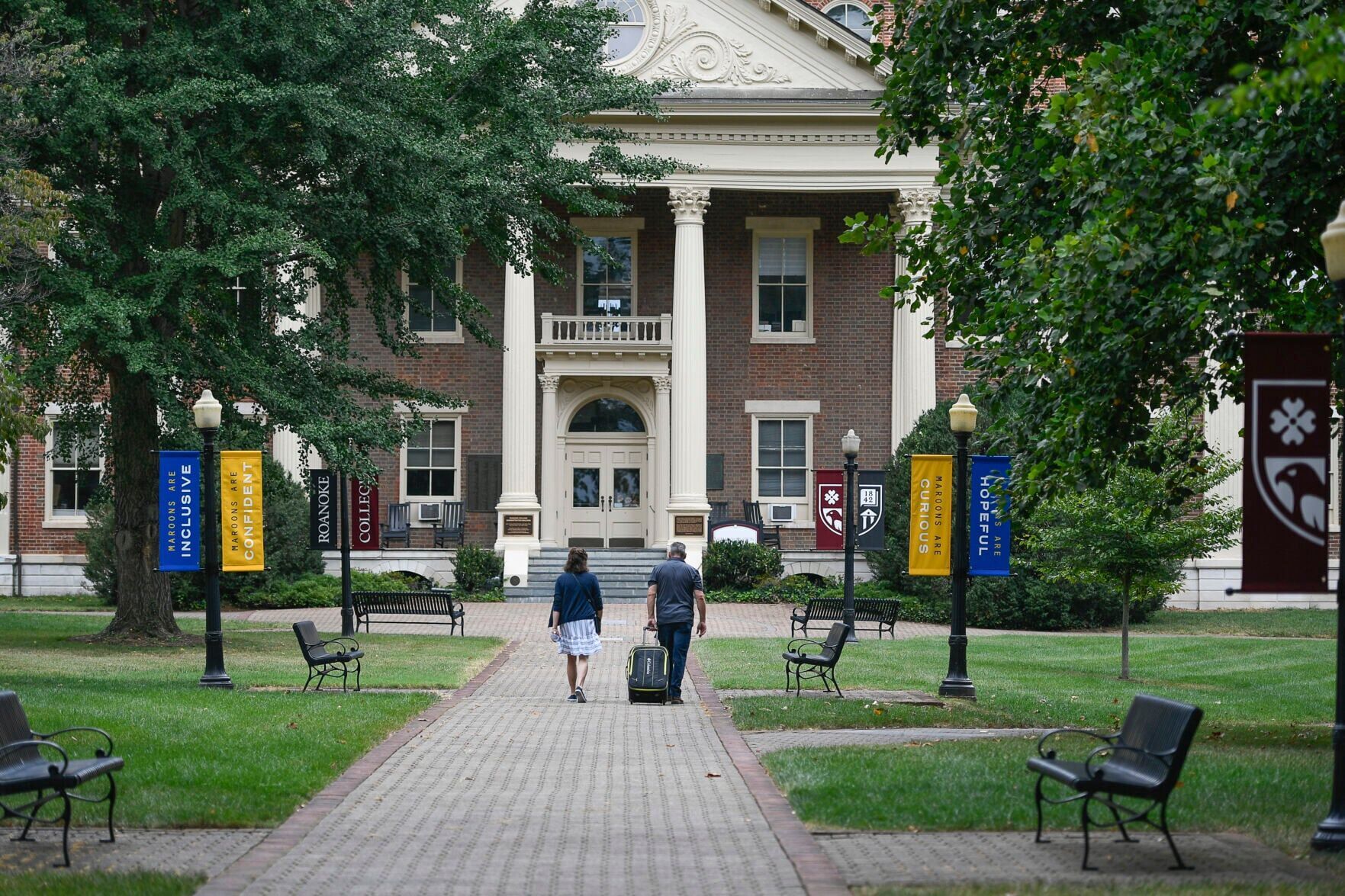
A parent pulls a suitcase up the sidewalk toward Roanoke College's Administration Building during freshman move-in in August 2023.
Also this fall, the Salem-based college will start working with fraternities, whose houses are located on the Elizabeth Campus, to find solutions for their future residential needs. The college will be relocating housing on that campus to the main campus for the 2027-28 academic year, Shushok said.
The college has entered into an agreement that could lead to a partnership to develop the Elizabeth Campus. Although the agreement is currently confidential and the details are still being worked through, Shushok said that "this is an extraordinary opportunity for the college to serve more broadly while also establishing a new revenue stream."
The current proposal would not impact the Environment Center or the athletic fields on the campus.
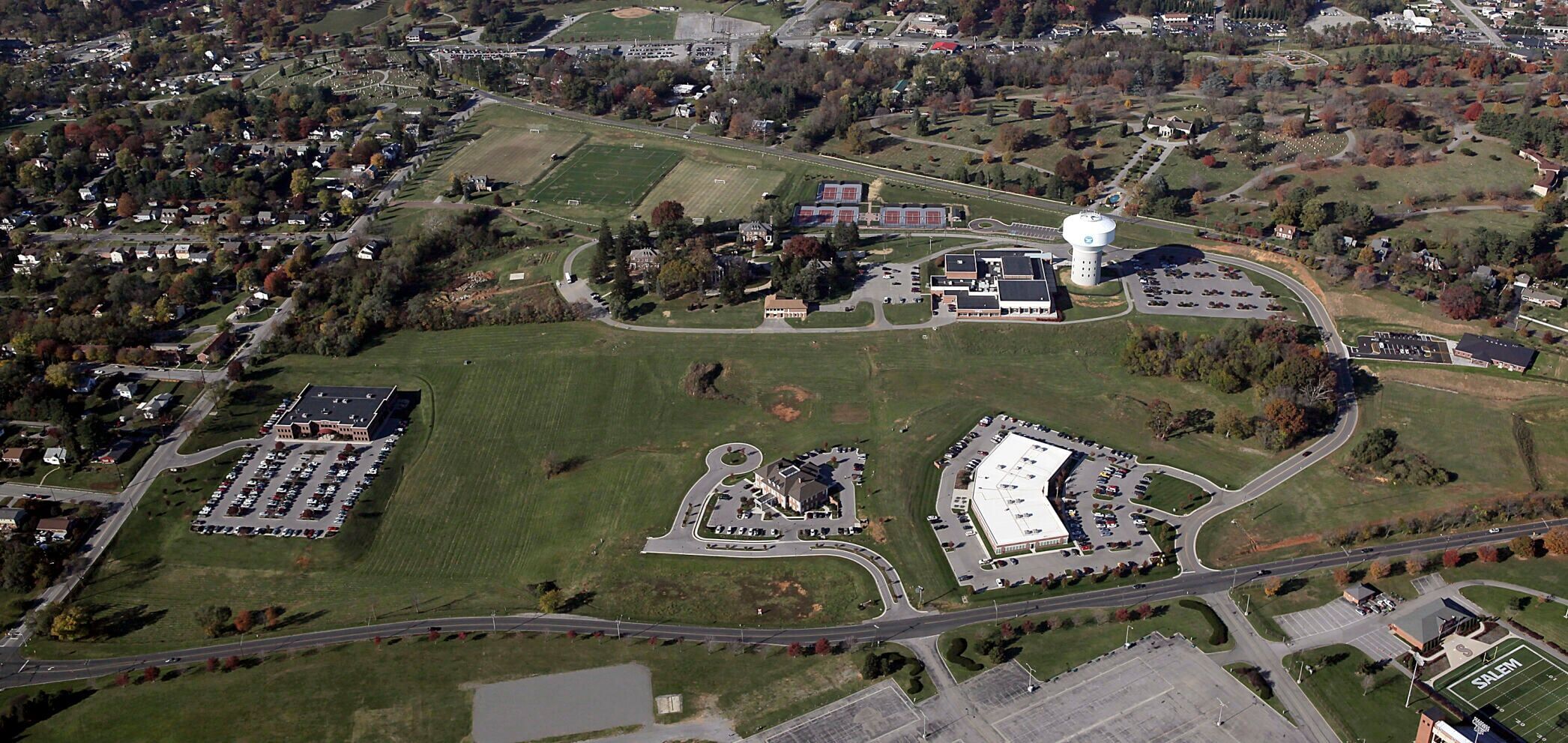
A 2011 aerial image showing the Elizabeth Campus site north of the Salem Civic Center and football stadium.
And when classes start later this month, the college will not accept new major or minor declarations in its health/physical education, physics and French programs. Those programs, and the concentration in German studies, will be discontinued a year from now.
The changes come amid Roanoke College's push to eliminate a $7.5 million "structural cash deficit," Shushok wrote. The current fiscal year is projected to reduce that cash deficit to slightly more than $2 million, marking the lowest operating deficit since his arrival as president in 2022.
It also comes as smaller colleges, particularly private ones, face declining enrollment and the so-called "demographic cliff" of a smaller pool of traditional age students. Roanoke College's enrollment declined by 202 students, or 10%, between fall 2015 and fall 2025, to 1,825 enrolled, according to State Council of Higher Education for Virginia data.
Over the summer, Academic Affairs leadership led an analysis of the college’s nearly 60 programs to assess their market demand, cost of operation and student interest. Shushok wrote that the analysis was "part of of our continual adaptation and the college’s incremental effort toward a balanced budget."
The decision to eliminate programs has no connection with the addition of new academic and athletic programs, according to a Frequently Asked Questions webpage for the update.
Twenty-nine students are currently majoring in the impacted programs. The majority will graduate in May 2027, before program changes begin, Shushok wrote. The six students with later graduation dates will be able to complete their studies through a “teach-out plan.”
Five tenure-track and three contingent faculty members will not have their contracts renewed. They will remain employed at Roanoke College through August 2027, according to the FAQ page.
“Saying goodbye to colleagues is incredibly difficult; these are wonderful educators and respected members of our community,” Shushok wrote in the update. “There is no way to deny the difficulty of this choice and its impact on our colleagues.”
Alexia Partouche (540) 981-3116 alexia.partouche@roanoke.com

Roanoke College President Frank Shushok gives his inaugural address on Oct. 27, 2023.
The Franklin County School Board announced three potential candidates for the recently vacated Union Hall seat in a sparsely attended public hearing held Thursday.
There were only three people in attendance at the start of the evening hearing. Of those, one was a candidate and the other was former Union Hall representative Scott Agee.
Agee announced he was stepping down last month after taking a new job in which he could no longer serve on the board.
Agee spoke briefly at the start of the meeting, taking time to praise the county's school district. He also wished the board members well in choosing his replacement.
"Ask deep questions," Agee told the board about their interview process. "Make sure they are doing it for the right reasons."
Following Agee's statement, Rocky Mount District representative and Chairman Jeff Worley thanked Agee for his time on the board. Agee was elected in 2023, serving less than half of his four-year term.
"I appreciate Mr. Agee's service on this board," Worley said. "I think everyone knows that it is not always easy. It's sacrifice. It's time spent. But you do it for the right reasons, and Mr. Agee did that, and I do appreciate his time on the board."
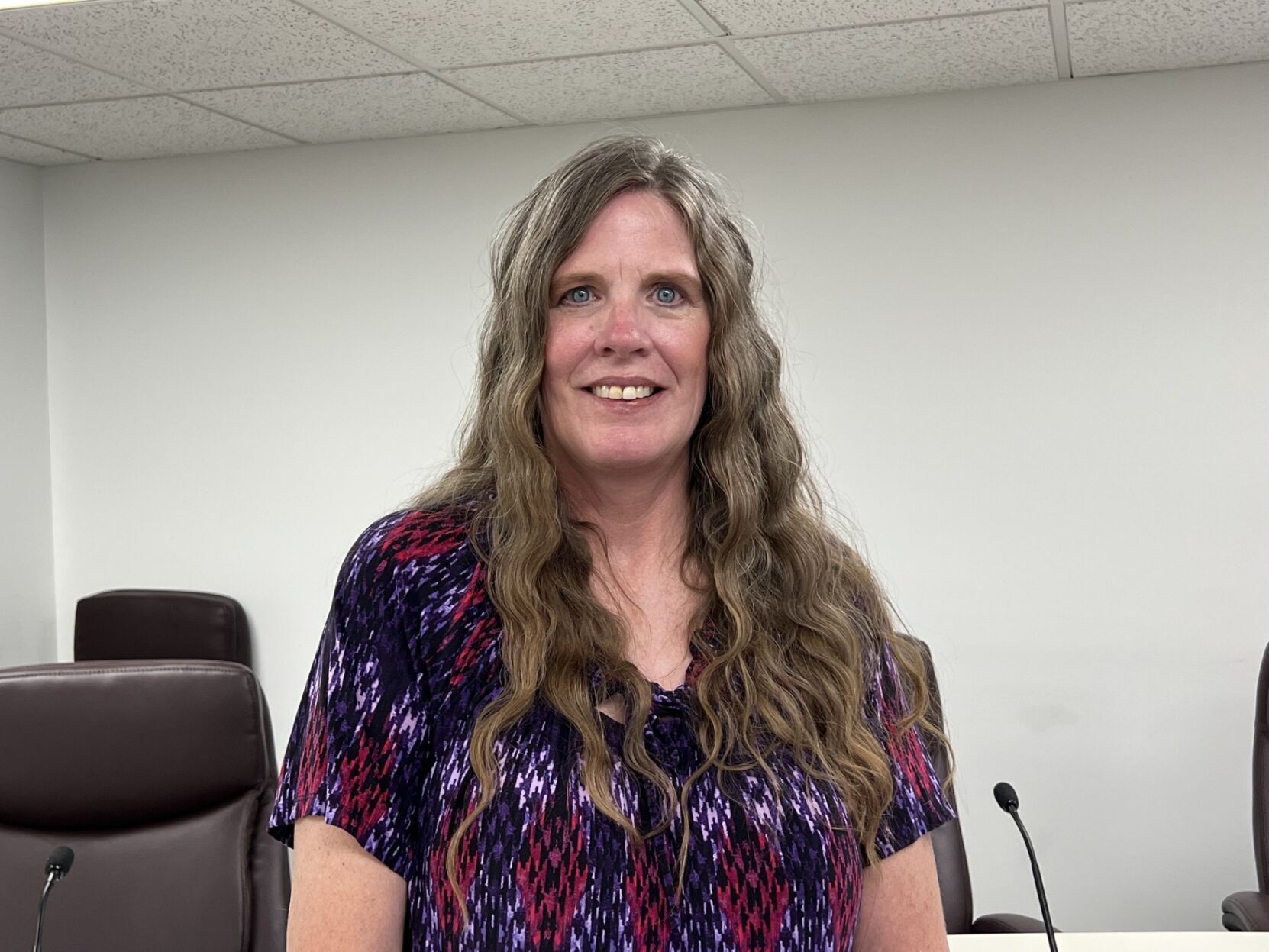
The only other speaker for the evening was candidate Sherrie Mitchell. She is no stranger to serving in county seats, spending 22 years as the Snow Creek District representative on the Franklin County Planning Commission. She recently moved to the Union Hall area, forcing her to step down from her Snow Creek seat.
Mitchell
"We have to ensure that our students are prepared in the basic foundations of education," Mitchell said. "I would look first at ways to encourage pathways to college careers, career and technical education, but also entrepreneurship for our students, a life that involves civic responsibilities. And then to industry-recognized credentials to the extent that we can offer financial literacy."
Mitchell said there are some similarities between her former role on the planning commission and one on the school board. She said her time on the board taught her to be accountable and transparent to the public.
Another candidate announced for the Union Hall seat is Franklin County sheriff's deputy Sandra Ingram. She has served 30 years with the sheriff's office, most recently as a school resource officer at Franklin County High School.
Penhook resident Jessica Brumfield also filed an application for the position. No additional information was provided on Brumfield at Thursday's meeting.
With the three candidates now announced, Worley said the school board will spend the next few weeks holding closed-session interviews with each candidate. The board has until Aug. 22 to fill the seat.
The person chosen will have a brief time in office. Because of the timing of the vacancy, a special election is required in November for voters to choose a new candidate to fill the remainder of the Union Hall District term.
Additionally, the candidate who wins the special election in November will only be able to serve in the position for one year. Next year is the last year of the four-year term for the Union Hall seat, meaning the regular election for the seat is scheduled for November 2027.
Jason Dunovant (540) 981-3324