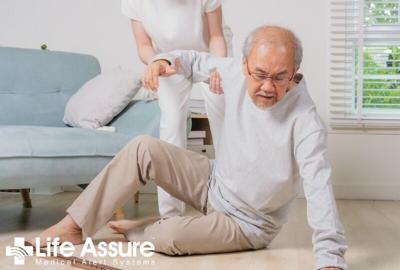

Every autumn, a familiar countdown begins across Canada: the first frost, the first sheet of ice on a walkway, the first storm that turns a familiar sidewalk into a hazard. For older adults, that countdown carries real stakes. Emergency departments see a measurable surge in fall-related visits each winter, and the data behind that surge tells a sobering story about who is most at risk and what happens when they fall.
The Scale of the Problem
Falls are not a minor inconvenience for Canada's aging population. They are a leading public health emergency.
According to the Public Health Agency of Canada, falls are the primary cause of injury-related hospitalizations and injury deaths among Canadians aged 65 and older. Between 2017 and 2022, deaths from falls increased by 51% in this age group, rising from 4,752 to 7,182 annually.
People are also reading…
Hospitalizations tell the same story. Fall-related admissions rose 47% between 2008 and 2019, climbing from roughly 49,152 to 72,392 (excluding Quebec). In 2018 alone, the direct cost of injurious falls among older Canadians reached $5.6 billion, more than twice that of the 25-to-64 age group.
Why Winter Makes It Worse
Cold weather does more than lower temperatures. It changes the terrain seniors move through every day.
Research published in PMC (National Library of Medicine) tracked 14,977 slip-and-fall-on-ice emergency department presentations at Calgary hospitals over 11 years. Winter months were consistently the strongest predictor of ER visits. Same-day ice, snow on the ground, and lingering ice from up to three days prior were all linked to spikes in injuries.
The same research found that women over 50 accounted for 25% more ice-and-snow-related ER presentations than men. Researchers pointed to post-menopausal bone density loss as a key factor, as women are more likely to sustain fractures severe enough to require hospitalization after a fall.
IceTrek's winter injury data adds important context: regions with freezing winters see three times the rate of slips and falls compared to milder climates. Injuries from ice are 10% higher in January than in any other month, and roughly 22.5% of all snow-and-ice falls result in at least one injury.
What Happens After a Senior Falls
The consequences of a fall go well beyond a bruise or sprain.
88% fall-related hospitalizations among seniors involve a hip fracture, one of the most serious injuries an older adult can sustain. Hip fractures frequently require surgery, extended rehabilitation, and in many cases, a permanent transition to long-term care.
Fall-related hospital stays for older adults run an average of nine days longer than stays for other reasons. Nearly 70% of seniors who sustain a fall-related injury seek medical attention, most often through an emergency department.
The psychological toll is just as real. Research consistently links falls among older adults to fear of falling again, social withdrawal, depression, and accelerated physical decline, outcomes that can outlast the original injury by months or years.
Who Faces the Highest Risk
All seniors face elevated fall risk in winter, but some groups are significantly more exposed.
Adults aged 85 and older are hospitalized for fall-related injuries at the highest rates of any demographic. Women in this bracket face a double disadvantage: higher fall frequency and greater injury severity tied to bone fragility.
Geography matters too. Hospitalizations for falls on ice in Alberta are nearly three times those in Ontario, a direct reflection of regional climate intensity. In 2022, Ontario and Alberta together reported more than 200,000 fall-related emergency department visits among adults aged 65 and older.
What Actually Reduces the Risk
Most fall-related injuries among older adults are preventable. The most effective approaches work on multiple levels at once:
Environmental changes: Clearing ice and snow from walkways, adding handrails, improving indoor lighting, and placing non-slip mats in high-traffic areas all reduce fall risk at home and outside.
Footwear: Winter boots with slip-resistant soles make a measurable difference on icy surfaces.
Exercise and balance training: Strength, balance, and flexibility programs are among the best-supported fall prevention strategies in the research.
Medication review: Some medications affect balance and blood pressure in ways that increase fall risk. Regular reviews with a physician can catch and address these factors.
Personal emergency response: Wearable alert devices, such as a seniors' panic alarm, allow older adults to call for help the moment a fall happens. Delayed assistance after a fall significantly worsens outcomes, making immediate access to help a genuine safety factor.
Why This Problem Is Only Getting Bigger
Canada's aging demographics make this a policy issue that won't resolve itself.
Statistics Canada projects that older adults will make up more than one-fifth of the national population by 2068, with the 85-and-older group growing fastest. More seniors means more falls, more hospitalizations, and more pressure on a healthcare system already absorbing billions in fall-related costs each year.
Every sector connected to aging has a role to play: healthcare providers, municipal planners, insurers, housing designers, and family caregivers alike. The infrastructure decisions made now, from safer sidewalks to better-lit public spaces to accessible housing, will directly shape fall rates for the next generation of older Canadians.
Organizations like Life Assure, which focus on personal safety technology for older adults, are part of that broader effort. So are the health authorities funding exercise programs, the urban planners redesigning public spaces, and the families figuring out how to support aging loved ones through the months when the risk is highest.
Winter is predictable. So is the injury spike that follows. The data is clear on both the scale of the problem and the measures that can reduce it, which means the path forward is less about new discoveries and more about acting on what is already known.