Is an ancient compound the new “wonder drug”?
People are also reading…

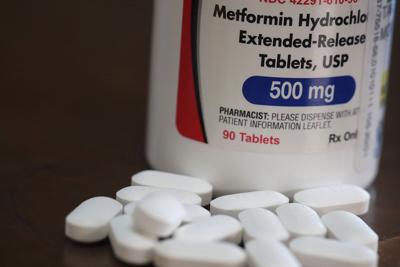
In this photo illustration, Avkare metformin ER 500 mg tablets are shown on July 9, 2020, in Chicago, Illinois. (Scott Olson/Getty Images/TNS)


8 strategies to help maintain strength as you age
Invest in a trainer

A licensed and credentialed trainer can design a personalized program and teach you proper form and technique. Get referrals from local gyms, and many trainers now offer virtual workouts. After you learn the basics, you can work out on your own.
Get free

Training with free weights, like dumbbells, kettlebells and barbells, is often better for muscle building than machines, Shawn Pedicini, a physical therapist at Harvard-affiliated Spaulding Rehabilitation Hospital, says. “However, machines are ideal if you have balancing issues or other limitations that make it safer to sit during weight training,” he says. You can also go back and forth between free weights and machines depending on the type of exercise and which muscles you are working on.
Leg up

While you need full-body workouts that address all your major muscles, older adults should pay special attention to their leg muscles: quadriceps and hamstrings (in the thighs), the gluteals (in the buttocks) and the calf muscles. “These are involved in many daily functional movements like squatting and climbing stairs,” Pedicini says. Compound exercises that work different muscles in one movement — like squats, deadlifts and lunges — are great for building leg muscles.
Weight, reps, sets

Pedicini says fewer reps with heavier weights helps you gain the most muscle. “An ideal routine would be eight repetitions for each exercise for three sets total.” But you can adjust this as needed. “People with movement issues might need to use lighter weights and do more repetitions.”
Find your tempo

Lifting should be done at a seven-second tempo. That means three seconds to lift the weight, a one-second pause and three seconds to lower it. If you can’t lift the weight at least eight times, use a lighter weight. When you can comfortably perform eight reps without completely tiring the muscle, increase the weight. “Muscles grow stronger only if you keep adding resistance,” Pedicini says.
Two days is plenty

Ideally, you should do weight training at least twice a week. “Two days of full-body training can produce measurable changes in muscle strength,” Pedicini says. You often can feel results after four to six weeks of consistent training.
Give it a rest

Always allow at least 48 hours between sessions for muscle recovery. Some people prefer to break their workouts into two parts: upper body and lower body. In that case, you can perform upper-body exercises one day and lower-body the next.
Always raise the bar

Use enough weight so that the last few reps of a lifting routine are challenging.
“Don’t forget to consistently challenge yourself as you progress,” Pedicini says. “It’s necessary to gain the muscle and strength changes you want and need.”