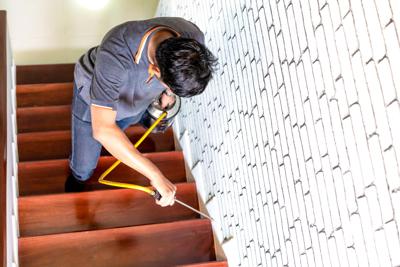

An extermination pro will both get rid of pests and address how they’re getting into the house. (Dreamstime/TNS)
People are also reading…
12 unique gardening hacks to try this spring and summer
Tea time

Peter Miller, founder of Gardening Stuffs, mentions that you can use more than just water to keep your plants nourished. “You need to constantly add nutrients to your plants, you could add compost and instead of plain, old water you could water your plants with either chamomile tea, room temperature boiled vegetable water, or there’s also the option of mixing water with some honey or hydrogen peroxide to keep your plants healthy,” Miller said.
No flood zone

While a leaky planter can be frustrating, George Pisegna, deputy chief of the Horticultural Society of New York, notes that you should always poke a hole in the bottom of your container so it doesn’t become a “pond.” “If there's not a hole and you put your planter outside and it rains, you're going to flood your plant and it's going to drown,” Pisegna says.
Coffee break

“To increase your soil acidic levels, then start to add FRESH coffee grounds near the soil. A common myth is to use "used" or washed coffee grounds to the soil. When you wash your coffee grounds it pretty much reduces its pH level from acidic to neutral so by adding it to the soil after this it doesn't have any effect on (your plants),” says professional landscaping contractor Andrew Wilson.
Salt of the earth

Mindy S. McIntosh-Shetter, a gardening writer and the author of "The Unofficial Outlander Book of Herbs," has a tip for making sure your roses and tomatoes come to full bloom this season, “Add Epsom salt to the hole prior to planting roses or tomatoes and every time you water. This common drugstore staple increases bloom production.” “Epsom salt adds some magnesium and phosphates to your soil, which really helps plants with budding and producing fruit,” says Pisegna.
'Til the water runs dry

If you’ve grown weary of the water from your plants leaking out onto your windowsill, table or other, plant holding surface, place a coffee filter in the bottom of your pot, Pop Sugar says.
Wine to water

According to Balcony Garden Web, a wine bottle is a great way to constantly give water to your plants using a terra cotta stake that absorbs the water and hydrates the soil. You can also use the bottles as planters, borders, decorations or even privacy shields.
Create-your-own fertilizer

Use kitchen scraps to do a mini compost and fertilize your plants.
Carry out

George Pisegna says takeout containers can make excellent trellises for your urban garden. “You don’t have to worry about drainage, you don't have to worry about anything…” And those aren’t the only homemade trellises you can create. “You could use an old window screen, you could use any type of wooden trellis. You could use a rake, you could use bamboo sticks,” Pisegna said.
No light? No problem.

If you want to start a garden but don’t have enough sunlight in your residential or apartment location, no problem, Pisegna says. “Stick to your easy greens.” This includes leafy greens like kale, parsley and lettuce as well as herbs like thyme, parsley and marjoram.
Seeds of innovation

According to Buzzfeed, an array of objects you’re likely to find around the house can hold your newly planted seeds. Buzzfeed lists lemon rinds, ice cream cones and egg cartons as great starters for your next batch of seeds.
Got milk (jugs)?

Shield your crop from frost and pests by covering growing plants with milk jugs.
Dust buster

Dusting your plants’ leaves helps photosynthesis. Apartment Therapy suggests using a sponge or even a banana peel