
Elected local government officials would no longer be allowed to sign agreements to keep what they're doing secret when carrying out their official duties under a bill sponsored by state Sen. Mike Jones, D-Richmond.
People are also reading…
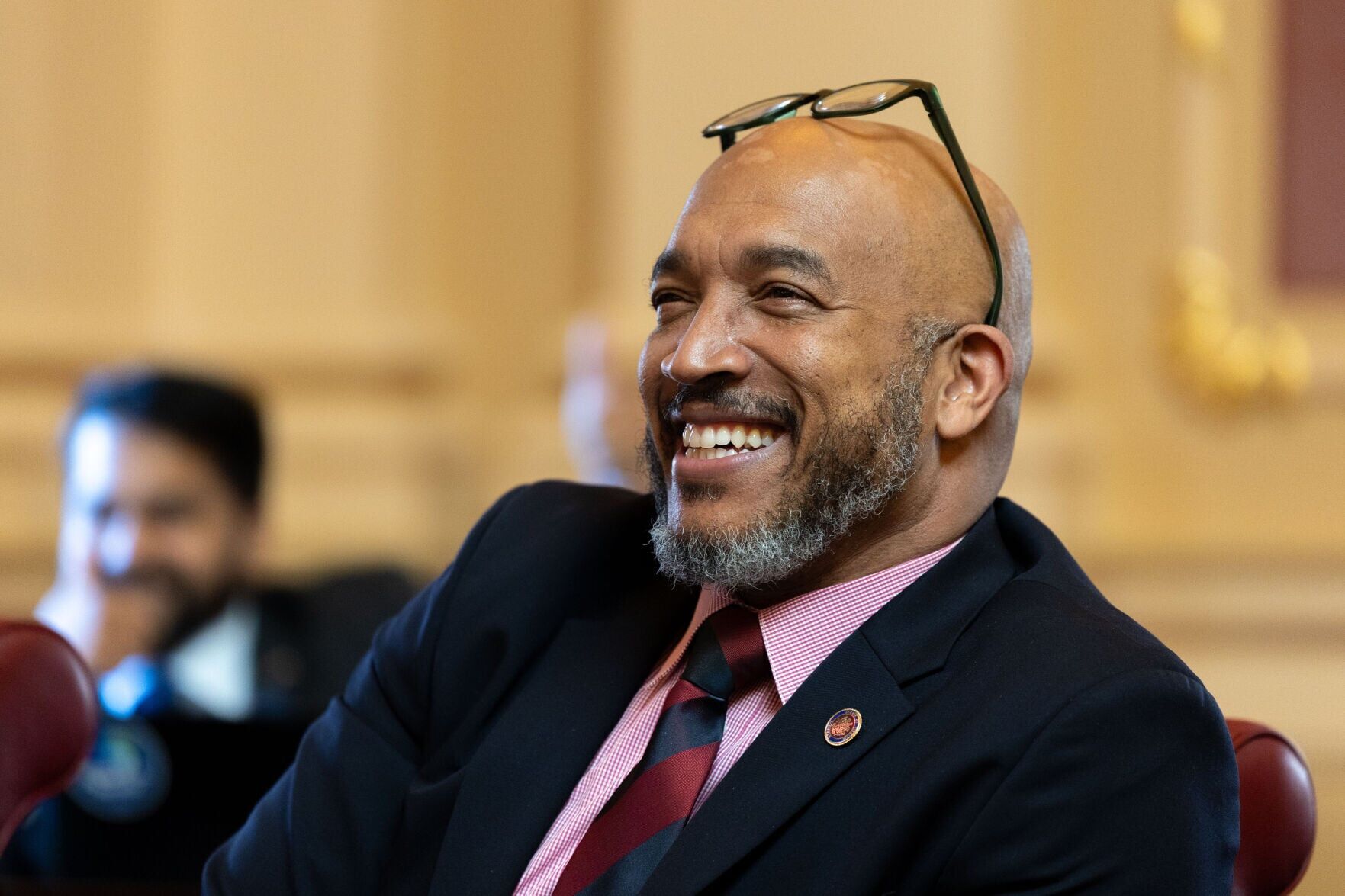
State Sen. Mike Jones, D-Richmond, is seen on the floor of the Virginia Senate on March 10. Elected local government officials would no longer be allowed to sign agreements to keep what they're doing secret under sweeping new language in a bill sponsored by Jones.
RTD coverage of Spanberger's energy, data center plans
Gov. Spanberger discussed her energy plan and data centers at the Virginia Clean Energy Summit, saying she expects continued discussion of the state's data center tax exemption. Here's a look at those plans.

Gov. Abigail Spanberger’s new energy plan, a sharp break from former Gov. Glenn Youngkin’s, reaffirms the Virginia Clean Economy Act and says affordability and reliability can be met with clean energy sources.

Gov. Abigail Spanberger's new energy plan details the costs of various options for Virginia's energy future. You can read Spanberger's plan here.

Virginia will move to give local and state officials more muscle to say when, where and how new data centers are built, under Gov. Abigail Spanberger’s new data center accountability framework.

See Spanberger’s full plan to tighten oversight of new data centers, end state subsidies and address their effects on energy, water, land, pollution and surrounding communities.
Recent Times-Dispatch reporting on data centers
Here's some recent Times-Dispatch reporting on data centers.

A bill aimed at limiting pollution from data centers’ backup diesel generators prompted a revision that now only calls for a study of more businesses’ generators.

The increase amounts to $11.20 more per month for the typical residential customer. Northern Virginia Electric Cooperative serves 180,000 homes and businesses.

The regional electric grid that covers Virginia should stop plugging in data centers until it has enough high-voltage lines and power plants to meet their demands for electricity, the grid’s watchdog says.

The state's data center boom is the subtext to increasingly intense politicking over longtime Virginia issues — climate change, electricity rates and the powers of local governments.

Data center developers are now eyeing the Richmond area. While counties welcome the sites' tax revenues, residents' concerns have prompted developers to withdraw some proposals and Henrico imposed further oversight.

Proponents say data centers bring localities enormous revenues and opportunities. Opponents raise concerns about their big demands for power and compatibility with neighborhoods.

The state's telecommunications infrastructure, tax breaks, workforce and officials' welcoming attitude have helped make Virginia the world's data center capital.

Virginia’s data center boom means new terms to understand. Here are some key words and phrases.

The 451 now running in Virginia, home to the largest concentration of data centers in the world, currently use 3,583 megawatts, or enough electricity to power nearly 896,000 homes.

These buildings that house key IT infrastructure are big, expensive and need a lot of energy but promise big revenues for localities.