RICHMOND — A docuseries launched on Feb. 12 by Amazon Prime Video, “Soul Power: The Legend of the American Basketball Association,” revisits the upstart league with a backdrop of the civil rights movement and other powerful forces shaping the country during the early 1970s.
People are also reading…

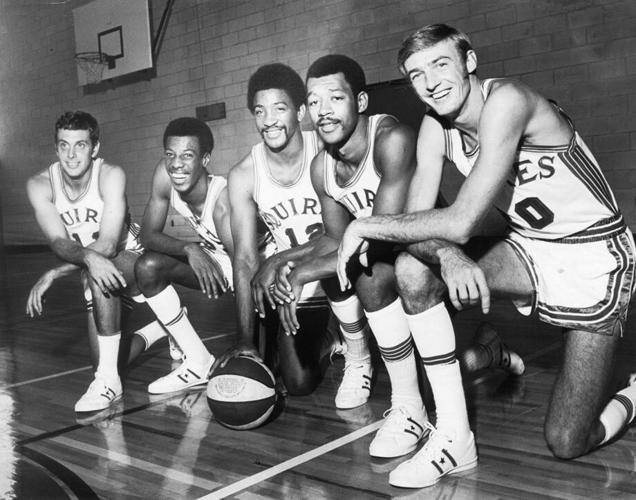
This September 1970 image shows players vying for roster spots on the Virginia Squires, a franchise in the American Basketball Association. From left are Larry Brown, Charlie Scott, Henry Logan, Roland "Fatty" Taylor and Mike Barrett. The team, which had moved from Oakland, Calif., to Washington, D.C., to Richmond in a span of two years, played in arenas from Roanoke to Norfolk during its time in Virginia starting in 1970.

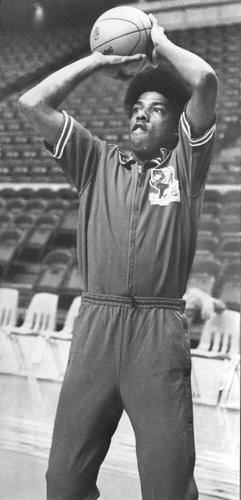
For the Virginia Squires, Julius Erving averaged 27 points in 1971-72, and 32 in 1972-73. He was traded to the New York Nets for cash during the summer of 1973.

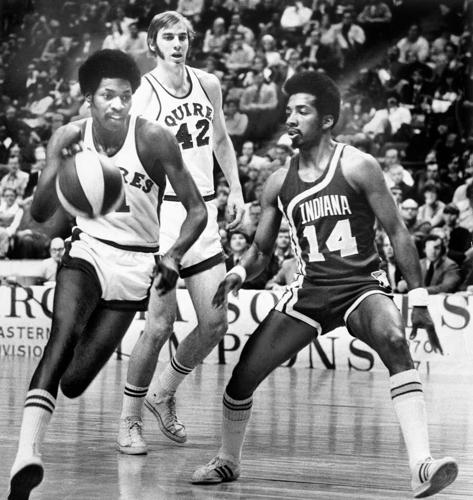
In March 1972, the American Basketball Association’s Virginia Squires lost to the Indiana Pacers 117-112 at the Richmond Coliseum. From left are Bernie Williams, who scored 19 points for the Squires; Jim Eakins, who added 15; and Freddie Lewis, whose 25 points led the Pacers on the night.

A young Julius Erving was the leading man for the Virginia Squires, the state's first and only major league sports franchise.
From the Archives: The Virginia Squires of the ABA
021626-rtd-sp-abap01
This September 1970 image shows players vying for roster spots on the Virginia Squires, a franchise in the American Basketball Association. From left are Larry Brown, Charlie Scott, Henry Logan, Roland "Fatty" Taylor and Mike Barrett. The team, which had moved from Oakland, Calif., to Washington, D.C., to Richmond in a span of two years, played in arenas from Roanoke to Norfolk during its time in Virginia starting in 1970.
Squires

January 1976: Rookie goes against rookie at the Coliseum. San Antonio’s Mark Oberding (left) defenses Squire Mel Bennett.
Squires

September 1971: Working out—The Virginia Squires American Basketball Association opened the first of two days of workouts yesterday at Ft. Eustis’ Anderson Fieldhouse. George Irvine (30) dribbles during the warmup while teammates Bill Bunting (16), Jim Eakins (42) and Mike Barrett (20) look on.
Squires

April 13, 1973.
Squires

September 1975: Willie Wise gets the word from the boss. Squires’ coach Al Bianchi talks with veteran forward at practice.
Squires

September 1972: Fatty Taylor (right) explains intricacies of defense. Rookies Dave Twardzik (13), Billy Shepherd take lessons during preseason camp.
Squires

TWO SQUIRES ROOKIES DISCUSS TRAINING CAMP / Julius Erving (left), Willie Sojourner await today's opening. September 12, 1971.
Squires

Nov. 26, 1972: Julius Erving 'Stuffs' Two of 46 for Squires
Squires

Julius Erving of the Virginia Squires on April 12, 1972.
021626-rtd-sp-abap03
In March 1972, the American Basketball Association’s Virginia Squires lost to the Indiana Pacers 117-112 at the Richmond Coliseum. From left are Bernie Williams, who scored 19 points for the Squires; Jim Eakins, who added 15; and Freddie Lewis, whose 25 points led the Pacers on the night.
Squires

In February 1976, Dave Twardzik of the Virginia Squires took on Artis Gilmore of the Kentucky Colonels en route to a 123-107 Squires victory before a crowd of only 1,017 at the Richmond Coliseum. This was the last season for the American Basketball Association and the Squires, and their 15 wins matched their mark from the previous year as the worst in league history.
Squires

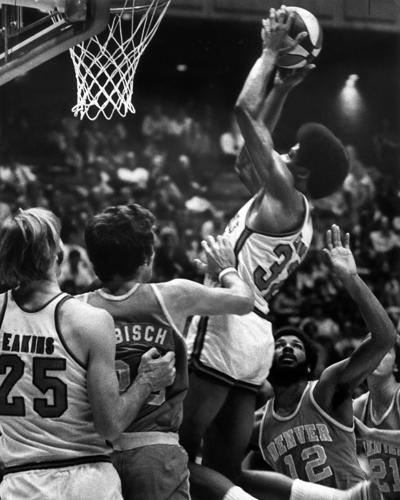
In December 1975, Mike Jackson of the Virginia Squires challenged Denver’s Ralph Simpson during an American Basketball Association game at the Richmond Coliseum. The Squires moved to Richmond in 1970 after spending a year in Washington as the Washington Caps.
Squires

In September 1972, Rudy Peele (left) and Al Sanders shared a laugh during a break at the Virginia Squires rookie tryout camp in Richmond. About 16 players were expected at the camp, including four who were invited after making an impression at a three-day open tryout in Norfolk the previous week. That tryout attracted 81 players who hoped to catch on with the American Basketball Association team.