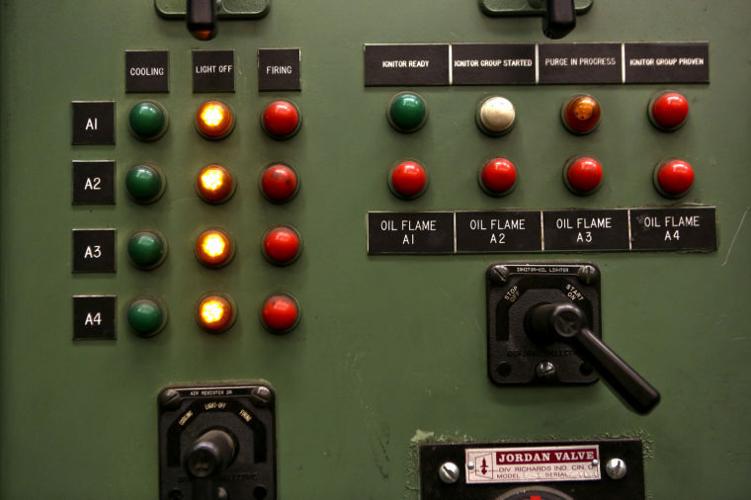
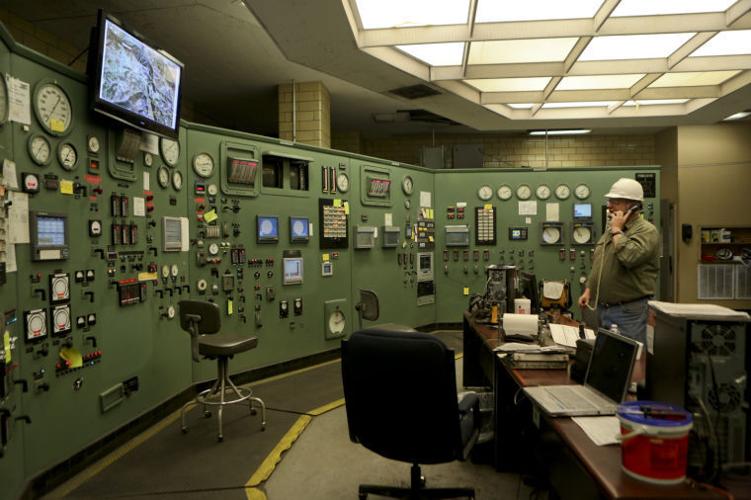
The boiler panel lights control the pulverizers A-F where the coal is ground into fire at the Glen Lyn Power Plant.
STEPHANIE KLEIN-DAVIS
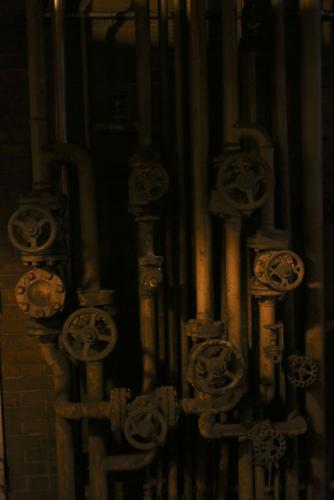
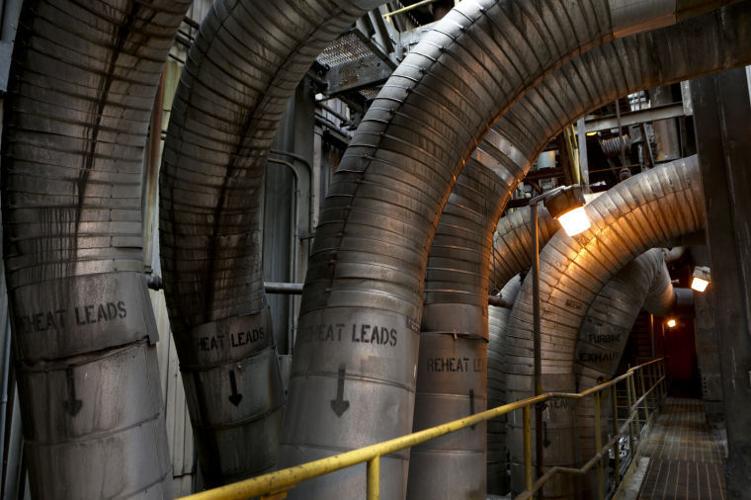
Old pipes from the Glen Lyn Power Plant which was built in the early 1900's and will soon be closed.
STEPHANIE KLEIN-DAVIS | The Roanoke Times
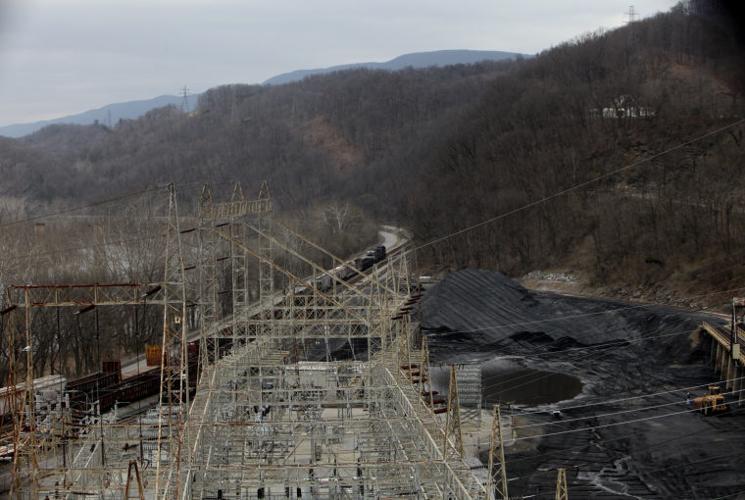
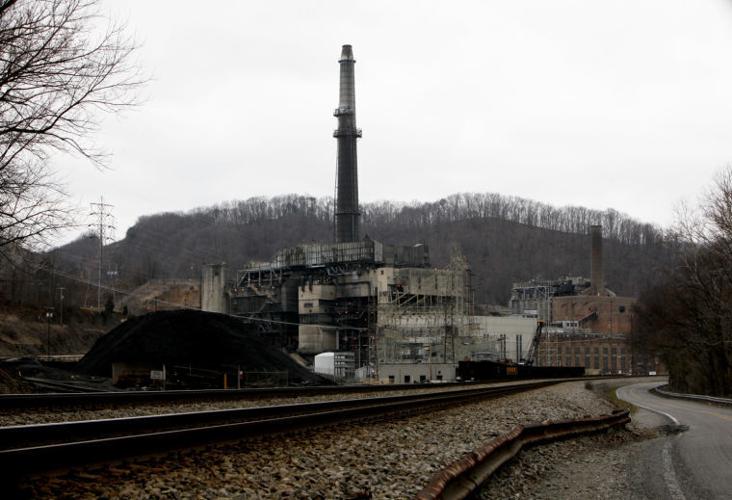
The Glen Lyn power plant in Giles County was built in 1919 and ceased operations in 2015.
The Roanoke Times | File 2015
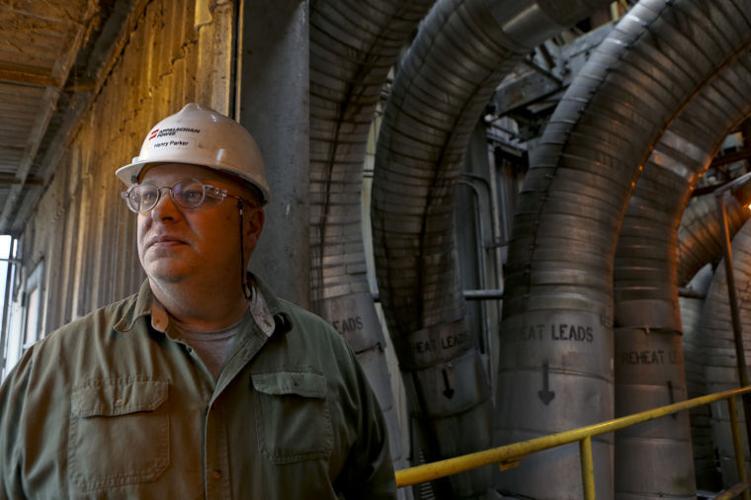
Henry Parker, who lives in Blacksburg, has worked at the Glen Lyn plant for 33 years. He will transfer to a job with Appalachian’s hydro-electric group in Roanoke after Glen Lyn closes.
STEPHANIE KLEIN-DAVIS | The Roanoke Times
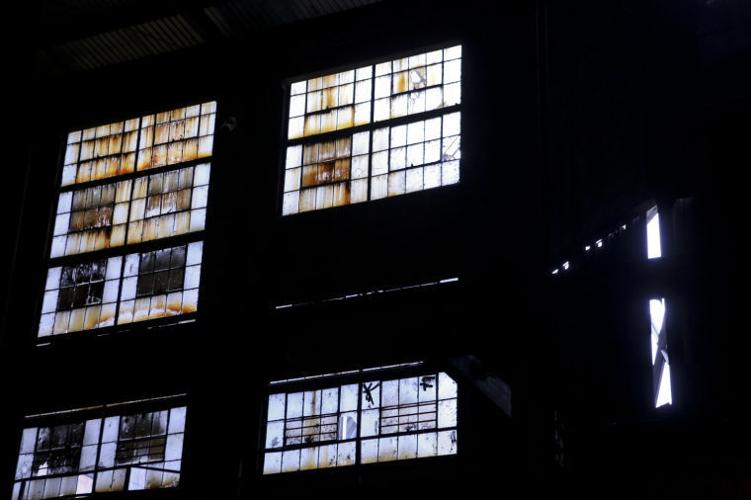
Windows bear the signs of age in a cavernous room of the plant that once housed 13 boilers. The space is now used for storage.
STEPHANIE KLEIN-DAVIS
Brad Jones has been the Plant Manager of the Glen Lyn Power Plant since 1994.
STEPHANIE KLEIN-DAVIS | The Roanoke Times
Appalachian Power Co. retired its coal-burning plant in Glen Lyn in Giles County in 2015.
The Roanoke Times | File 2015
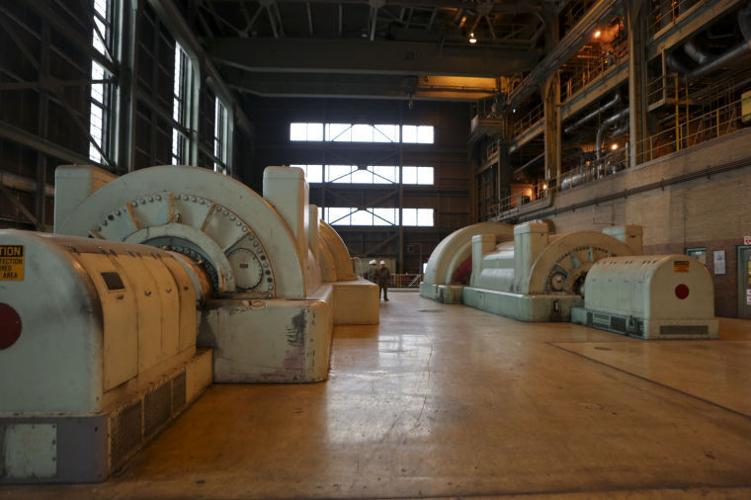
Unit 6 consists of two large turbine units that produced 240 megawatts of electricity at the Glen Lyn Plant.
STEPHANIE KLEIN-DAVIS | The Roanoke Times
Water is pumped through these large pipes to be cooled before being discharged from the Glen Lyn Plant back into the New River.
STEPHANIE KLEIN-DAVIS | The Roanoke Times
Henry Parker has been the production supervisor at the Glen Lyn Power plant for 33 years. He stands in one of the plant's control rooms.
STEPHANIE KLEIN-DAVIS | The Roanoke Times
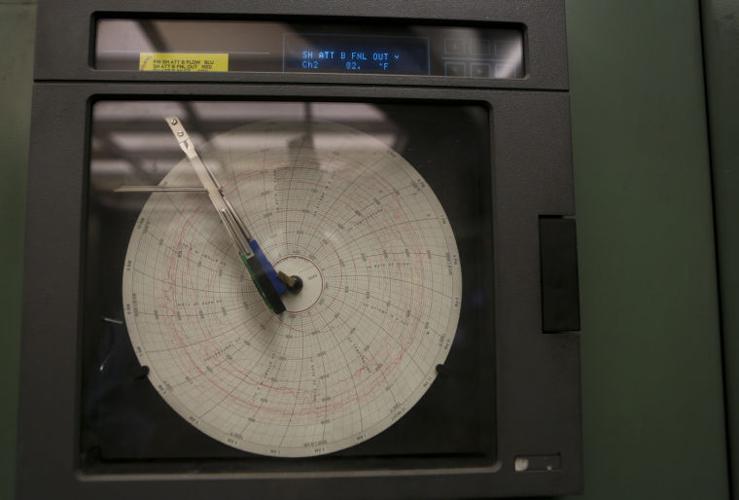
Steam charts record the measurements of the water temperature from the boilers in the Glen Lyn Plant onto round graph paper sheets in one of the control rooms.
STEPHANIE KLEIN-DAVIS | The Roanoke Times
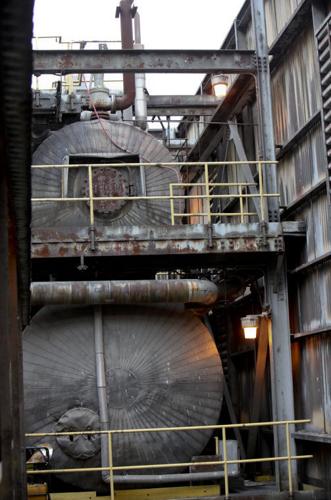
Cooling tanks reduce the temperature of the water from the plant before it is discharged into the New River.
GLEN LYN — Pulverizers grind the coal to powder. That transformation and the intense heat of boilers have enabled the power plant at Glen Lyn to release the solar energy captured many millions of years ago by giant ferns and other swamp-dwelling vegetation.
Henry Parker, who lives in Blacksburg, has worked at the Glen Lyn plant for 33 years. He will transfer to a job with Appalachian’s hydro-electric group in Roanoke after Glen Lyn closes.
Steam charts record the measurements of the water temperature from the boilers in the Glen Lyn Plant onto round graph paper sheets in one of the control rooms.