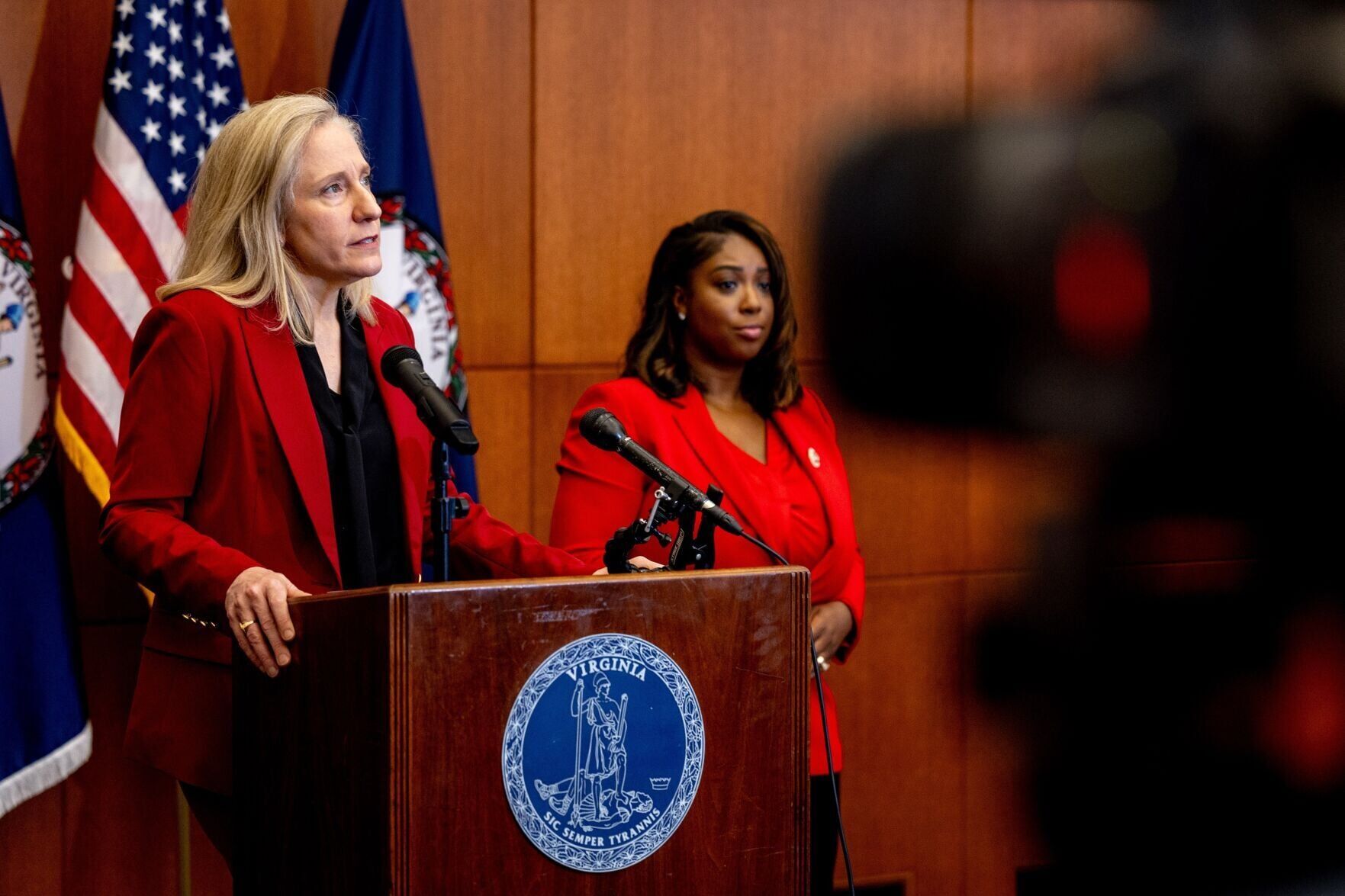
RICHMOND — Gov. Abigail Spanberger and two lawmakers say they have resuscitated legislation to create a legal market for selling cannabis in Virginia.
Though the governor vetoed the measure, nearly killing it for the year, she announced a deal Tuesday alongside the bills' sponsors, Sen. Lashrecse Aird, D-Petersburg, and Del. Paul Krizek, D-Fairfax.
They intend to put the framework for a cannabis market into the state budget, which must be signed by the end of the month to avoid a government shutdown. The state would allow sales beginning July 1, 2027, and the market, Spanberger said, would be "safe, legal and well-regulated."
![]()
Del. Paul Krizek, D-Fairfax, who sponsored the bills
alongside Sen. Lashrecse Aird, D-Petersburg, said that
building the market correctly is as important as launching it,
adding that the final product "reflects years of
work."
MIKE KROPF, TIMES-DISPATCH
Earlier this year, Spanberger proposed an array of changes to the bills, delaying the start date, reducing the number of stores and hiking penalties for offenders. After lawmakers refused to accept her amendments, Spanberger vetoed the legislation.
But the governor said she was still committed to a marijuana market, and negotiations began immediately. Though the governor relented on some aspects, her priorities remain intact, she said.
The trio agreed to the governor's later start date and compromised on a 6% cannabis tax that will rise to 8% on July 1, 2029. Initially, Spanberger wanted a higher tax so marijuana can provide a revenue stream similar to beer, wine and liquor. But she acknowledged that a lower tax rate will help sway buyers to purchase from legal sellers. Buyers also will have to pay the state sales tax and a local tax, meaning the total tax rate in 2027 will range between 12.3% and 16.5%. Virginia's proposed tax rate is lower than most other states.
![]()
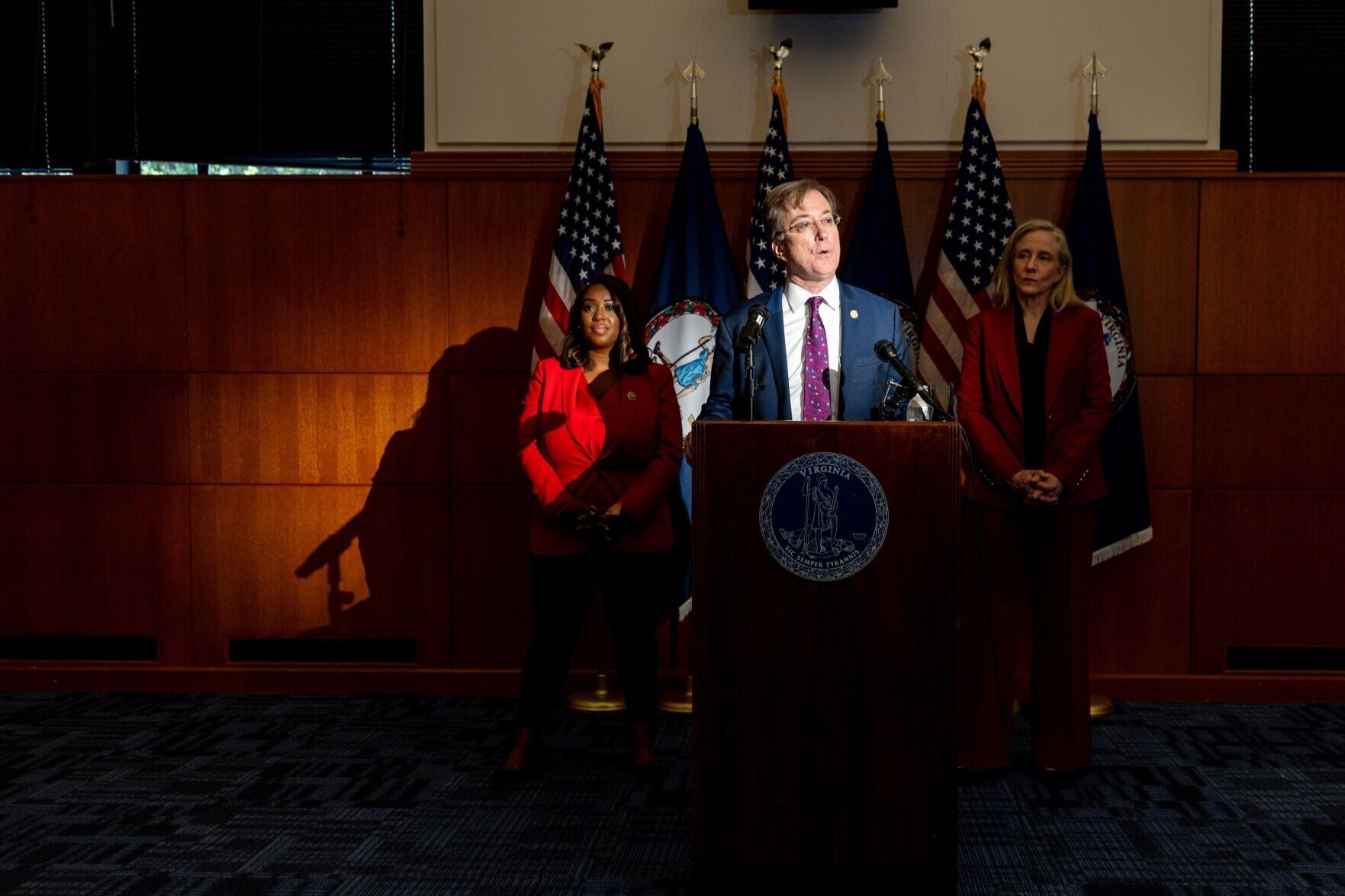
Gov. Abigail Spanberger speaks Tuesday at a news conference
announcing there is a deal to authorize cannabis sales and put the
legislation in the upcoming budget.
MIKE KROPF, TIMES-DISPATCH
Under the agreement, the state will allow 350 stores, but it will not award every license immediately. A slower rollout is designed to give small businesses time to compete with large manufacturers. Regulators will decide where to award licenses.
Concerning penalties, the state will give harsh punishments to people who sell to underage customers, which Spanberger said was a priority. But the governor agreed to drop heavy prison sentences on people who grow or transport excessive amounts of marijuana. The governor and lawmakers agreed to delay until 2027 a provision that would fine a person $250 for consuming marijuana in public. Legislators will continue discussing that law next year, Krizek said. It would be illegal for a person to possess more than 2 ounces of marijuana.
"We all share the belief that recriminalization is not the answer," Aird said.
For now, tax revenue will go to the general fund. The state intends to spend the money on pre-kindergarten programs, K-12 education, substance use disorder programs and public health. Initially, lawmakers planned to divert a percentage of revenue to the cannabis equity reinvestment fund, which is designed to help communities hurt by past marijuana laws, but Spanberger diverted the tax money away from that fund. Lawmakers will continue discussing the subject next year, Krizek said, who added that the topic of tax revenue was too big an issue to include in the current framework.
The latest version of the law would make illegal intoxicating hemp products. Currently, a hemp product is legal if it contains 25 times as much CBD as THC, which Aird has called a "loophole." A Republican lawmaker said this provision would put Virginia hemp sellers out of business.
![]()
Gov. Abigail Spanberger, along with the bills' two sponsors,
intend to put the framework for a cannabis market into the state
budget. Spanberger said the market would be "safe, legal and
well-regulated."
MIKE KROPF, TIMES-DISPATCH
The final product "reflects years of work" and compromise, Krizek said. Building the market correctly is as important as launching it, he added.
To make the agreement a reality, the House, Senate and governor must agree to a state budget. For months, that process has been consumed by debate concerning data centers and their tax breaks.
Republicans mostly have voted against legalizing marijuana sales. Senate Minority Leader Ryan McDougle, R-Hanover, said he disfavors the legislation and the fact that Democrats are legislating through the budget.
"I'm not in favor of the retail market of marijuana in general, but doing significant policy through the budget is not a plan," he said.