Henry County has adopted its first specific zoning rules for data centers, creating a district that currently exists nowhere on the county’s zoning map and requiring any future developer to clear three public hearings before a project can move forward.
![]()
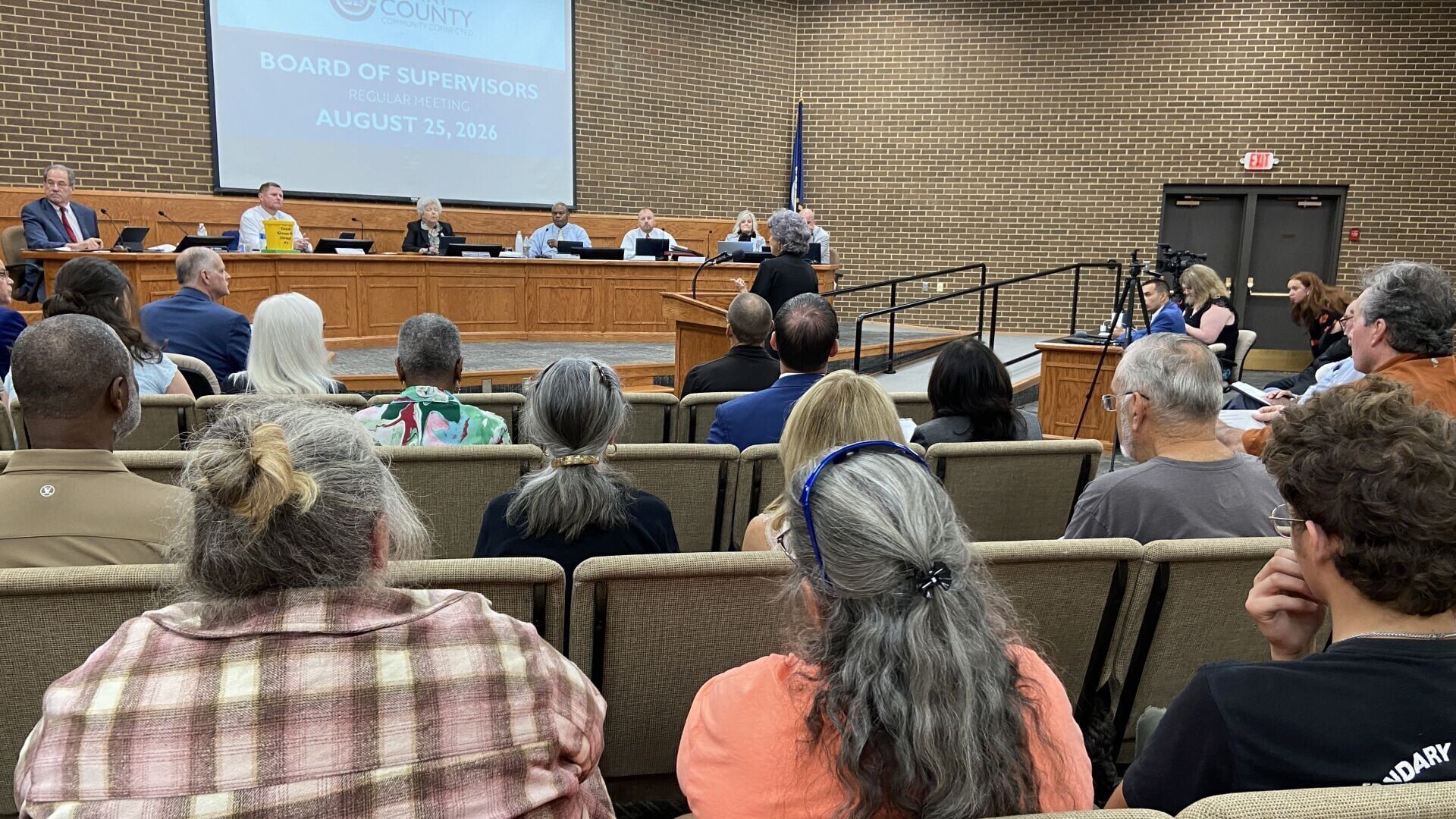
A regular meeting of the Henry County Board of Supervisors,
where members discussed and unanimously approved strict data center
rules, drew a strong crowd on Tuesday.
BILL WYATT, Martinsville Bulletin
The Henry County Board of Supervisors approved the ordinance Tuesday, nearly a month after 37 residents spoke against an earlier proposal and urged the county to impose stronger protections or halt data center development.
No data center has been proposed in Henry County, officials stressed during Tuesday’s meeting, and the vote did not approve or rezone property for one.
Instead, the ordinance creates a Data Center District, or D-C District, that could be applied to a property only after public hearings before the Henry County Planning Commission and Board of Supervisors. If the board approved the rezoning, the developer would then need a special use permit from the Board of Zoning Appeals, which would conduct a third public hearing.
The zoning appeals board also could impose conditions addressing site-specific concerns such as construction access, equipment staging and road maintenance.
![]()
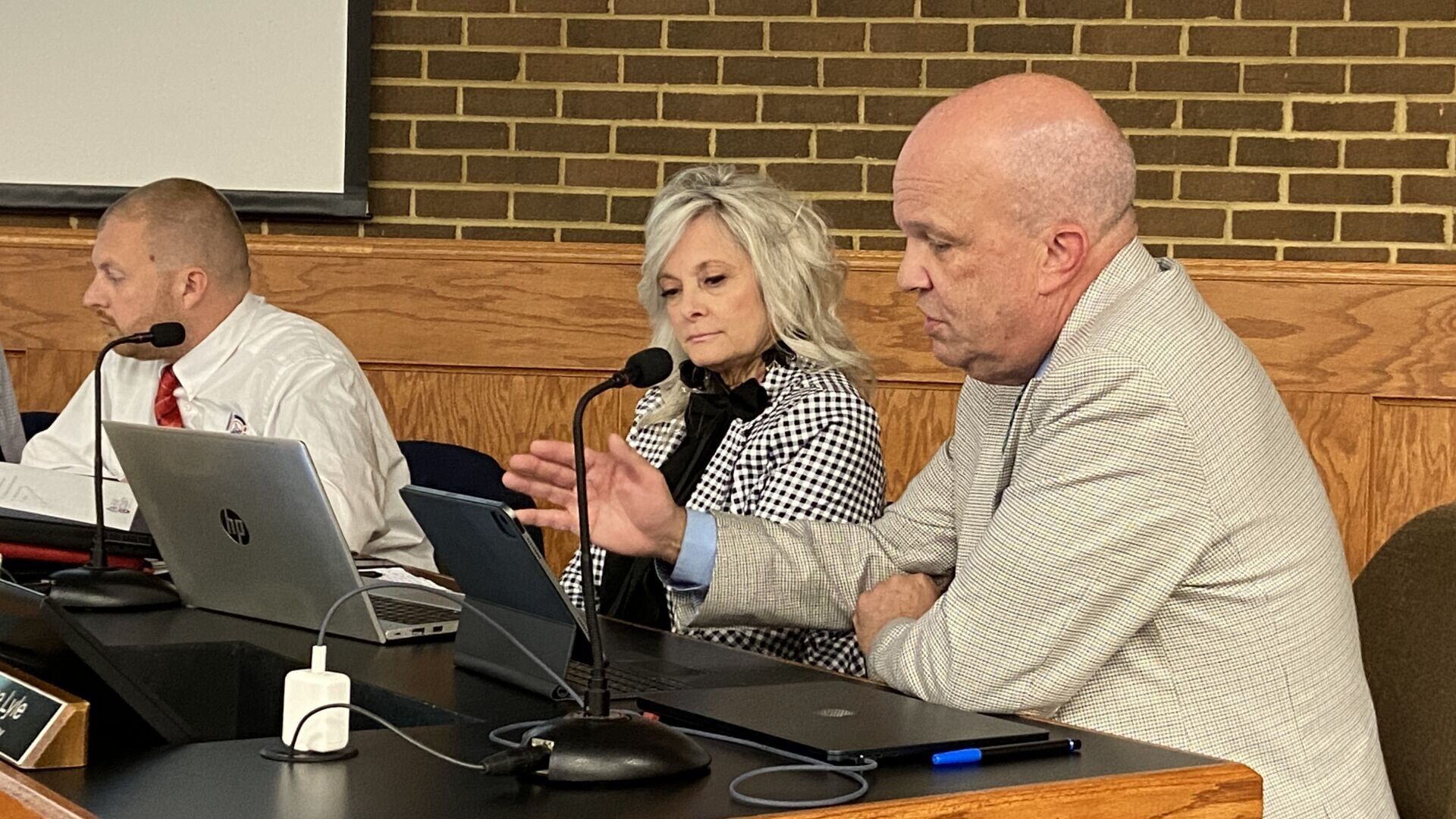
County Attorney George Lyle explains the news data center
rules.
BILL WYATT, Martinsville Bulletin
County Attorney George Lyle described the process as both protective of residents and fair to landowners who may want to pursue a project.
“There’ll be a lot of transparency, a lot of opportunity for public input,” Lyle said.
The new approach replaces a proposal that would have allowed data centers on industrially zoned property with a special use permit. Under that version, a project would have required only the public hearing associated with the permit.
The Planning Commission recommended the original regulations after an April 15 public hearing at which no one spoke. Opposition emerged when the supervisors conducted their public hearing on July 28.
Residents spoke for about two hours about water and electricity demand, noise, nighttime lighting, fire risks, environmental effects, the loss of farmland and the relatively small number of permanent jobs associated with large data centers. No one spoke in favor of the proposed data center regulations.
The supervisors removed the data center provisions from the larger package of zoning amendments and directed staff to return with stronger rules.
“The goal was to establish reasonable, enforceable standards that address the potential impacts of data center development,” board Chairman Jim Adams said in a statement Tuesday.
The revised ordinance requires a 100-foot setback from any street right-of-way. Side and rear setbacks would be 1,000 feet where a data center adjoins property that is not zoned industrial and 500 feet next to industrially zoned property.
Buildings would generally be limited to 75 feet in height. A taller structure would require approval from the Board of Zoning Appeals.
Applicants also would have to submit a detailed site plan and third-party studies addressing water supplies, electrical infrastructure, acoustics and lighting.
The water study would have to examine average and peak demand, the proposed water source, groundwater and downstream effects, drought scenarios, private wells, wastewater treatment and opportunities to capture, store, recycle or release water.
Only closed-loop cooling systems would be permitted. Evaporative cooling and cooling towers, which can consume substantial amounts of water, would be prohibited.
An electrical infrastructure analysis would have to identify expected peak and phased demand, redundancy needs and upgrades or modifications required to serve the facility. The applicant also would need documentation from the utility confirming that adequate capacity is available.
Data centers could not exceed 50 A-weighted decibels at the exterior property line. Mechanical equipment also could not create a clearly audible pure tone — such as humming, buzzing, whining or droning — at or beyond the property line of residentially zoned land.
A third-party acoustical engineer would be required to model sound under anticipated worst-case conditions, including peak cooling demand and routine generator testing. The analysis would have to address low-frequency and tonal noise and predict sound levels at nearby homes, schools, parks and other sensitive locations.
A second acoustical study would be required within 90 days after full operations begin and after each project phase is completed. Noise testing would continue annually for the life of the facility, with reports due to the county by July 1. Violations must be corrected within 48 hours to avoid a halt in operations.
Routine generator testing would be limited to weekdays from 9 a.m. to 5 p.m. Applicants also would have to evaluate alternatives to Tier 4 diesel generators and demonstrate that their selected emergency-power system has the lowest practical environmental impact.
Generators, cooling systems and other mechanical infrastructure would have to be enclosed or screened from adjoining streets, uses and buildings. Exterior lighting would have to be shielded and directed downward, with a color temperature no higher than 3,000 Kelvin. Most light poles would be limited to 25 feet.
Before receiving a certificate of occupancy, a developer would have to prepare an emergency response plan in consultation with the Henry County Department of Public Safety. The plan would cover hazards, emergency contacts, access, utility shutoffs, fire suppression, hazardous materials, fuel and battery systems, backup power and water supplies. It would be updated at least every three years and after major facility changes.
The ordinance also requires a detailed decommissioning plan and financial assurance sufficient to pay for removing buildings, cooling equipment, transformers, generators, fuel tanks, battery systems, hazardous materials and other infrastructure.
Decommissioning would have to begin within 12 months after permanent closure or after a facility remains inactive for a year. The work generally would have to be completed within the following 24 months. Cost estimates and financial guarantees would be reviewed at least every three years, and the county could draw on the security if an owner failed to complete the work.
Some residents previously sought a temporary moratorium on data centers. Lyle again advised against one Tuesday, saying a ban on accepting applications could be more vulnerable to a court challenge than a demanding but defined review process.
“I think the ordinance is enough,” Lyle said. He added that the supervisors can amend it later through the usual Planning Commission and public hearing process as technology and industry practices change.
![]()
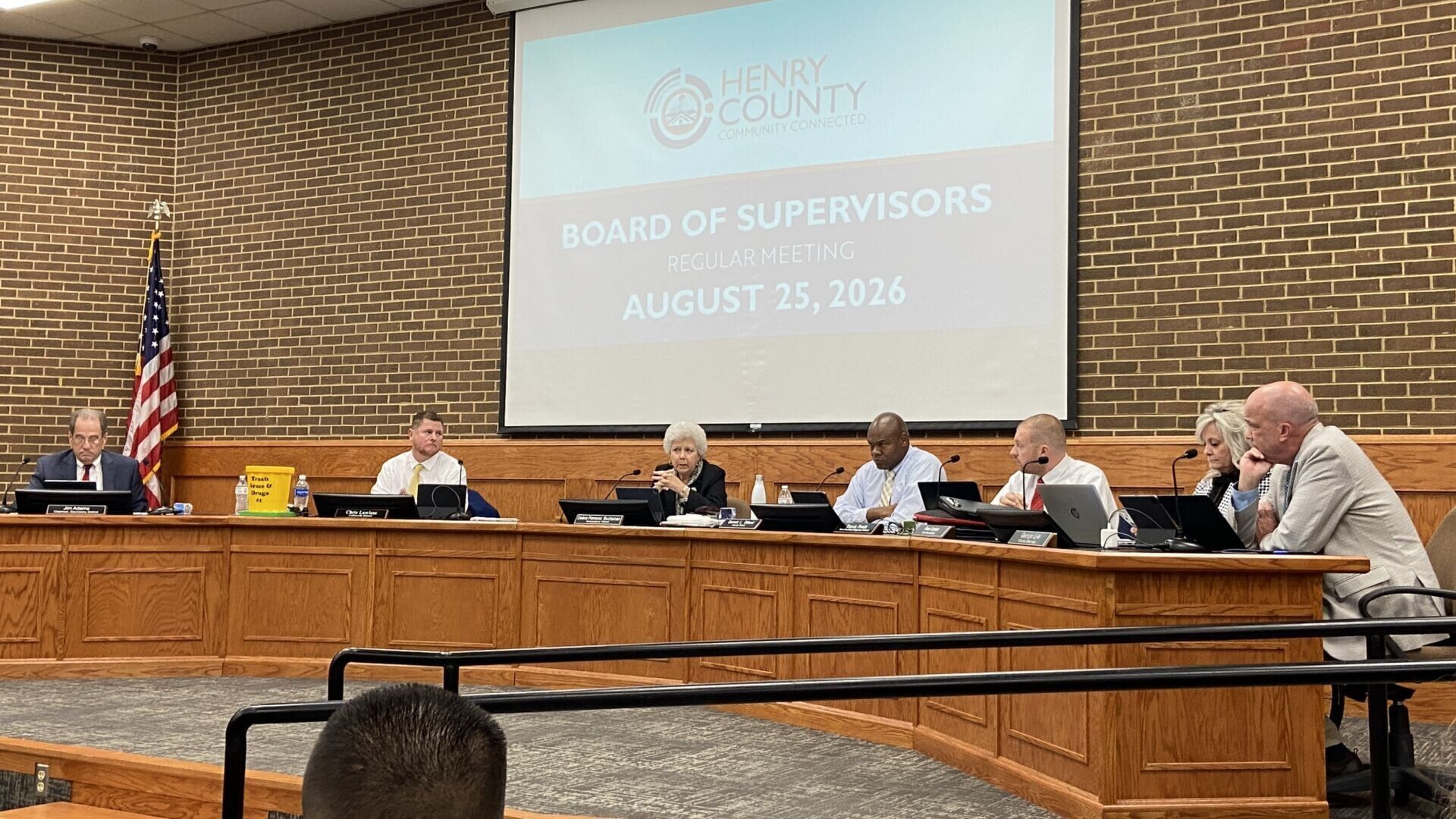
New restrictive data center rules in Henry County were approved
by the Board of Supervisors Tuesday night by a 6-0 vote.
BILL WYATT, Martinsville Bulletin
The county’s action comes amid rapid data center growth across Virginia. A 2024 state study found that Northern Virginia accounted for 13% of reported data center operating capacity worldwide and projected that Virginia’s unconstrained electricity demand could double within 10 years, driven primarily by data centers.
A Virginia law adopted this year also requires site assessments for proposed high-energy-use facilities expected to need at least 100 megawatts. Henry County’s ordinance defines data centers in part by electrical and cooling infrastructure of at least 1 megawatt and imposes its studies and operating standards through the local zoning process.