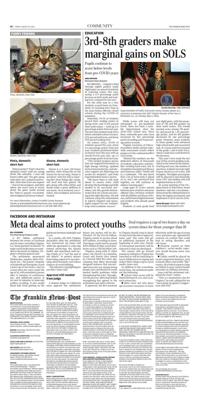


Virginia's 3rd-8th graders make marginal improvements on SOLs, still below pandemic scores

Superintendent of Public Instruction Jenna Conway speaks at a ceremony to announce the 2027 Virginia Teacher of the Year in Richmond, Va., on Tuesday, May 5, 2026.
RICHMOND — Virginia's third through eighth graders made slight gains on annual Standards of Learning exams this year, seeing a 0.4 percentage point increase on both math and reading tests compared to last year.
For the sixth year in a row, students scored lower on Standards of Learning tests than in the years before officials closed schools during the COVID-19 pandemic.
Statewide, 74.5% of students passed their reading exams in spring 2026, and 72.9% passed their math exams — both up 0.4 percentage points from last year. The last time students took SOLs before extended school closures, 82% passed math tests, and about 78% passed reading tests.
On science SOLs, 70.9% of students passed this year, down 0.2 percentage points from last year. Students performed better on history tests this year with an overall 69.6% pass rate, up 3.2 percentage points from last year.
“This modest progress proves that our targeted investments in high-dosage tutoring, updated instructional materials, and educator support are delivering real results for students,” said State Superintendent Jenna Conway.
“We know there is still work ahead to ensure every child develops the knowledge and skills needed to be successful anywhere, but this growth demonstrates that our schools are moving in the right direction. We will continue using this information to inform targeted and meaningful support for our students' long-term academic success."
While scores still have not rebounded to pre-pandemic levels, there has been a notable improvement since the 2020-2021 school year. Since then, statewide pass rates have increased by five percentage points in reading and 19 percentage points in math.
Virginia Secretary of Education Jeffery Smith said the statewide assessment results reflect progress in the commonwealth's classrooms.
“Behind the numbers are the dedicated efforts of thousands of students, educators, and families working hard every day to strengthen foundational literacy and numeracy skills," Smith said in a statement. "We also know that a lot of hard work is ahead of us, and I am convinced that together, we will continue to address learning gaps.”
Large gaps in scores remain between poor students and more affluent ones, between students with disabilities and those without, and between English learners and students who already speak English.
Students at each grade level saw slight gains, with the exception of 7th and 8th graders on their math exams. The overall passing score among 7th graders decreased by 1.45 percentage points, and for 8th graders decreased by one percentage point. However, more students in those grades took advanced high school math and associated end-of-course math tests instead of the grade 7 and 8 math SOLs, which could have contributed to the decrease.
This year's tests mark the last year of the current grading scale, which is the lowest in the nation. Starting next year, the number of questions students must get right to pass, known as cut scores, will be higher. The higher passing bar will be phased in incrementally from 2027 and ending with full implementation in 2030.
At a June meeting of the Virginia Board of Education, board members rejected a recommendation from the administration to delay the higher passing bar and implement it all at once in 2029.
Anna Bryson (804) 649-6922
Related

RTD’s football preview; Virginia's hospitality industry awards; 25 Richmond-area companies make Inc. 5000 list