

A computer-generated mockup of Gobbler Racing's competition car. The actual car will differ slightly cosmetically.
A computer-generated mockup of Gobbler Racing's competition car. The actual car will differ slightly cosmetically.
A computer-generated mockup of Gobbler Racing's competition car. The actual car will differ slightly cosmetically.
A computer-generated mockup of Gobbler Racing's competition car. The actual car will differ slightly cosmetically.
A petition seeking the removal of Mayor LC Jones from the Martinsville City Council was dismissed Friday in Martinsville Circuit Court, ending — at least for now — a monthslong political and legal battle tied to allegations of misconduct and an ongoing criminal investigation involving city finances.
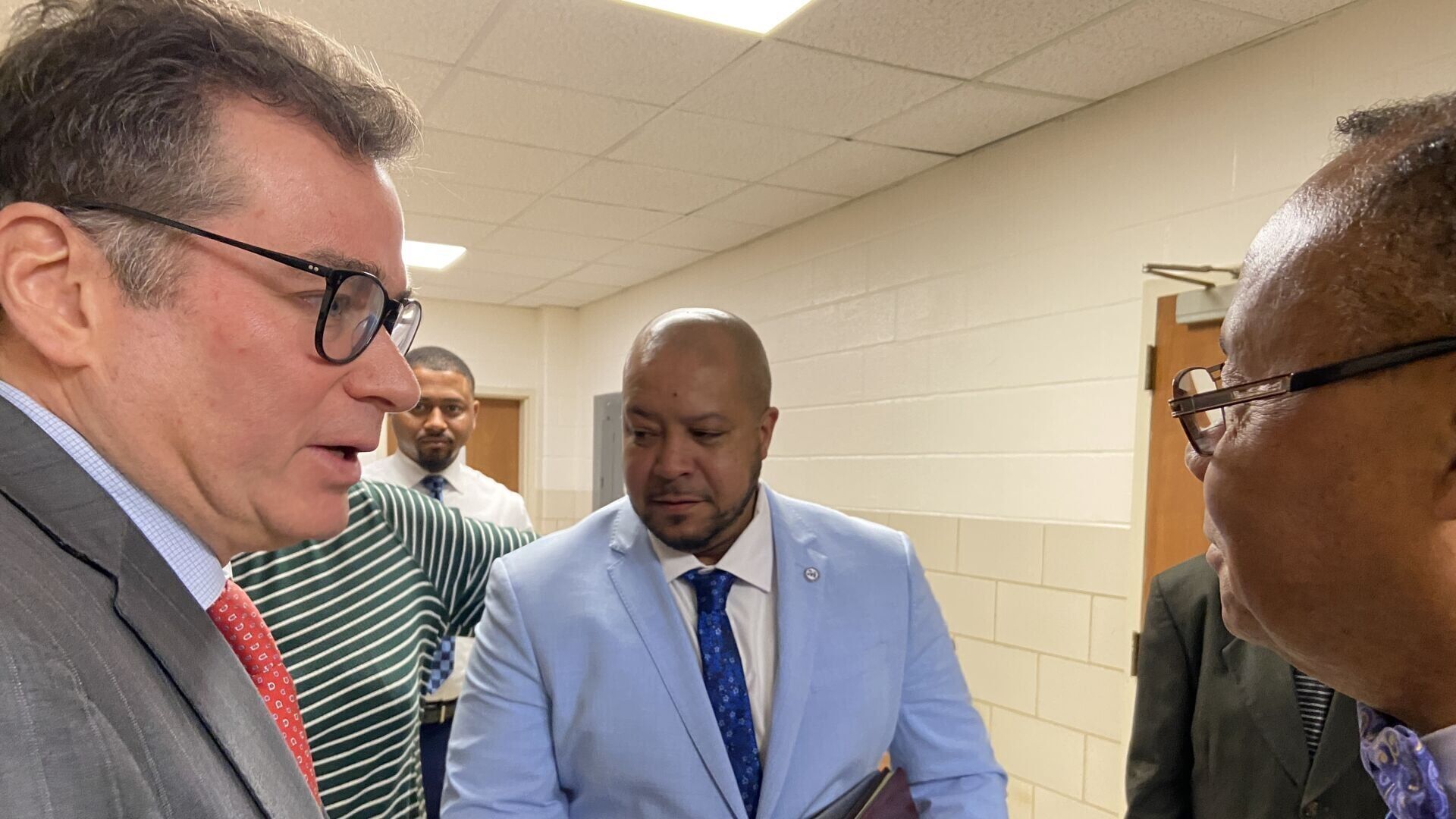
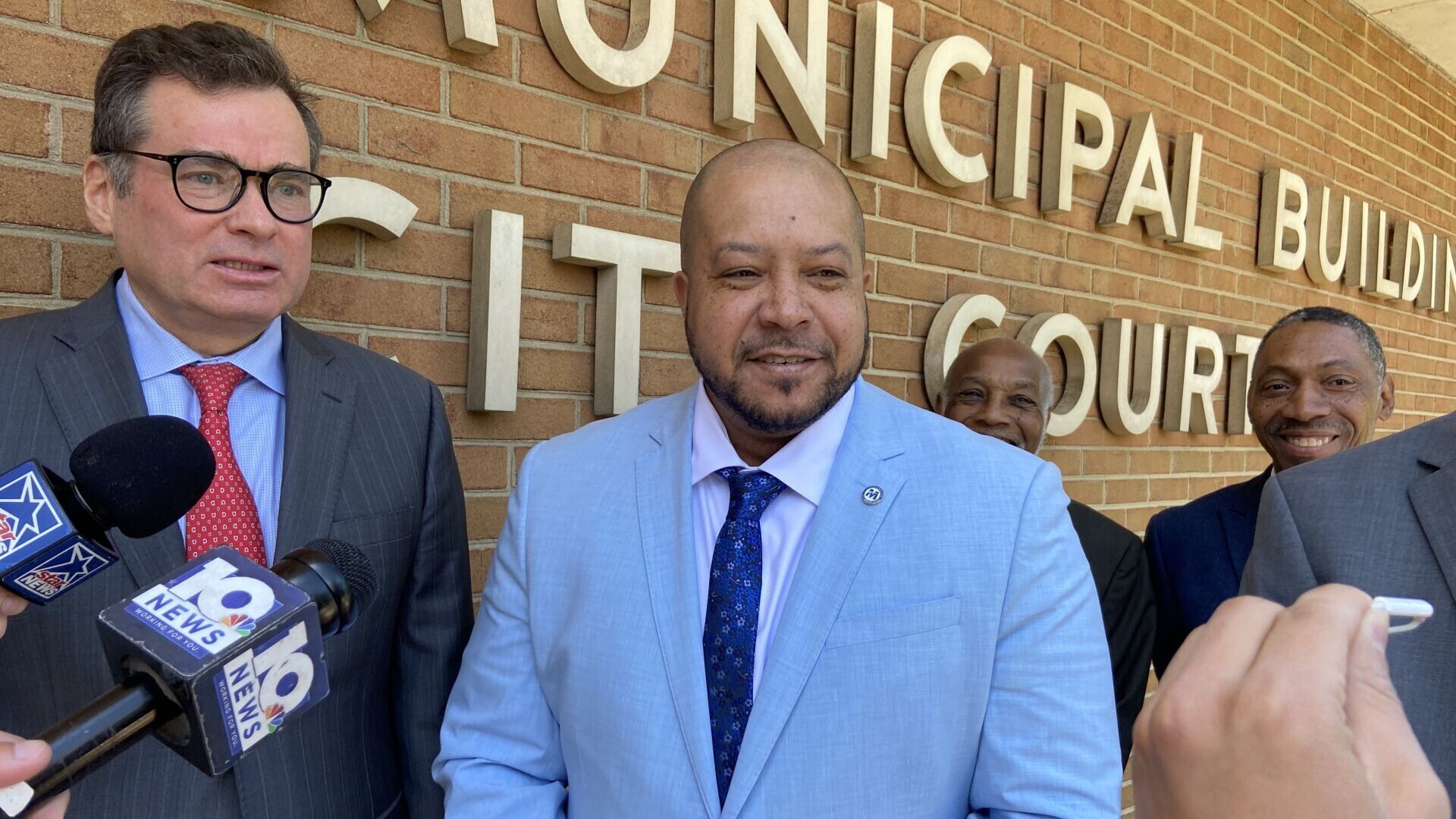
Appearing relieved after a petition case against Mayor LC Jones was dismissed on Friday are Jones' attorney Mark Krudys (from left), Martinsville Councilman Rayshaun Gravely, Jones, and Malvester Dixon, a prayer group participant that prayed for Jones in front of City Hall.
Judge Marcus Brinks ruled the citizens-led petition failed to meet the minimum number of signatures required under Virginia law, siding with Jones’ attorney, Mark Krudys, who argued the petition fell hundreds of signatures short of the legal threshold.
“The petition required 1,179 valid signatures, and included only 401,” Krudys argued during Friday's hearing. “It’s a third of what was needed. They think you should do some interesting math, but you don’t have any options under the law.”
The petition effort emerged after months of controversy surrounding Jones and fallout from a forensic investigation conducted by the accounting firm Sands Anderson into Martinsville city finances. A criminal investigation by the Virginia State Police remains active, though no criminal charges have been filed against Jones.
Jones, who has denied wrongdoing throughout the controversy, was temporarily suspended from council activities for roughly two months during the dispute, before later returning to office after an earlier court ruling.
At issue Friday was how Virginia law calculates the number of signatures needed to force a removal hearing.
Krudys argued the statute required signatures equal to at least 10% of all votes cast in the 2024 election, even though Jones himself was not on the ballot that year because his term had not expired.
Special prosecutor Alfred Collins countered that the proper calculation should instead be based on the number of voters who cast ballots for Jones during his 2022 election.
“He was barred from running in 2024 because he was already elected,” Collins argued.
Martinsville Registrar Sara Workman had previously certified the petition after determining that the total number of signatures exceeded the threshold based on Jones’ 2022 election totals. Petition organizers said they were informed that 375 signatures would be required, and they collected more than that amount.
But Brinks ultimately agreed with Krudys’ interpretation of the statute, concluding the petition did not meet the minimum requirement regardless of which election year was used in the calculation.
Brinks described his ruling as being based on a “technicality” and dismissed the removal case.
The hearing itself lasted only briefly before attorneys shifted their focus to legal fees.
Krudys told the court that his legal bills defending Jones exceeded $80,000, with rates of nearly $600 per hour. Brinks ordered the city of Martinsville to cover half that amount, or approximately $40,000.
Krudys also accused Martinsville Councilman Aaron Rawls of helping fuel public controversy surrounding Jones.
“There’s a racial factor behind all of this,” Krudys said.
Mark Krudys (from left), Martinsville Mayor LC Jones' attorney, and Jones speak with reporters in front of the Municipal Building after a removal by petition case against Jones was dismissed.
Speaking with reporters afterward, Krudys said the dismissal completely vindicated the mayor.
“This was a huge, wrongful conduct, terrible thing that happened to the mayor, and now he has been absolutely vindicated, absolutely vindicated,” he said.
Krudys also criticized the basis of the petition itself.
“What does the petition actually say?” he said. “The other side today said that the signers of that petition were merely signing on to hearing rumors. That’s their argument. They said that in open court, a bunch of people heard rumors, and they signed a petition under oath.”
Jones appeared emotional following the ruling.
“Oh, glory go to God, Jesus,” Jones said. “So it’s a great, a great lift off to my shoulders.”
Jones said he hoped the city could move beyond months of political turmoil.
“It is time that we turn the page on the negativity, and we focus on doing what’s best for the citizens,” he said. “I’m going to lead that effort and start reaching out to more citizens and seeing where we can make up for this past year, because we’ve got a lot of work to do.”
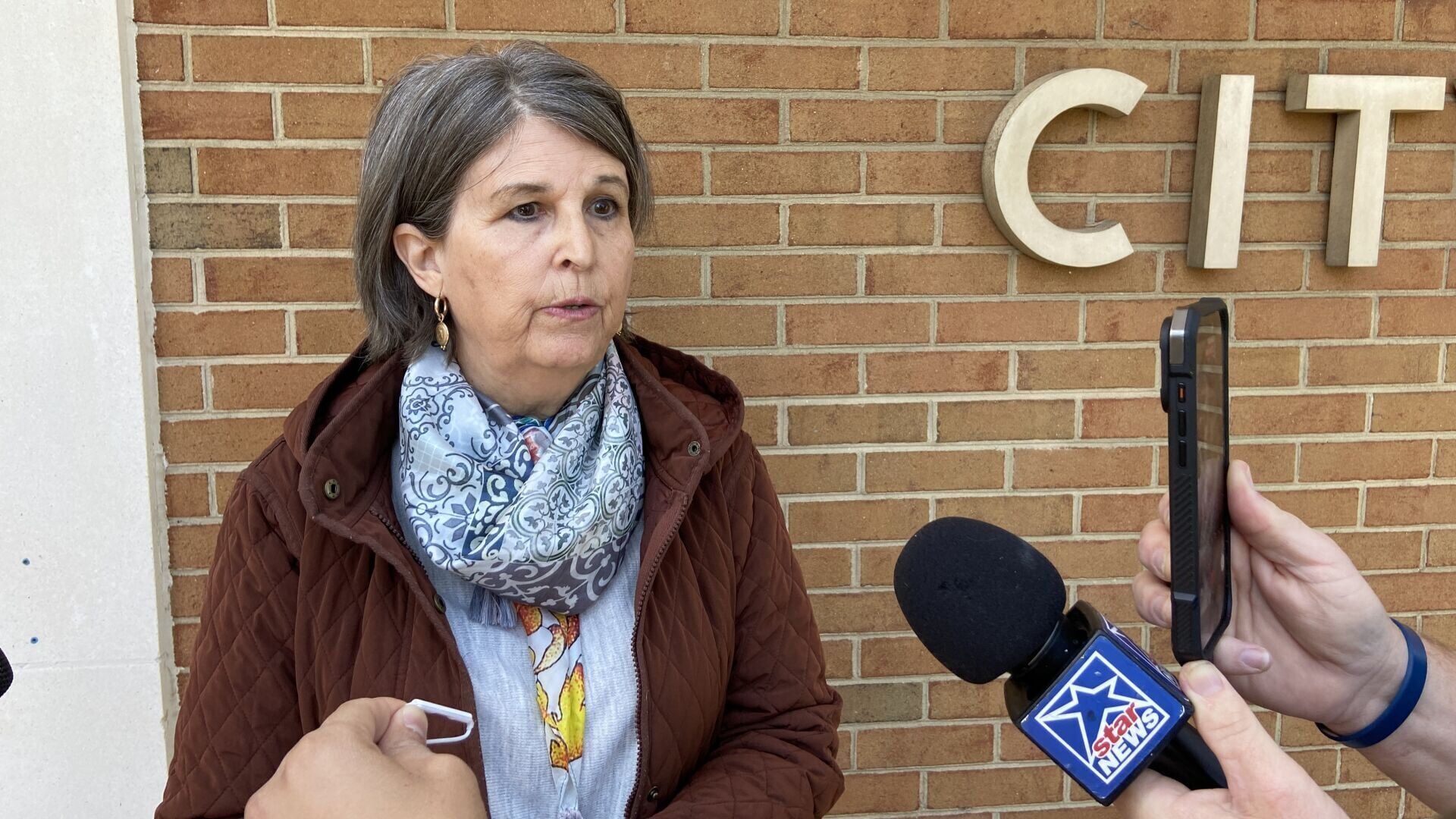
Martinsville resident Patti Covington, who helped to lead the petition effort, spoke to reporters after the case against Mayor LC Jones was dismissed.
Among those behind the petition effort was Martinsville resident Patti Covington, who said citizens pursued it after becoming frustrated by what they viewed as a lack of transparency regarding the Sands Anderson investigation.
“We approached council informally to get some transparency, and three members of council refused and concealed the Sands Anderson investigation, which was paid for by taxpayers,” Covington said after the hearing. “So our only avenue for any transparency was to petition. It’s a legal right of citizens.”
Covington argued petition organizers relied on signature requirements provided by election officials and said residents should not be punished for acting on that information.
“Unfortunately, the registrar gave us the wrong number,” she said. “We exceeded the number that we were given, which was 375, so I feel like citizens of Martinsville have been penalized by trying to get transparency and accountability.”
Covington maintained she believes broader issues remain unresolved, pointing to the continuing state police investigation.
Neither the court on Friday nor investigators have publicly identified any criminal wrongdoing by Jones, and no charges have been announced against him or any other Martinsville officials as the state police investigation continues.
Organizer Kathryn Orth places a first-place ribbon on an entry at the Smith Mountain Arts Council's 30th Photo Show.
Shawn O'Connor was judge at the Smith Mountain Arts Council's 30th Photo Show.
The Smith Mountain Arts Council's 30th Photo Show winners have been awarded salutations and award money based on judge Shawn O'Connor's reviews at an awards ceremony on Friday.
Allen Raasch won Best in Show for "Art Lovers." The other winners are:
1st Place: Kathy Coulahan — Day is Done, Gone the Sun
2nd Place: Allen Raasch — Wood Duck Family
3rd Place: Brenda Smith — Morning Reflections
Honorable mention: Mike Cote — Evening Reflections
1st Place: Michael McCormick — Boats in the Harbor
2nd Place: Ray Lekich — Alaska
3rd Place: Teresa Woodford — Morning Calm on the Sound
Honorable mention: Elaine Lee — Golden Hour/Isle of Palms
1st Place: Elaine Lee — Moroccan Mosque Entry Way
2nd Place: Kathy Coulahan — Circles
3rd Place: Michael McCormick — Eagle’s Nest Lounge, Bar Harbor
Honorable mention: Todd Murden — Kaleido-scape 2/Kaleido-scape 3 (Antelope Canyon)
1st Place: Elaine Lee — Miss Confidence
2nd Place: Karen DeBord — Penny Loafers
3rd Place: Kim Deneault — Cameron
Honorable mention: Kathryn Orth — Good Friday
1st Place: Tamara Key — Her Point of View
2nd Place: Stephen Blancett — I’m All Ears
3rd Place: Susan Halloran — It’s a Dog’s Life
Honorable mention: Grant West — Deer at Twilight
1st Place: Kathryn Orth — Kayaks- 30 Years on Smith Mountain Lake
2nd Place: Jane Murden — 30 Layers (Portugal)
3rd Place: Alan Raasch — Thirty
Honorable mention: Kathy Coulahan — Thirty Penguins Applaud/Thirty Years of Photo Shows
1st Place: Kathy Coulahan — Wow, What a View!
2nd Place: Kim Deneault — Joy of a Fresh Apple
3rd Place: Teresa Woodford — The Joy of Sharing
Honorable mention: Kathryn Orth — Selfie on the Iona Ferry
Every week since Cam Terry and his farm Garden Variety Harvest began working with chef-owner Nate Sloan to supply produce to his restaurant in Wasena — named "bloom" — people have been coming up to Terry at farmers markets and raving about those vegetables.
That's the story Terry told attendees at the launch celebration of the Roanoke Region Food & Farm Trail website Thursday, and it's exactly the outcome the project's creators hope it will have.
The website, a regional initiative of the Roanoke Foodshed Network, aims to make it easier for farmers to connect with consumers, tourists and potential collaborators, in a bid to support the local food system and boost economic development.
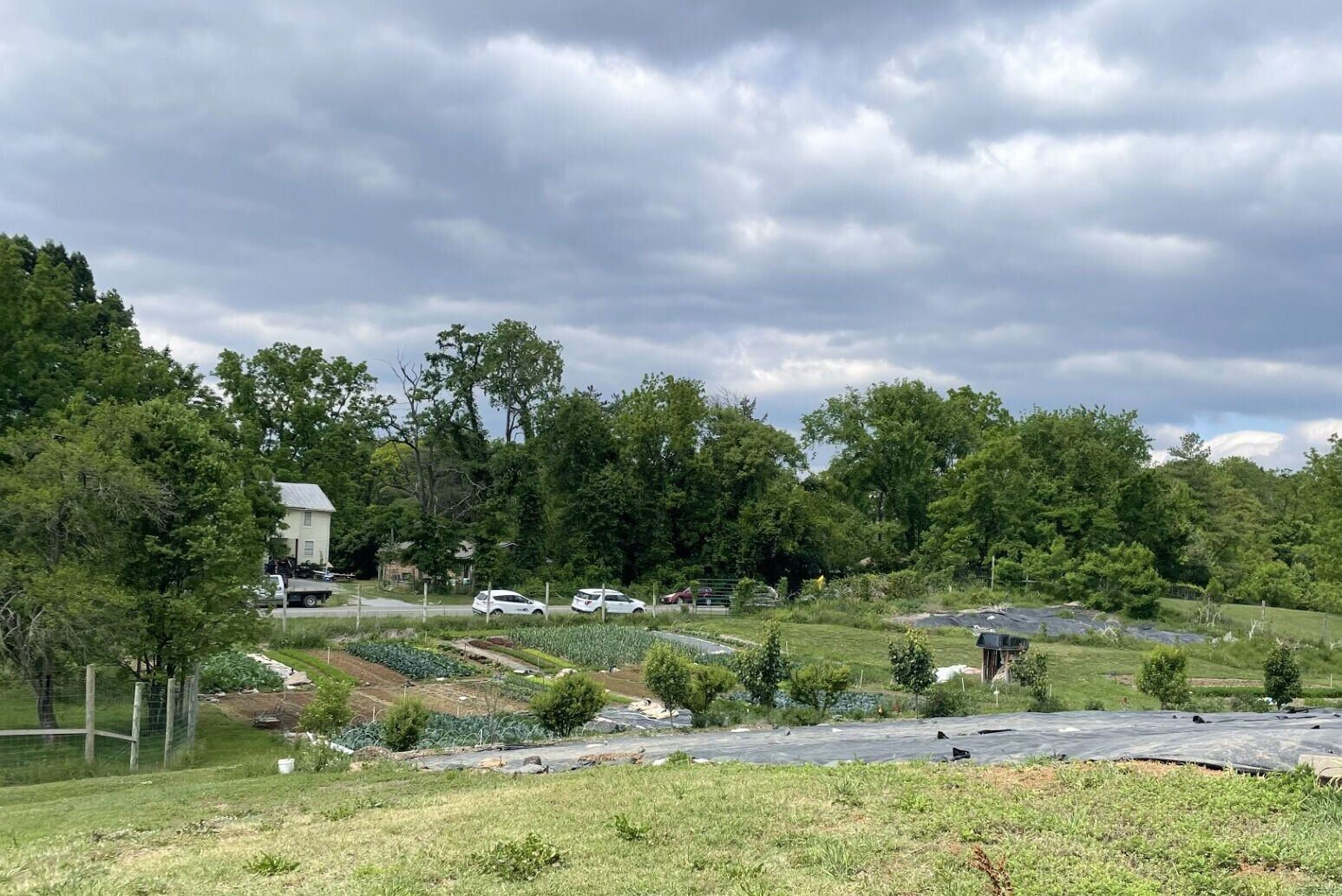
Lick Run Farm is seen Thursday during a launch celebration for the Roanoke Region Food and Farm Trail. The initiative aims to support farmers by making it easier for them to connect with consumers.
"Efforts like the Food and Farm Trail help to coordinate and optimize our efforts as we market our farm businesses," Terry said. "Over time, this is what defines and affirms a regional food culture, bringing personality and excitement in addition to the sustenance."
Trail members — which include farms, farmers markets, farm stores, farm-to-table restaurants and other businesses with agriculturally-based products — each have a page on the website.
Consumers can then search the website based on location, the type of vendor, growing practices, products and services offered to narrow down and learn more about which member organizations may best fit their needs.
The website currently features 56 members, with more waiting to be onboarded, Lisa Archer, the Roanoke Foodshed Network's communications coordinator, told attendees during a demo of the website. Those members span the cities of Roanoke and Salem, as well as Roanoke, Botetourt, Craig, Franklin, Floyd and Montgomery counties.
"How can we increase the dollars spent in our local community?" Archer said during the demo. "We need to provide consumers with access to let them know that this great, local, healthy, nutritious food is here, while also trying to attract tourists and drive demand."
Agriculture is the "epitome of the local business," said Amanda McGee, director of community development at the Roanoke Valley-Alleghany Regional Commission, during the event. The initiative is especially handy because it's online, she said, citing a Capital One report that found 97% of consumers search online to find local businesses to shop at.
"So this asset that we're rolling out today, it's going to have a great impact, I think, for our local food and agricultural businesses," McGee said.
The website is a long time in the making. Over a decade ago, a group of volunteers started an online database of farms, farmers markets and food businesses in the region, Maureen McGonagle, the Roanoke Foodshed Network's director, told reporters.
LEAP, the Local Environmental Agriculture Project, became the database's fiscal sponsor, but when the pandemic hit, the project had to take a backseat.
In the meantime, from 2020 to 2024, farmers, planners and food advocates developed the Roanoke Foodshed Network, an organization focused on connecting partners throughout the food system in service of supporting farm viability and food access.
Garden Variety Harvest founder Cam Terry, right, leads a tour of Lick Run Farm on Thursday in Roanoke as part of a launch celebration for the Roanoke Region Food and Farm Trail.
They realized that the network would be an ideal host for such a database. A USDA Regional Food System Partnerships grant, as well as several local sponsors, allowed the network and its partners "to create not just a website, but a storytelling site, a digital space, that tells the story of the people and the places that make this region and this business so special," she said.
Erica Cundiff, who developed the website, told reporters the initiative allows farmers to focus on farming, while she and the Roanoke Foodshed Network put their skill sets in marketing and advertising to work.
"So that we can build a website that helps them be found, helps them collaborate with other farmers, helps local people, tourists, everybody find a new way to eat, a new way to enjoy, a new way to nourish themselves locally," Cundiff said.
Without any of the fanfare that marked her ceremonious signing of legislation she already signed, Gov. Abigail Spanberger signed into law the first of the several measures she had wanted to amend but that the General Assembly refused to.
They include legislation, House Bill 217 and Senate Bill 749, saying buying or selling a semiautomatic rifle or pistol with a fixed magazine capacity in excess of 15 rounds should be a crime, subject to up to 12 months in jail. Spanberger proposed language saying the ban would not cover certain shotguns used by hunters.
“I am signing this bill into law because firearms designed to inflict maximum casualties do not belong on our streets," Spanberger said.
Spanberger also signed measures, Senate Bill 253 and House Bill 1393, that include language that she had wanted removed that shifts the cost of high-priced imported electricity from all Dominion Energy ratepayers to data centers.
Gov. Abigail Spanberger is seen last month signing House Bill 217 and Senate Bill 749, which say buying or selling a semiautomatic gun should be a crime, subject to up to 12 months in jail.
The House bill also included language that allows Dominion to spread out the cost of its annual fuel and imported power purchases over time, instead of passing them on dollar-for-dollar every year.
Two months after the House bill passed, Dominion reported that double-digit percentage price increases meant it would need a hefty increase in bills, unless the House bill allowed it to finance the costs over several years. The difference would be a $7.97 increase in a benchmark $171.90 monthly bill for 1,000 kilowatt-hours versus a $21.97 increase.
Spanberger said the bills would provide tangible relief to Virginians who need the most help with rising power bills.
In addition to the cost-shifting, they also provide for an extension of Virginia’s power line undergrounding program through early 2033, a provision that Republican critics had argued would push power bills higher because it also authorized Dominion to spend more on undergrounding.
Spanberger said Dominion promised it would not seek State Corporation Commission approval to spend more than it has already been authorized to spend.
The signings came the same day she vetoed legislation (House Bill 1263 and Senate Bill 378) that would empower unions to negotiate wage and work conditions for state and local government employees.
Meanwhile, the National Rifle Association said it is filing suit in state and federal court to overturn the ban on selling or buying semi-automatic weapons.
“This extreme anti-gun proposal, which bans the new purchase of commonly owned firearms and standard capacity magazines in the Commonwealth, is a blatant violation of Second Amendment rights,” said John Commerford, executive director of the NRA’s legislation action institute.
House Minority Leader Terry Kilgore, R-Scott, said Republicans, who opposed the bills in party-line votes, had repeatedly warned the measure would be challenged in court.
"Democrats are going to waste even more taxpayer money just to lose. Again," he said, referring to the recent Virginia Supreme Court ruling that Democrats' new congressional district map was null and void.
Spanberger also signed House Bill 229 and Senate Bill 173, which bar people from bringing weapons into hospitals and other healthcare facilities that provide psychiatric care.
She signed House Bill 26 and Senate Bill 62, which say people imprisoned or put on probation for possession of marijuana before legalization in 2021 can have a hearing to reconsider their sentences.
"For too long, Virginians have remained behind bars for conduct the Commonwealth no longer treats as a crime. That changes now," said Del. Rozia Henson, D-Prince William.
"After years of similar efforts being blocked under the previous administration, Virginia now has a process to revisit cannabis sentences that no longer reflect current law; families who have been waiting will finally have a path home," he said.
She also signed House Bill 675, which protects immigrant workers from retaliation by their employers when they report wage theft or minimum wage violations.
“All Virginia workers should be able to report any violations of their rights without fear of employer retaliation,” Spanberger said.
Spanberger signed House Bill 561, which allows courts to issue a restricted license and the immediate installation of an ignition interlock device for certain individuals charged with driving while intoxicated.
Dave Ress (804) 649-6948

Richmond Times-Dispatch reporters discuss data centers' energy consumption.

Read the stories from the Richmond Times-Dispatch's three-day series on data centers and the key issues they pose.