
Virginia Tech softball's Warren denied request for injunction

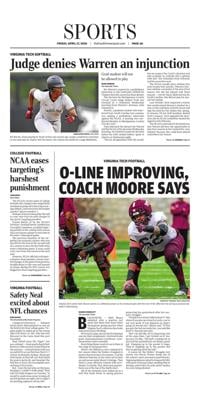
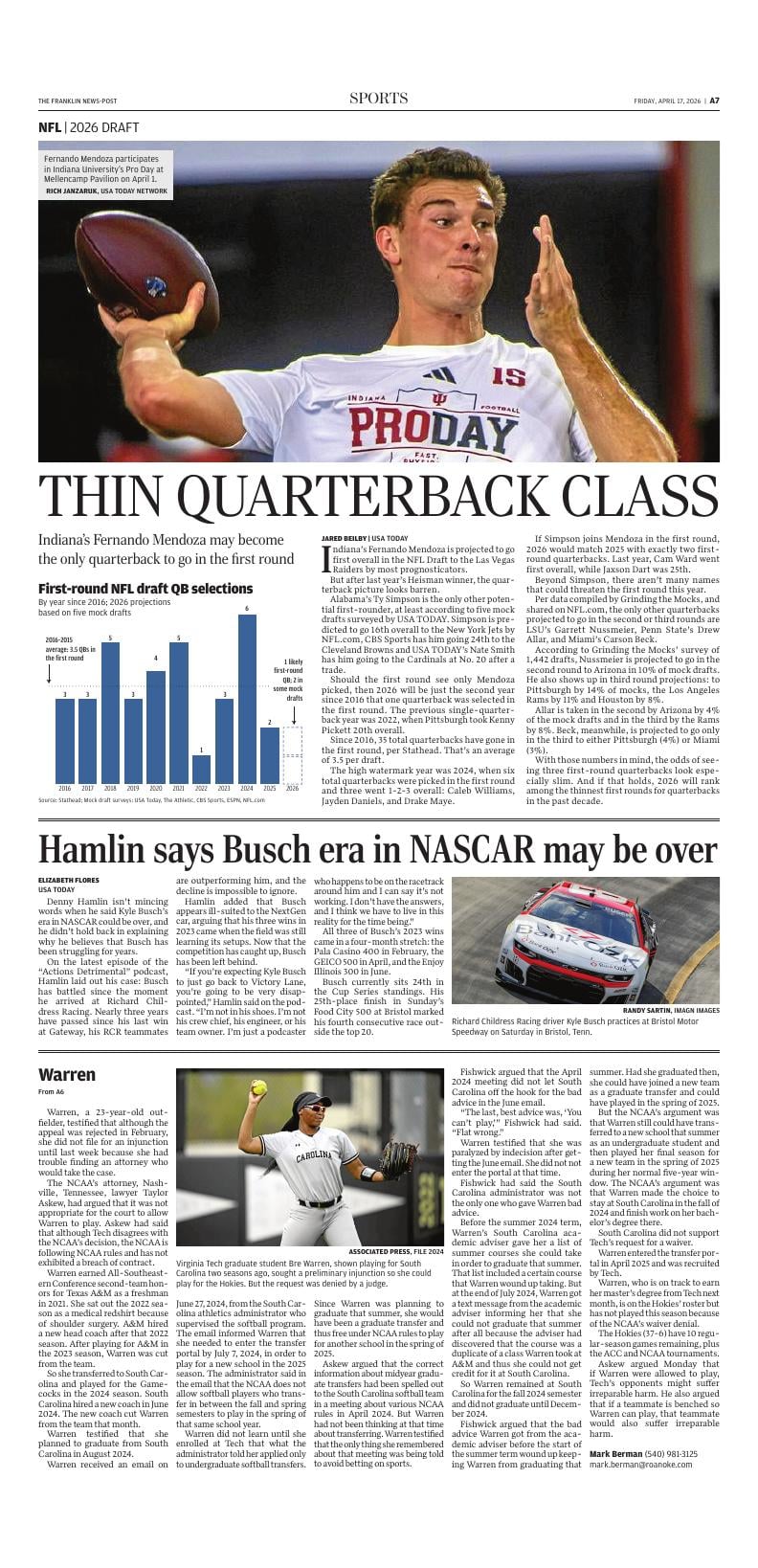
Bre Warren, shown playing for South Carolina two seasons ago, sought a preliminary injunction so she could play for Virginia Tech this season. Her request was denied by a judge Wednesday.
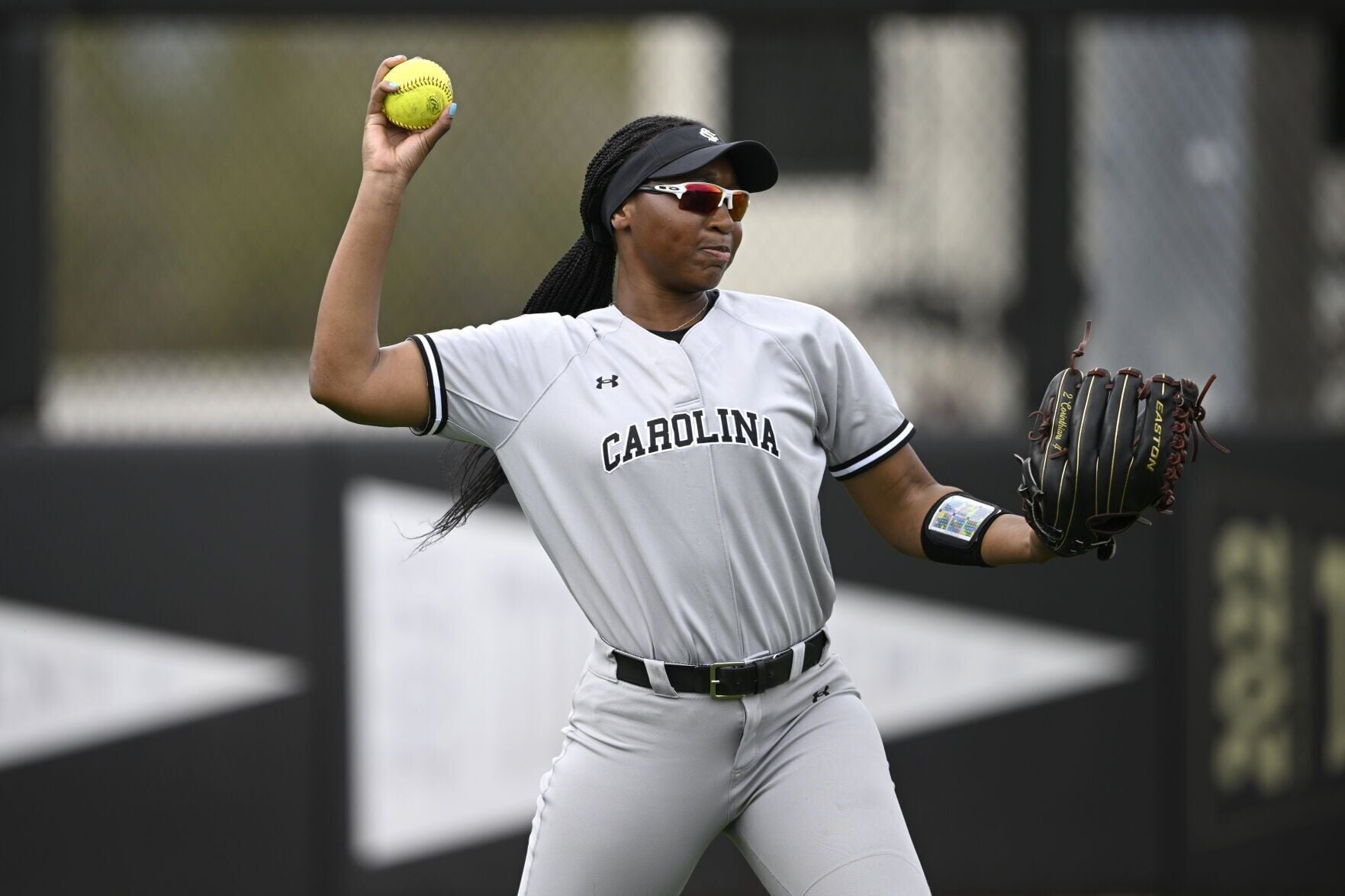
Virginia Tech graduate student Bre Warren, shown playing for South Carolina two seasons ago, sought a preliminary injunction so she could play for the Hokies. But the request was denied by a judge.
Bre Warren's request for a preliminary injunction so she could play softball for Virginia Tech this season has been denied.
The decision by Montgomery County Circuit Court Judge Robert Turk was revealed in a statement Wednesday morning from Warren's attorney, John Fishwick Jr.
Warren, a graduate student who transferred from South Carolina last summer, was seeking a preliminary injunction against the NCAA. A hearing was conducted Monday in Montgomery County Circuit Court.
Turk informed the lawyers for Warren and the NCAA of his decision Wednesday morning. He wanted to make his decision before the 10th-ranked Hokies' game at Liberty on Wednesday night.
"We are disappointed with this result, but we respect the Court’s decision and will continue to evaluate Bre’s options with her," the statement from Fishwick and his associates read.
The NCAA usually gives athletes five years to play four seasons. Warren's five-year window concluded at the end of last season, but she has played only three seasons — two for Texas A&M and one for South Carolina. She did not play for anyone last spring.
Last October, Tech requested a waiver that would extend Warren's window by a year so she could play a fourth season and take the field for the Hokies this spring. In January, NCAA staff members denied Tech's request. Tech appealed the decision, but an NCAA committee denied the appeal in late February.
The NCAA's rationale for the denial was that Warren did have the opportunity to play four seasons in her normal five-year window because she could have played somewhere last season.
Warren, a 23-year-old outfielder, testified that although the appeal was rejected in February, she did not file for an injunction until last week because she had trouble finding an attorney who would take the case.
The NCAA's attorney, Nashville, Tennessee, lawyer Taylor Askew, had argued that it was not appropriate for the court to allow Warren to play. Askew had said that although Tech disagrees with the NCAA's decision, the NCAA is following NCAA rules and has not exhibited a breach of contract.
Warren earned All-Southeastern Conference second-team honors for Texas A&M as a freshman in 2021. She sat out the 2022 season as a medical redshirt because of shoulder surgery. A&M hired a new head coach after that 2022 season. After playing for A&M in the 2023 season, Warren was cut from the team.
So she transferred to South Carolina and played for the Gamecocks in the 2024 season. South Carolina hired a new coach in June 2024. The new coach cut Warren from the team that month.
Warren testified that she planned to graduate from South Carolina in August 2024.
Warren received an email on June 27, 2024, from the South Carolina athletics administrator who supervised the softball program. The email informed Warren that she needed to enter the transfer portal by July 7, 2024, in order to play for a new school in the 2025 season. The administrator said in the email that the NCAA does not allow softball players who transfer in between the fall and spring semesters to play in the spring of that same school year.
Warren did not learn until she enrolled at Tech that what the administrator told her applied only to undergraduate softball transfers. Since Warren was planning to graduate that summer, she would have been a graduate transfer and thus free under NCAA rules to play for another school in the spring of 2025.
Askew argued that the correct information about midyear graduate transfers had been spelled out to the South Carolina softball team in a meeting about various NCAA rules in April 2024. But Warren had not been thinking at that time about transferring. Warren testified that the only thing she remembered about that meeting was being told to avoid betting on sports.
Fishwick argued that the April 2024 meeting did not let South Carolina off the hook for the bad advice in the June email.
"The last, best advice was, 'You can't play,’" Fishwick had said. "Flat wrong."
Warren testified that she was paralyzed by indecision after getting the June email. She did not not enter the portal at that time.
Fishwick had said the South Carolina administrator was not the only one who gave Warren bad advice.
Before the summer 2024 term, Warren's South Carolina academic adviser gave her a list of summer courses she could take in order to graduate that summer. That list included a certain course that Warren wound up taking. But at the end of July 2024, Warren got a text message from the academic adviser informing her that she could not graduate that summer after all because the adviser had discovered that the course was a duplicate of a class Warren took at A&M and thus she could not get credit for it at South Carolina.
So Warren remained at South Carolina for the fall 2024 semester and did not graduate until December 2024.
Fishwick argued that the bad advice Warren got from the academic adviser before the start of the summer term wound up keeping Warren from graduating that summer. Had she graduated then, she could have joined a new team as a graduate transfer and could have played in the spring of 2025.
But the NCAA's argument was that Warren still could have transferred to a new school that summer as an undergraduate student and then played her final season for a new team in the spring of 2025 during her normal five-year window. The NCAA's argument was that Warren made the choice to stay at South Carolina in the fall of 2024 and finish work on her bachelor's degree there.
South Carolina did not support Tech's request for a waiver.
Warren entered the transfer portal in April 2025 and was recruited by Tech.
Warren, who is on track to earn her master's degree from Tech next month, is on the Hokies' roster but has not played this season because of the NCAA's waiver denial.
The Hokies (37-6) have 10 regular-season games remaining, plus the ACC and NCAA tournaments.
Askew argued Monday that if Warren were allowed to play, Tech's opponents might suffer irreparable harm. He also argued that if a teammate is benched so Warren can play, that teammate would also suffer irreparable harm.
Mark Berman (540) 981-3125