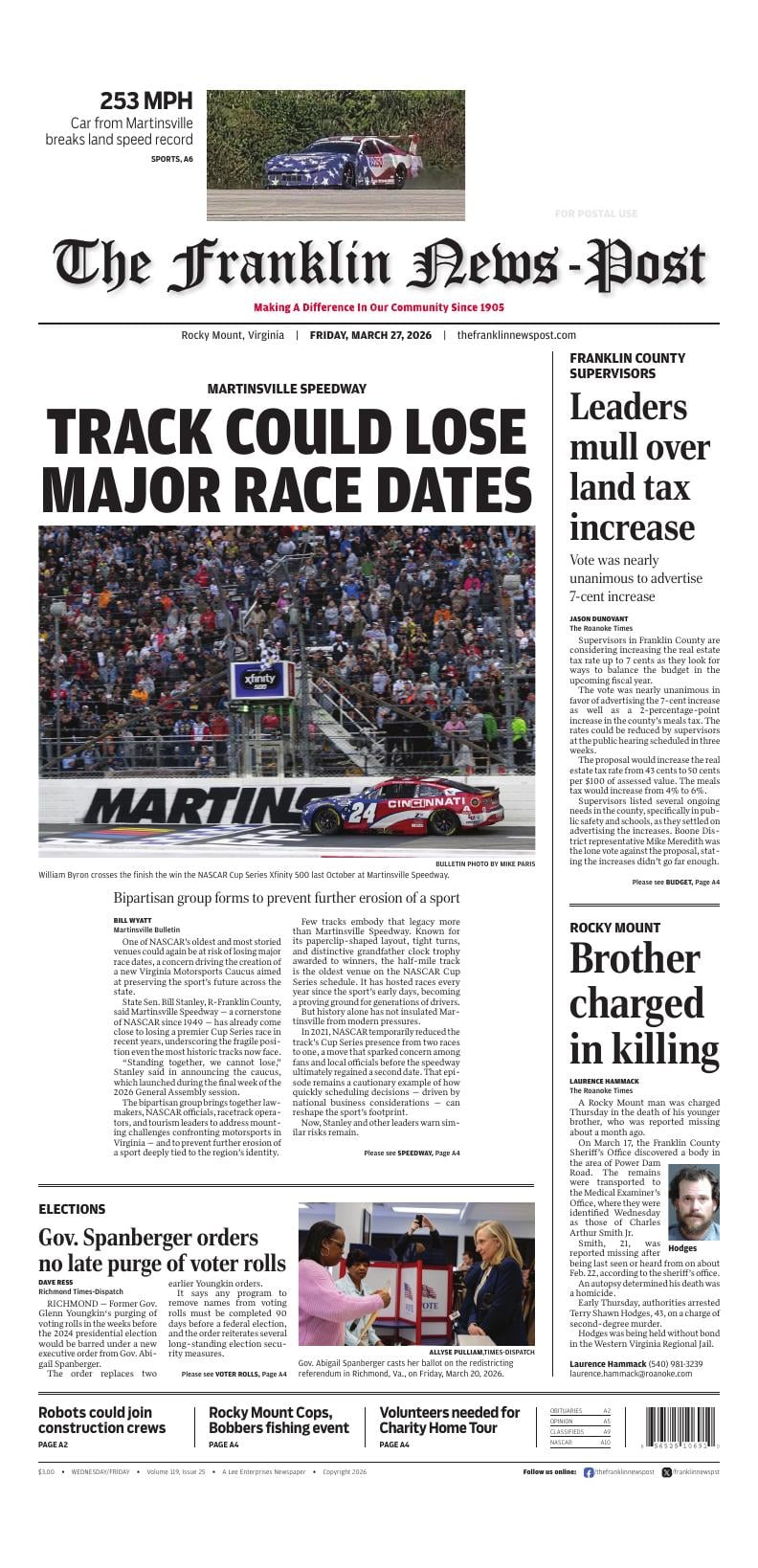


Va. Tech robots could join construction crews — and leave inspectors at home
BLACKSBURG — Construction site robots being developed at Virginia Tech could cut building costs by up to 30% by catching mistakes before walls are sealed — a technology that may also reduce demand for building inspectors.
Procon, a Fairfax-based construction consulting firm, has partnered with researchers at the university to develop robots that photograph construction projects, creating a Google Street View-style map of building interiors that documents each stage as work progresses.
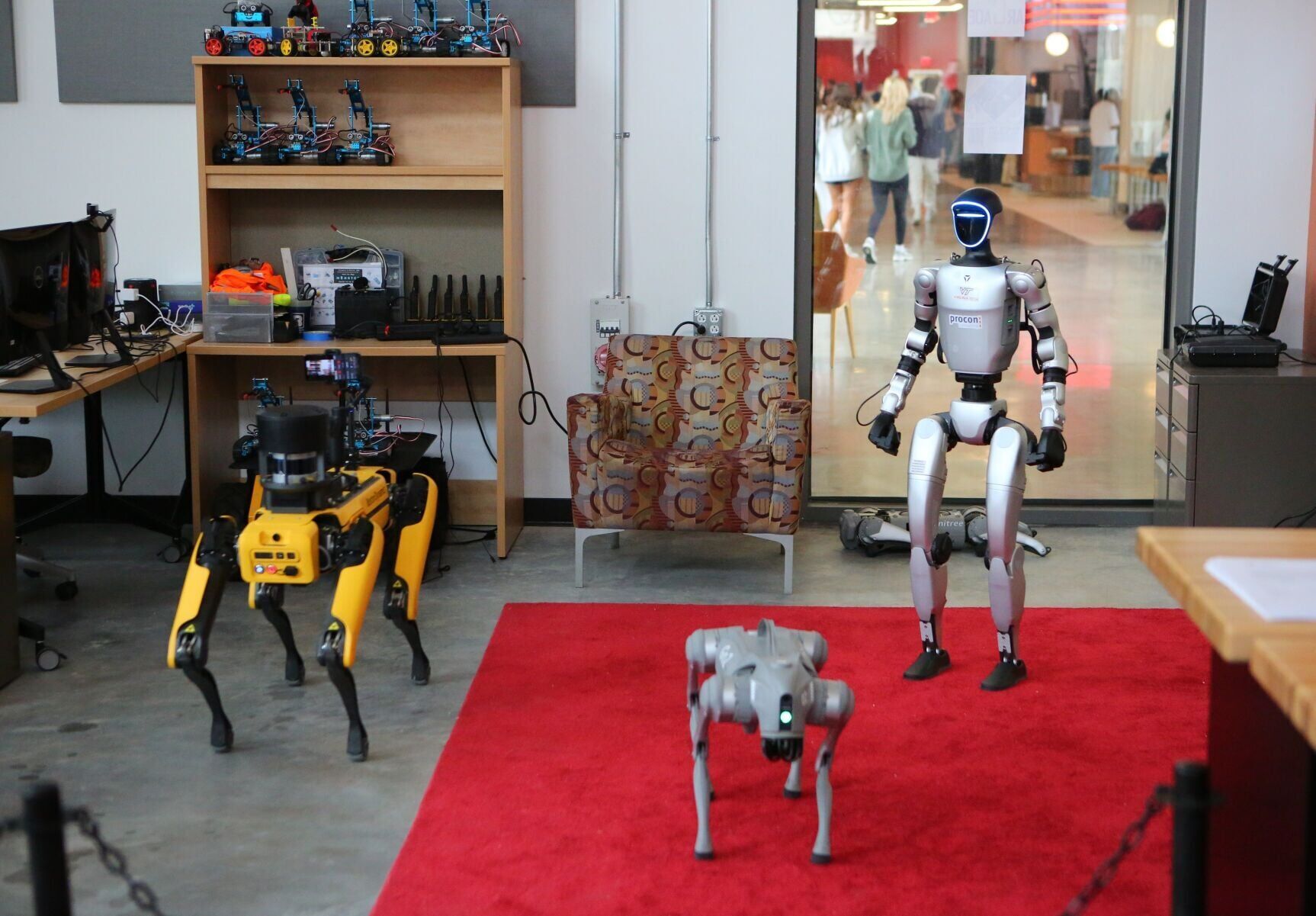
The two quadruped robots and a drone would be accompanied by "George," the humanoid robot as they photograph construction sites.
The system is designed to give builders and owners a continuous, verifiable view of a project, helping prevent costly rework, improve coordination and allow inspectors to monitor multiple sites remotely.
“When our robots are walking, they’re creating a virtual path, just like Google Street View’s camera car,” said Stephen DeVito, Procon’s technology director. “You’re able to virtually walk down the street and see everything in 360 degrees — that’s what these robots are doing.”
Robots’ uses, and impact on humans
The robotic system includes two quadrupeds — one of them the yellow Boston Dynamics “dog” robot equipped with cameras — along with a drone and a humanoid robot named George. The humanoid unit handles tasks requiring touch, such as opening doors and pressing elevator buttons, and helps guide the others.
While commercialization is still about a year away, the robots have already been used on three recent projects on Virginia Tech’s campus and have drawn investment from the Virginia Builders Foundation. Procon is not alone in the field; several companies have developed similar systems.
One use is to assist building inspectors by allowing them to monitor multiple sites remotely, improving speed and reducing errors.
Virginia Tech construction and engineering professor Kereshmeh Afsari, who is leading the project, said researchers surveyed inspectors early on and designed the system to address common challenges.

Kereshmeh Afsari, a construction and engineering professor at Virginia Tech, stands next to one of her students, Ricardo Pastor.
“It helps me be a force multiplier, so I’m at home controlling multiple robots on different job sites,” Afsari said. “We don’t want to completely remove human supervision. They need human supervision.”
DeVito said the system is expected to cost about $40,000 to implement, less than employing an experienced inspector, who earns a median salary of about $68,000, according to the U.S. Bureau of Labor Statistics.
He said he does not expect his company to reduce its number of inspectors.
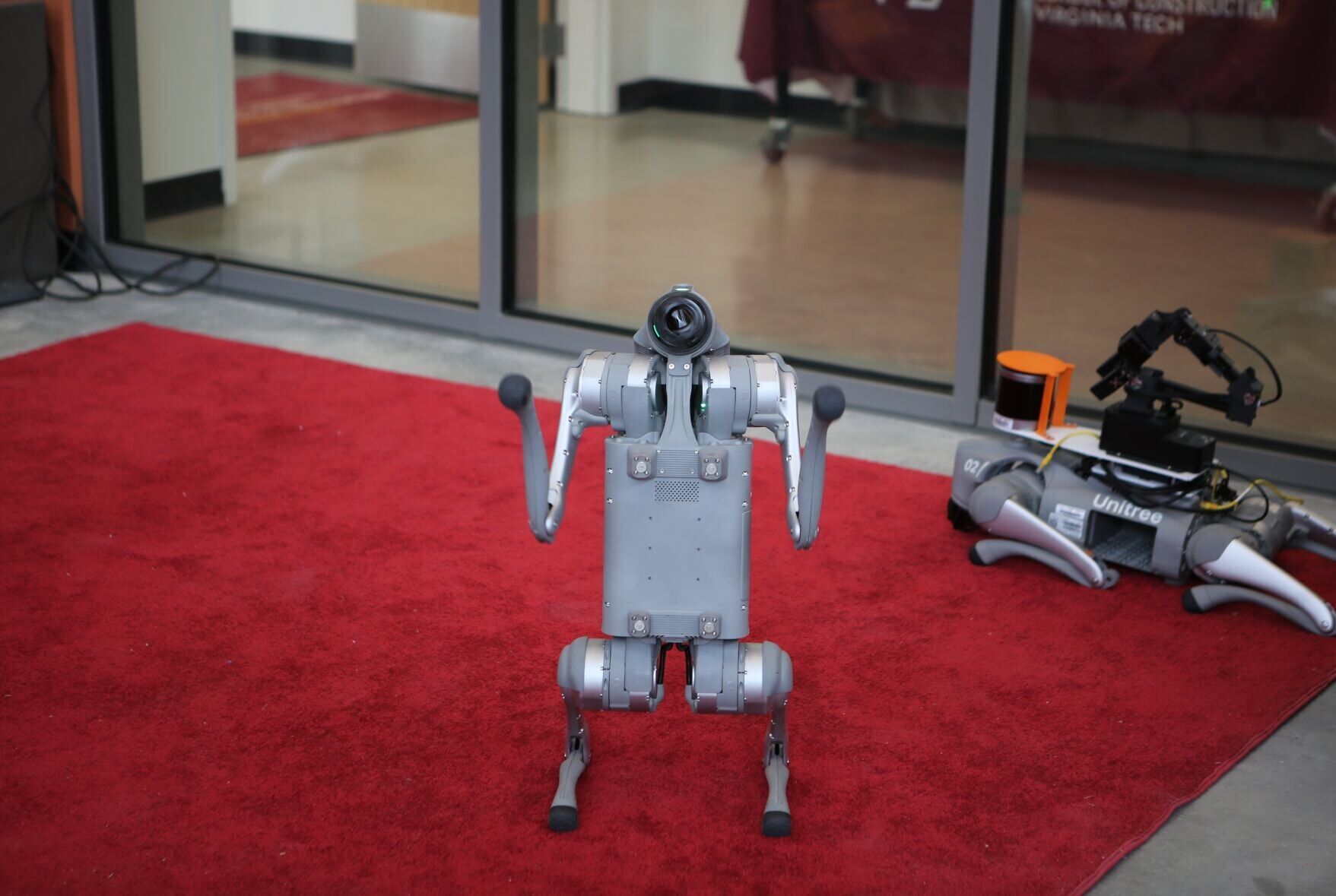
The smaller quadruped, made by Unitree, performs a trick.
“But for a large, established contracting company that’s not employee-owned, maybe that would be an issue,” he said, acknowledging some firms could cut staff to realize savings rather than increase inspection capacity.
“I share the concerns,” DeVito said. “I really don’t want that to happen.”
Accountability, efficiency, coordination
For Procon, another key function of the robots is opening the “black box” of construction sites by allowing stakeholders to view project progress virtually in real time.
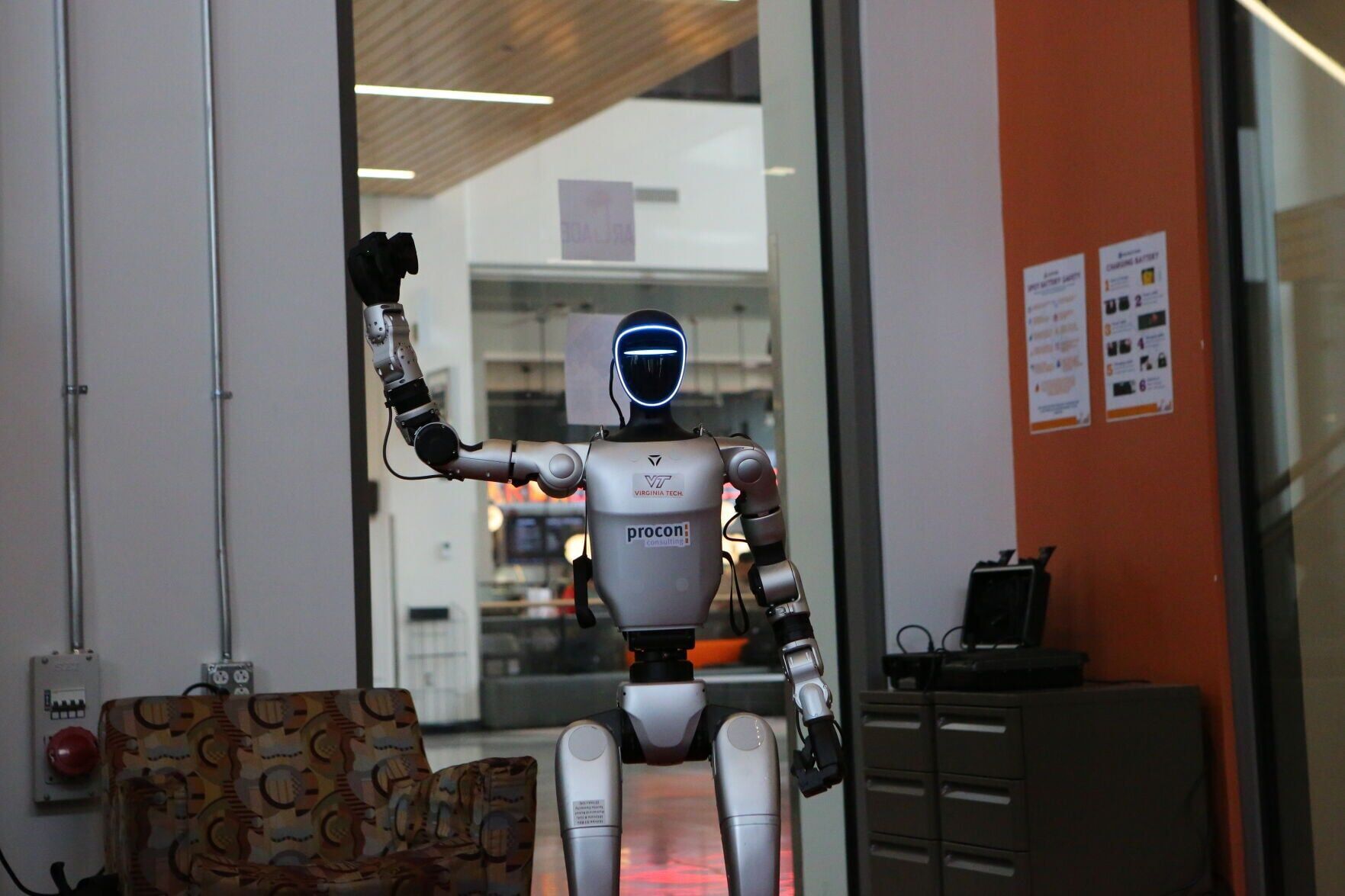
“George,” one of the construction robots, demonstrates raising a fist.
“Construction sites are, in a way, gatekept by the superintendent or the foreman or the inspectors,” DeVito said. “The people who actually own the building are not getting a chance to see what’s really there.”
Daily documentation by the robots would also address contractor and owner accountability.
DeVito gave the example of a contractor billing $100,000 for completing 60% of drywall work.
“Until now, you’d have to just be like, ‘Hey superintendent, is that true?’” he said. “Now we can just verify.”
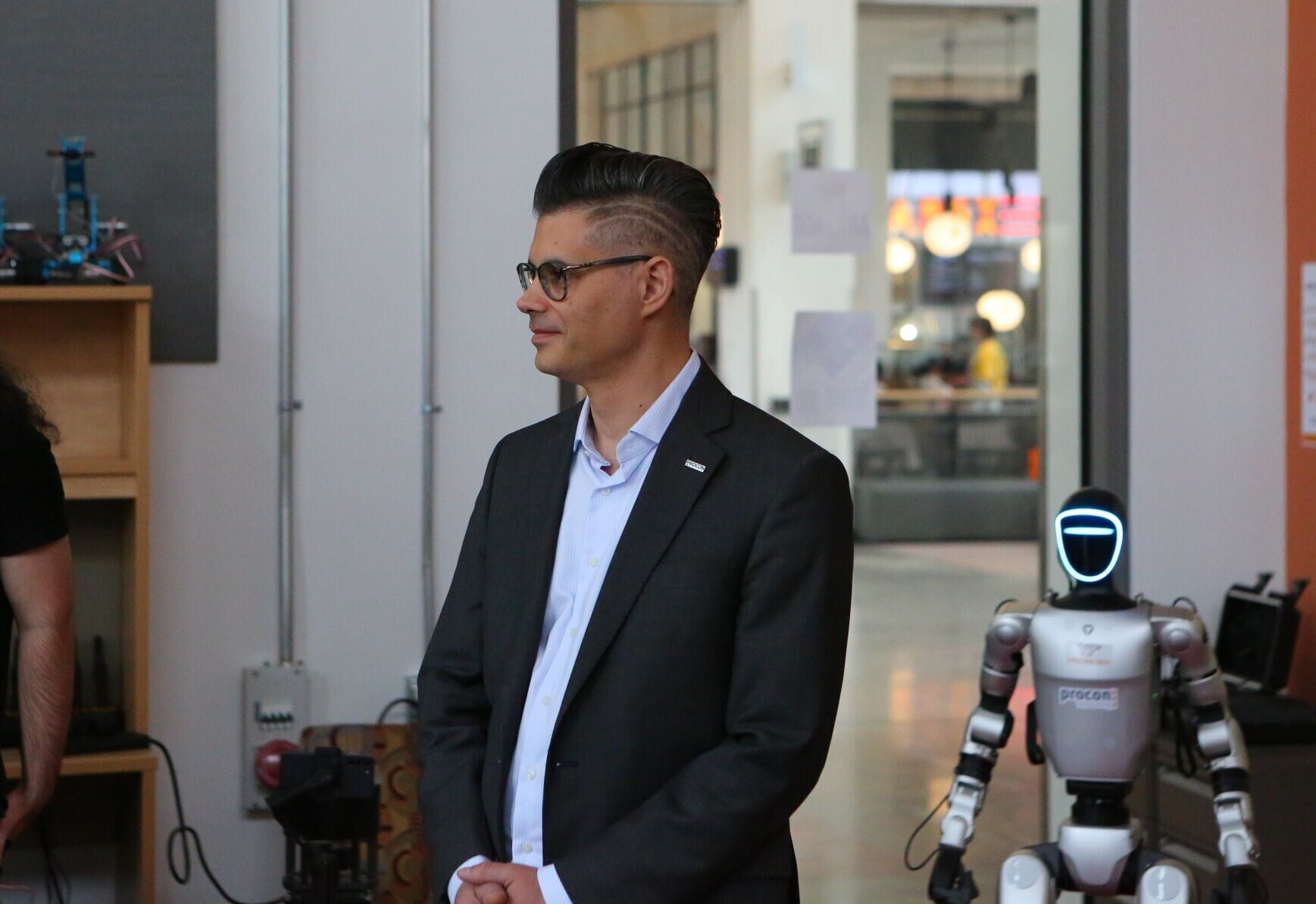
Stephen DeVito, technology director at Procon, a Fairfax-based construction consulting firm partnering with Virginia Tech researchers on the robots.
The system could also help avoid disputes by serving as “dashcam” evidence for insurance claims.
A major driver of potential cost savings is what DeVito described as the robot’s “X-ray” vision. By capturing images from foundation to finish, the system allows side-by-side comparisons of the same wall at different stages, helping crews avoid expensive rework — such as reopening finished sections to find pipes, conduit or structural elements.
“Every year, $2.1 trillion of new structures are being built,” Afsari said. “Fifty-three percent of these projects are behind schedule, and 66% are over budget. Why is this happening? It’s because rework errors happen and they don’t catch it in time.”
While the technology could reshape parts of the construction labor market, the priority for Procon is pushing innovation in an industry that has stayed relatively the same for decades.
“Every other manufacturing industry has improved in productivity at a much more significant rate than this industry,” DeVito said. “It’s just because we haven’t had innovation. We shouldn’t be making mistakes just because we’re old school.”
Ethan Hunt (540) 381-1678
Related

Researchers at Virginia Tech demonstrate robots being developed at the university that will eventually be used on construction sites.