Franklin County officials have been discussing a confidential economic development project known as "Project Flash" with representatives of data center developer Crusoe since at least November 2025, according to documents county residents obtained through the Virginia Freedom of Information Act.
The records include calendar invitations, internal emails, partially redacted confidentiality agreements and a meeting titled “Project Flash LOI” — an apparent reference to a Letter of Intent — held Nov. 25. That meeting included Crusoe representatives, Franklin County Economic Development Director Danielle Poe and Kelly Ferree, an attorney with Latham & Watkins.
Latham & Watkins is an international law firm representing major corporate clients in complex commercial transactions.
The documents indicate discussions surrounding Project Flash were underway months before the project was discovered by county residents. Franklin County has not acknowledged being in talks with a data center developer, beyond a news release in late June about economic development and confidentiality in response to requests for comment from county residents and journalists.
Although county officials have not publicly identified Project Flash, or acknowledged its existence, multiple records connect the project to Summit View Business Park, a county-owned industrial site north of Rocky Mount. Crusoe, a technology company that develops large-scale artificial intelligence infrastructure, appears in the meeting invites received in relation to Project Flash. WDBJ first reported the connection July 2.
Modern data centers are large, industrial facilities that house thousands of computer servers used to process and store digital information. AI-focused data centers require enormous electrical capacity and, depending on their cooling systems, can require substantial water resources — two issues that have become central to public discussion in Franklin County.
The earliest document reviewed dates to Nov. 13, when then-County Administrator Chris Whitlow signed a nondisclosure agreement related to Project Flash.
Less than two weeks later, on Nov. 25, Crusoe representatives scheduled a meeting titled “Project Flash LOI”. Calendar records identify attendees as Crusoe executive Nick Gates, Poe and Latham & Watkins attorney Kelly Ferree.
The records indicate that what began with a nondisclosure agreement had progressed to a meeting labeled “Project Flash LOI” within 12 days.
The appearance of outside legal counsel at what appears to have been a Letter of Intent meeting suggests discussions had progressed beyond preliminary introductions, although neither the calendar invitation nor accompanying records describe the negotiations’ substance.
Additional agreements followed in December before Steve Sandy became county administrator on Feb. 1.
On Feb. 5, while serving as deputy county administrator, Sandy signed a Mutual Confidentiality Agreement related to Project Flash.
By April, the pace of communication increased.
A calendar invitation dated April 10 scheduled a “Project Flash Update” meeting involving Crusoe representatives Steve Buster, Nick Gates and Poe.
Three days later, on April 13, Gates emailed Poe, confirming receipt of county documents.
“Thank you, Dani! Confirming receipt, and adding @Shayla Martin from our side to help review,” Gates wrote in an email embedded within a calendar invitation.
Poe replied by suggesting another meeting before the Franklin County Board of Supervisors met.
“Would you all like to schedule a time to connect later this week? I would like to provide the Board an update,” Poe wrote.
Four days later, another meeting titled “Project Flash—SVBP” was held. “SVBP” appears to refer to Summit View Business Park.
The sequence of records document active communication between county officials and Crusoe throughout the spring, while official public discussion of Project Flash remained non-existent.
Patterns in documents
Those discussions occurred against the backdrop of nearly a decade of county investment in Summit View.
Franklin County began acquiring land for the project in late 2015, eventually assembling approximately 550 acres off U.S. 220.
County financial records show development continued over several years through multiple financing mechanisms, including lease revenue bonds and bond anticipation notes.
According to Franklin County’s FY2019 Comprehensive Annual Financial Report, the county’s lease revenue bonds are secured by county-owned real estate, including Summit View, the Government Center, the Franklin County Courthouse and Windy Gap Elementary School.
The report does not state those properties were pledged exclusively for Summit View, but it identifies them as collateral securing the lease revenue bonds.
Moreover, the records do not reveal the full scope of Project Flash or whether a final agreement has been reached.
Such documents are shielded from public view by public records exemptions to Virginia's Freedom of Information Act.
They do, however, provide the clearest timeline to date showing that discussions between Franklin County and Crusoe extended over several months and involved county administrators, the county’s economic development office and representatives of one of the country’s fastest-growing artificial intelligence infrastructure companies.
For Rocky Mount resident Laura Carter, the significance emerged only after comparing hundreds of pages of emails, meeting calendars, Board packets and FOIA records.
“The story isn’t contained in one document,” Carter said. “It’s contained in the pattern the documents reveal.”
One of those patterns was timing.
The Nov. 25 letter-of-intent meeting occurred less than two weeks after the first nondisclosure agreement was signed and more than two months before Sandy became county administrator. By April, Project Flash meetings and email exchanges were occurring as county officials prepared to brief the elected board of supervisors.
Another pattern involved the county’s long-term investment in Summit View.
Over the past decade, Franklin County has acquired land, extended utilities, constructed roads and financed infrastructure intended to prepare the property for large-scale economic development.
Even though the county has not publicly identified Project Flash as a data center project, Crusoe has become nationally known for developing large, artificial intelligence computing facilities, including projects requiring significant electrical infrastructure.
Questions about impacts
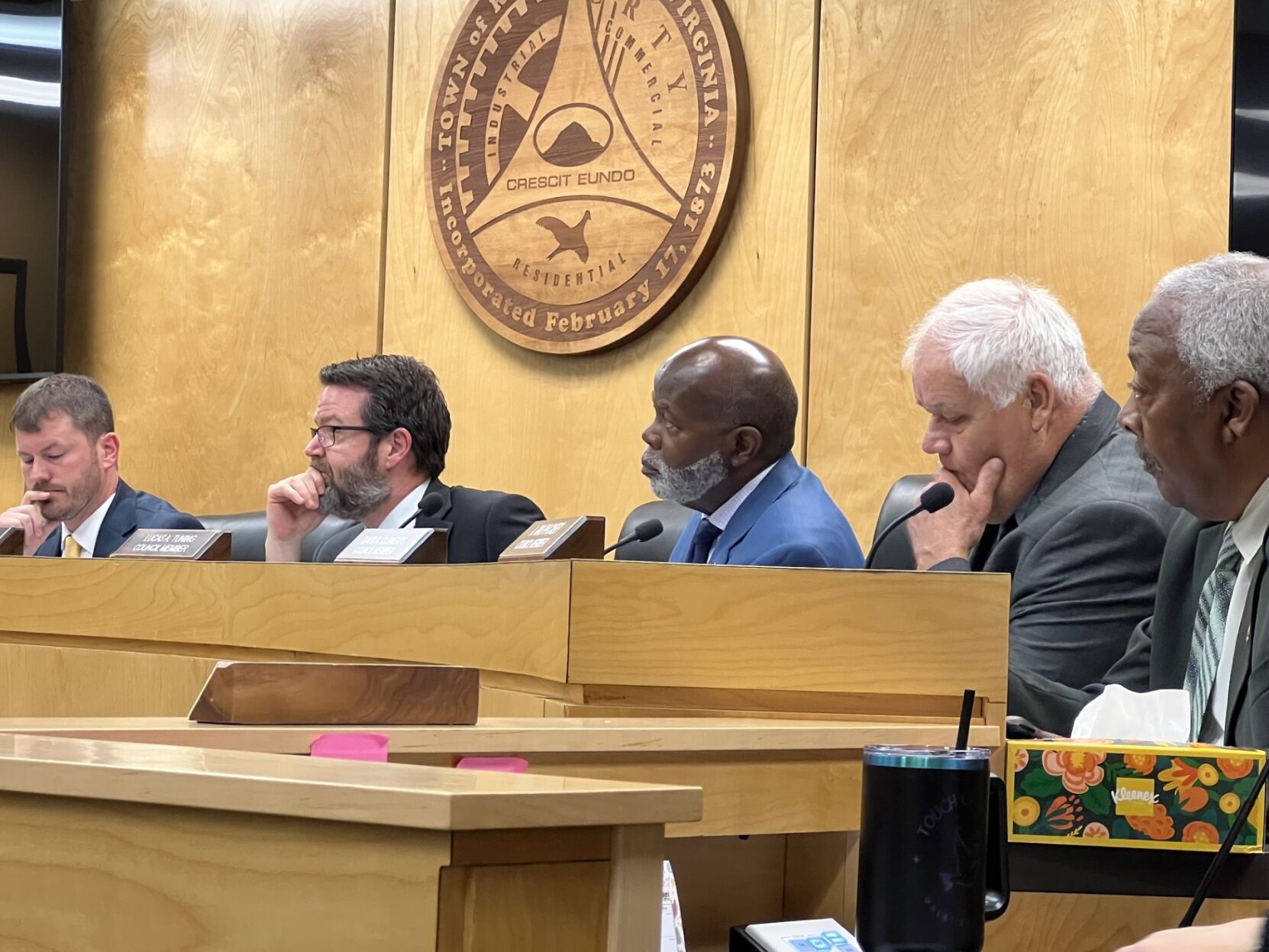
Public discussion of those potential impacts intensified after supervisors Chair Lorie Smith held a town hall meeting April 30 to discuss proposed changes to the county's zoning ordinance.
Residents repeatedly questioned whether the county was preparing for a data center and asked about water consumption, electrical demand and the future of Summit View.
Responding to one question, Smith, shaking her head no, said:
“Your question implies that we’ve got a data center coming to Franklin County … No, we’re not.”
Smith went on to shut down the data center conversation.
“I am not going to comment about a data center because if I could, I can’t,” she said. “We’re not going to talk about data centers.”
The records reviewed for this article neither establish a data center has been planned for Franklin County, nor identify the ultimate nature of Project Flash.
They do establish that county officials had been communicating with Crusoe for months while negotiations remained confidential.
Supervisor Mike Meredith said confidentiality is an important part of economic development.
“The initial stage is to learn about the company, their line of business and what they are thinking about doing in the county,” Meredith said. “This gives us a good idea of their impact, and then we can start inquiring about the effect.”
Meredith said each project presents different challenges.
“Some may only impact one area, where other projects could impact multiple areas … it is very important to ask all the right questions and do your own research,” he said.
He also believes residents should receive information as soon as circumstances allow.
“As soon as we can announce something, the citizens should learn about it,” Meredith said. “There are a lot of questions that need to be answered on both sides before any project comes close to becoming a reality.”
Following growing public interest in Project Flash — and emails sent by citizens to members of the board of supervisors regarding the project — Franklin County issued a joint statement in late June from Sandy and Smith.
The statement outlined the county’s general approach to economic development but did not mention Project Flash, Crusoe or the meetings identified in records obtained through FOIA documents. At press time, no member of the board of supervisors had publicly acknowledged Project Flash.
Crusoe did not respond to multiple requests for comment by email and telephone before publication.