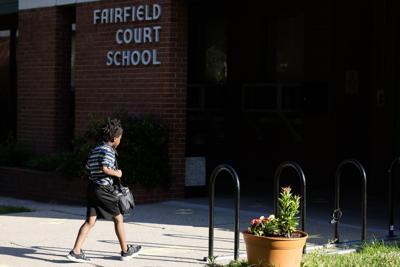
Growing up in Fairfield Court, a housing project in Richmond’s East End, Samantha Thompson did not know her family was poor. The 12th of 13 children, Thompson had not seen much outside of the neighborhood until, during a short-lived period of mandated school busing, she attended an integrated school about 30 minutes from home.
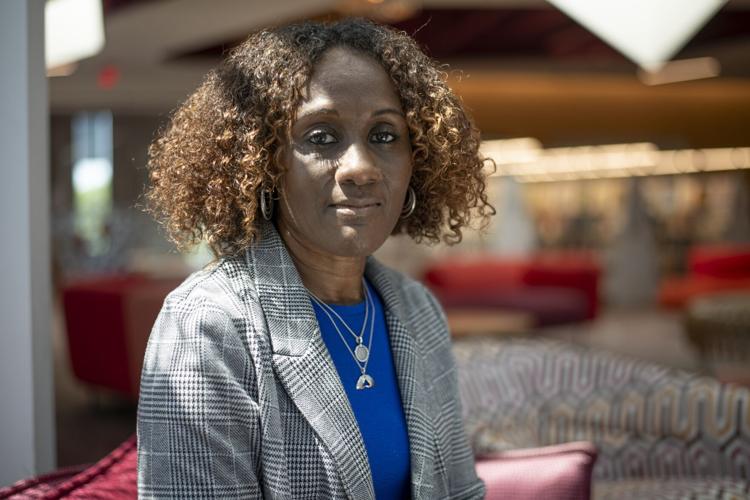
Samantha Thompson, seen here at the Fairfield Area Library in Henrico County last month, grew up in Richmond’s Fairfield Court. Thompson said attending an integrated high school allowed her to see beyond her circumstances to the endless possibilities of what she could become.
AKASH PAMARTHY, TIMES-DISPATCH
kAm“xE H2D 2E E92E E:>6 x C62=:K65 E92E >2J36 E9:D 24256>:4D E9:?8 4@F=5 5@ D@>6E9:?8 7@C >6[” %9@>AD@? D2:5]k^Am
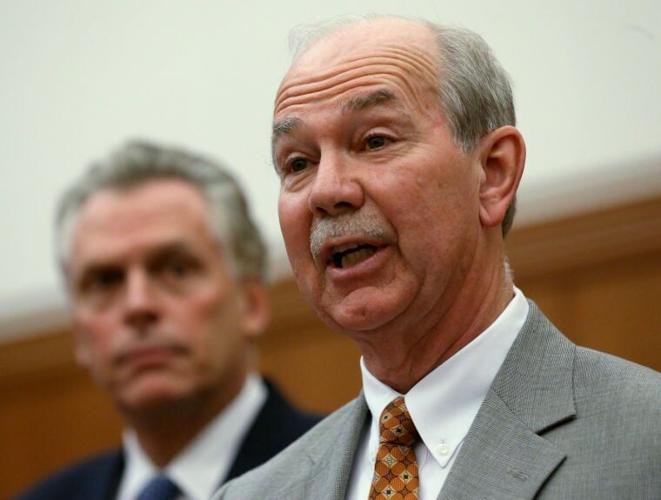
Then-Gov. Terry McAuliffe, left, named Steve Staples as Virginia’s superintendent of public instruction in 2014. Staples, who served in that role until 2018, recalled that during his time at the Virginia Department of Education, Petersburg employed about 300 teachers. One year during his tenure, the school district opened with nearly 100 vacancies.
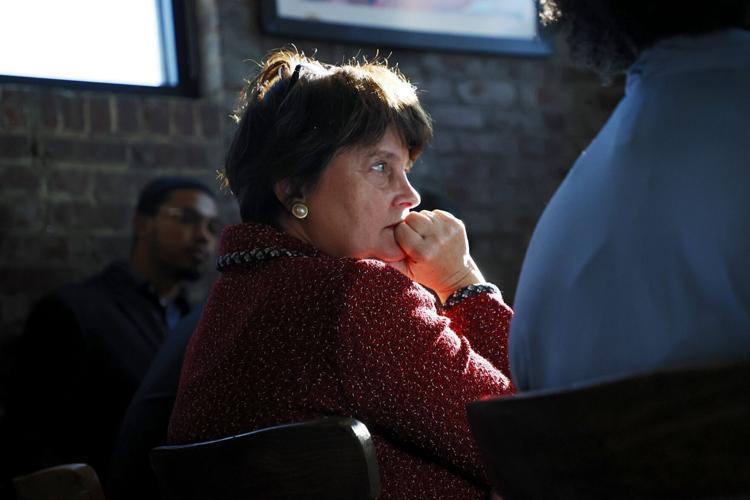
“Middle-class people of all colors are eager to live in cities, and they do live (in Richmond) now until their kids get to be school age,” said Anne Holton, a former state secretary of education and a current member of the State Board of Education.
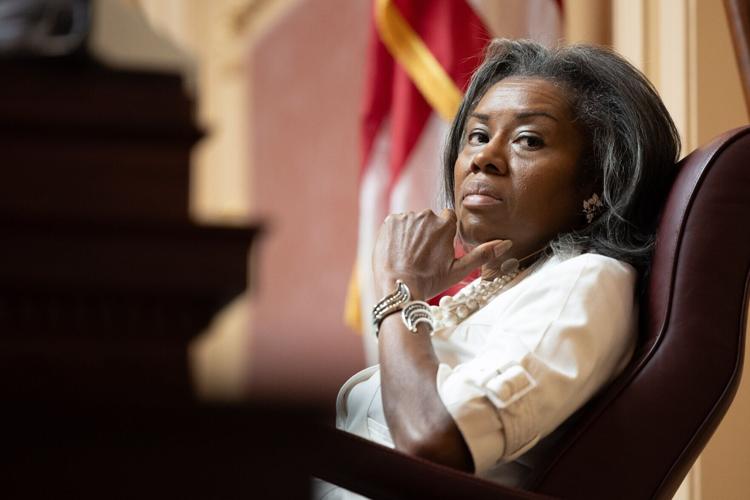
“ZIP codes really are the new redlining all over again,” said Lt. Gov. Winsome Earle-Sears. “Unless you can buy a school district, you can't really move about."
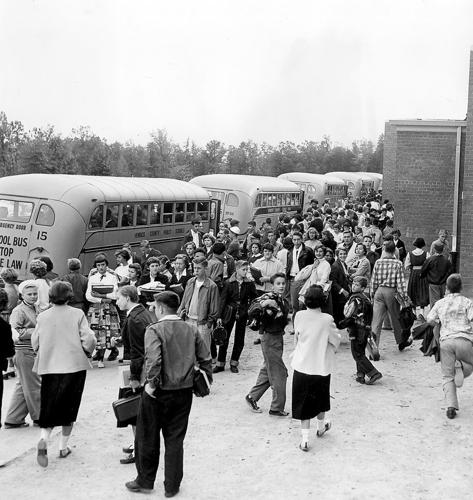
In October 1954, students crowd into the new Douglas S. Freeman High School in Henrico County. Freeman is now one of the most diverse in the region, with racial demographics that closely mirror the country's.
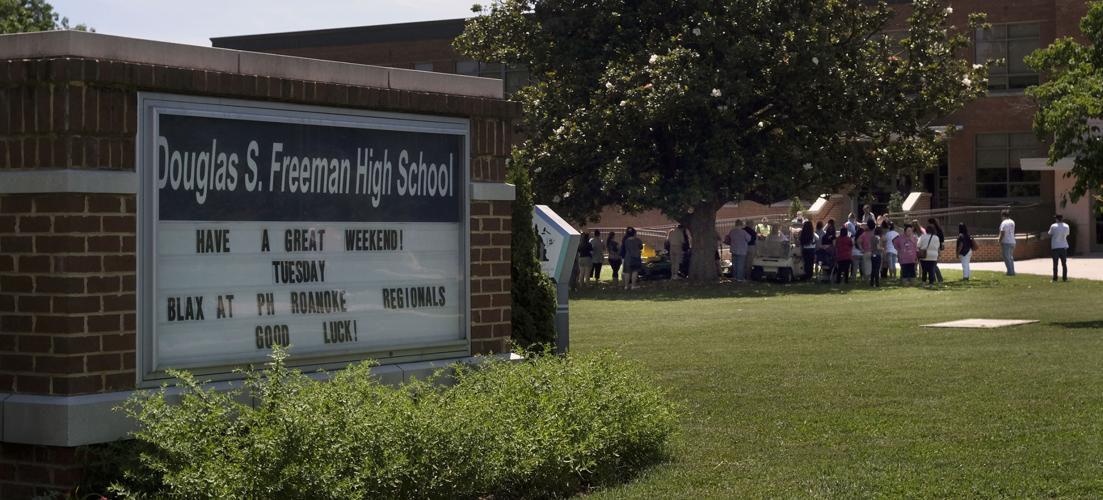
Douglas S. Freeman High School in Henrico County opened in 1954. Roughly 55% of students are white, 18% Hispanic, 15% Black and 7% are Asian, with the remaining races split between American Indian and multiracial students. The school outperforms the state average and the county's average score in several key metrics.
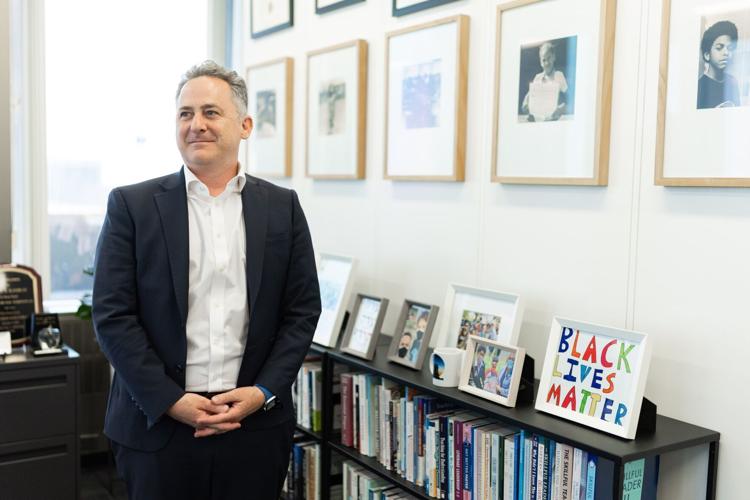
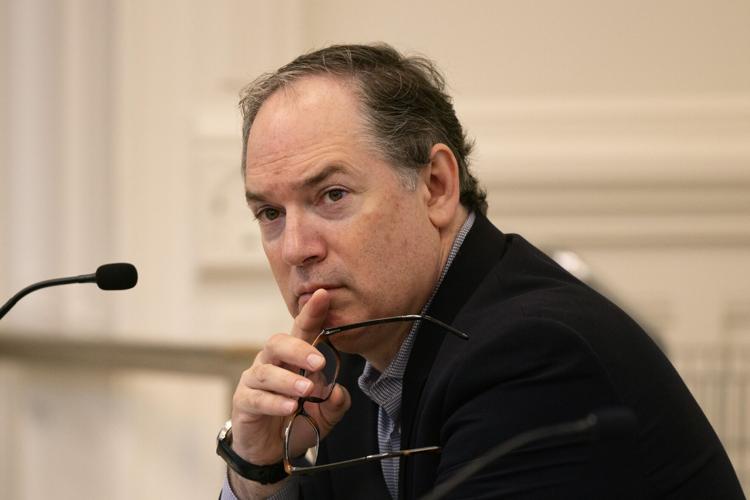
Richmond Schools Superintendent Jason Kamras says Richmond and its schools remain "largely segregated." He speaks about schools in Richmond on April 23.
As filmmaker and writer Nora Ephron said during a ’96 commencement address at Wellesley College, “Your education is a dress rehearsal for a life that is yours to lead.” If that’s the case, high school may be one of the greatest dress rehearsals of all.
It’s a place where students explore their interests, dive into extracurricular activities, finally get the freedom to choose their own classes, and prepare for college or the workplace. For many of these students and their families, public education is key: 48.1 million students enrolled in public elementary and secondary schools in 2020; and there are almost 24,000 public high schools in the U.S., according to the National Center for Education Statistics.
For many anxious parents, getting their kid into the best of these public high schools is of the utmost importance. Some families even move homes to get into better school districts. However, among all of these thousands of schools, a few stand out for their academic excellence, incredible track records, and the future success of their young students.
Find out how the best high schools in the state stack up against each other, 8 of the 10 schools in the list are private schools. Stacker compiled a list of the best high schools in Virginia using rankings from Niche.
#10. St. Stephen's and St. Agnes School (private)
- Location: Alexandria
- Enrollment: 1,183 (6:1 student to teacher ratio)
#9. Norfolk Academy (private)
- Location: Norfolk
- Enrollment: 1,184 (8:1 student to teacher ratio)
#8. Pinnacle Academy (private)
- Location: Chantilly
- Enrollment: 159 (6:1 student to teacher ratio)
#7. Woodberry Forest School (private)
- Location: Woodberry Forest
- Enrollment: 406 (7:1 student to teacher ratio)
#6. BASIS Independent McLean (private)
- Location: Mclean
- Enrollment: 478 (7:1 student to teacher ratio)
#5. The Potomac School (private)
- Location: Mclean
- Enrollment: 1,060 (6:1 student to teacher ratio)
#4. Episcopal High School (private)
- Location: Alexandria
- Enrollment: 464 (5:1 student to teacher ratio)
#3. The Madeira School (private)
- Location: Mclean
- Enrollment: 324 (6:1 student to teacher ratio)
#2. Thomas Jefferson High School for Science & Technology (public)
- District: Fairfax County Public Schools, VA
- Enrollment: 1,809 (18:1 student to teacher ratio)
Samantha Thompson, seen here at the Fairfield Area Library in Henrico County last month, grew up in Richmond’s Fairfield Court. Thompson said attending an integrated high school allowed her to see beyond her circumstances to the endless possibilities of what she could become.
Then-Gov. Terry McAuliffe, left, named Steve Staples as Virginia’s superintendent of public instruction in 2014. Staples, who served in that role until 2018, recalled that during his time at the Virginia Department of Education, Petersburg employed about 300 teachers. One year during his tenure, the school district opened with nearly 100 vacancies.
“Middle-class people of all colors are eager to live in cities, and they do live (in Richmond) now until their kids get to be school age,” said Anne Holton, a former state secretary of education and a current member of the State Board of Education.
“ZIP codes really are the new redlining all over again,” said Lt. Gov. Winsome Earle-Sears. “Unless you can buy a school district, you can't really move about."
In October 1954, students crowd into the new Douglas S. Freeman High School in Henrico County. Freeman is now one of the most diverse in the region, with racial demographics that closely mirror the country's.
Douglas S. Freeman High School in Henrico County opened in 1954. Roughly 55% of students are white, 18% Hispanic, 15% Black and 7% are Asian, with the remaining races split between American Indian and multiracial students. The school outperforms the state average and the county's average score in several key metrics.