WASHINGTON — U.S. consumer inflation increased at its fastest pace in three years in May, boosted by surging prices for energy products amid the Middle East conflict, and giving more ammunition for the Federal Reserve to keep interest rates unchanged into 2027.
President Donald Trump appeared to embrace the data Wednesday, telling reporters that he "loved" inflation and reiterating his belief that prices will fall as soon as the Iran war ends.
Asked about the consumer inflation data, and whether it could hobble his fellow Republicans just months ahead of November's midterm election, Trump said: "I love the inflation."
The president then explained how he approved a plan to secretly move oil tankers through the Strait of Hormuz over concerns of higher costs and increasing inflation.
"When it's over, you will see oil drop to where it was before," Trump said of the larger war. "It's coming down. It's going to come down like a rock."
![]()
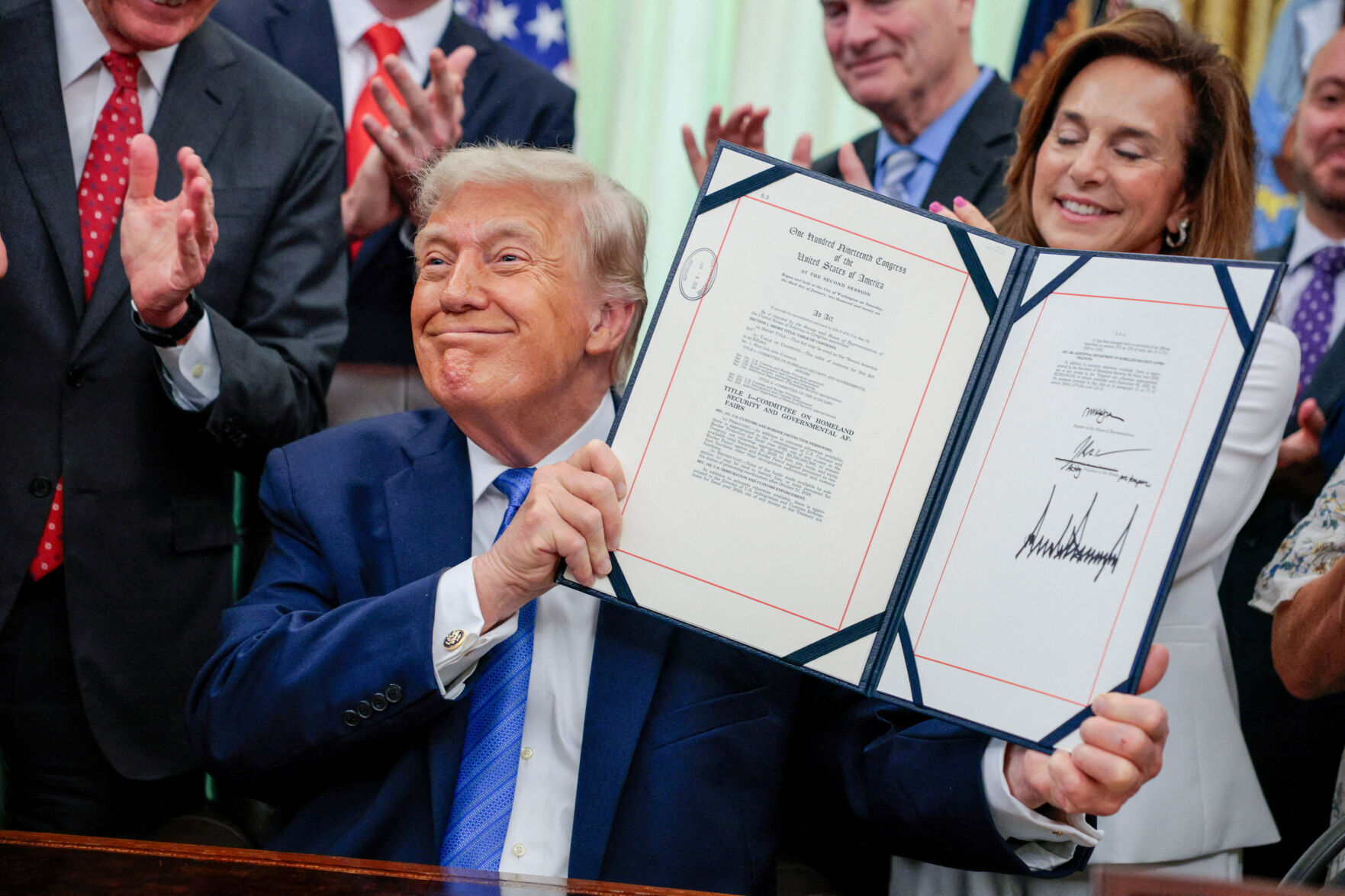
U.S. President Donald Trump holds up the Secure America Act
after signing it Wednesday in the Oval Office at the White House in
Washington.
Evan Vucci, REUTERS
The third straight month of strong increases in the Consumer Price Index reported by the Labor Department on Wednesday underscored the mounting pressure on households, who are increasingly tapping their savings.
Inflation eroded wages for a second consecutive month in May, which could weigh on overall economic growth. The soaring cost of living is a political liability for Trump and his Republican Party, seeking to retain control of Congress in the midterm elections in November.
Trump won the 2024 presidential election in large part because of his promise to lower inflation, but watched his approval rating tumble as frustration mounts over his handling of the economy.
![]()
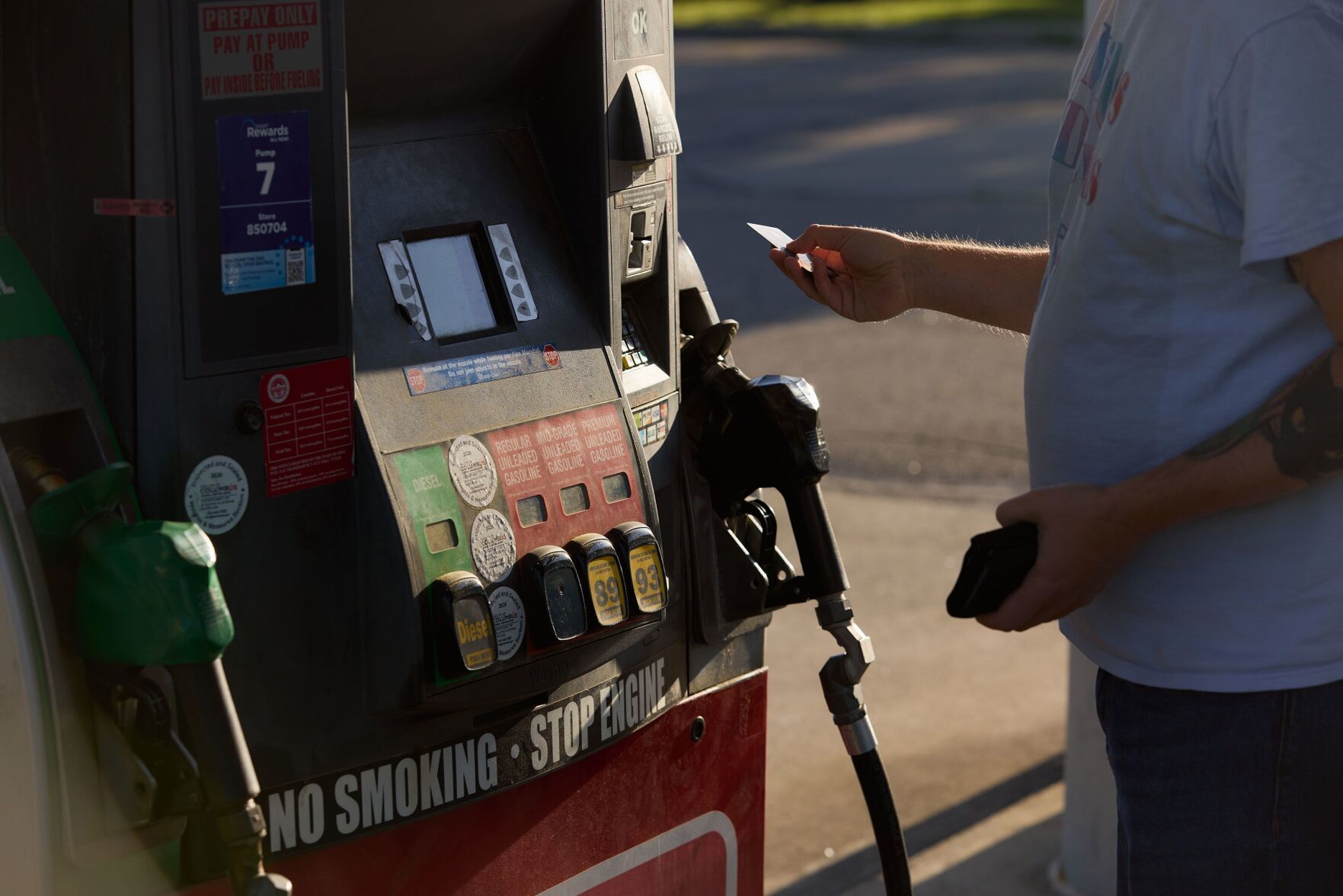
A driver pays at a fuel pump May 11 in Columbus, Ohio.
Brian Kaiser, Bloomberg
"Americans are getting squeezed financially by inflation," said Heather Long, chief economist at Navy Federal Credit Union. "It's not just bad vibes about the economy now, there are real financial pressures, especially on middle-class and lower-income households."
The Consumer Price Index increased 4.2% in the 12 months through May, the largest gain since April 2023, the Labor Department's Bureau of Labor Statistics said. The CPI advanced 3.8% year-on-year in April and rose 3.3% in March. Prices increased 0.5% over the month after climbing 0.6% in April. The rise in inflation was in line with economists' expectations.
The U.S. central bank tracks the Personal Consumption Expenditures Price Indexes for its 2% inflation target. All inflation measures are running well above the Fed's target.
Real average hourly earnings dropped 0.7% in the 12 months through May after falling 0.3% in April.
![]()
Vessels are anchored Wednesday in the Strait of Hormuz as seen
from Musandam, Oman.
Reuters
A 3.9% jump in the price of energy goods accounted for more than 60% of the rise in the monthly CPI. Energy prices rose 3.8% in April. They vaulted 23.5% in the 12 months through May. Gasoline prices accelerated 7.0% over the month and were up 40.5% from a year ago.
Prices at the pump retreated in recent weeks as oil prices eased, raising cautious optimism among economists that May could be the peak in CPI inflation.
But the U.S. and Iran traded strikes Tuesday, with Trump saying Wednesday Tehran took too long to negotiate a deal and would now "have to pay the price." Iran has said it would reassess diplomatic engagement with Washington.
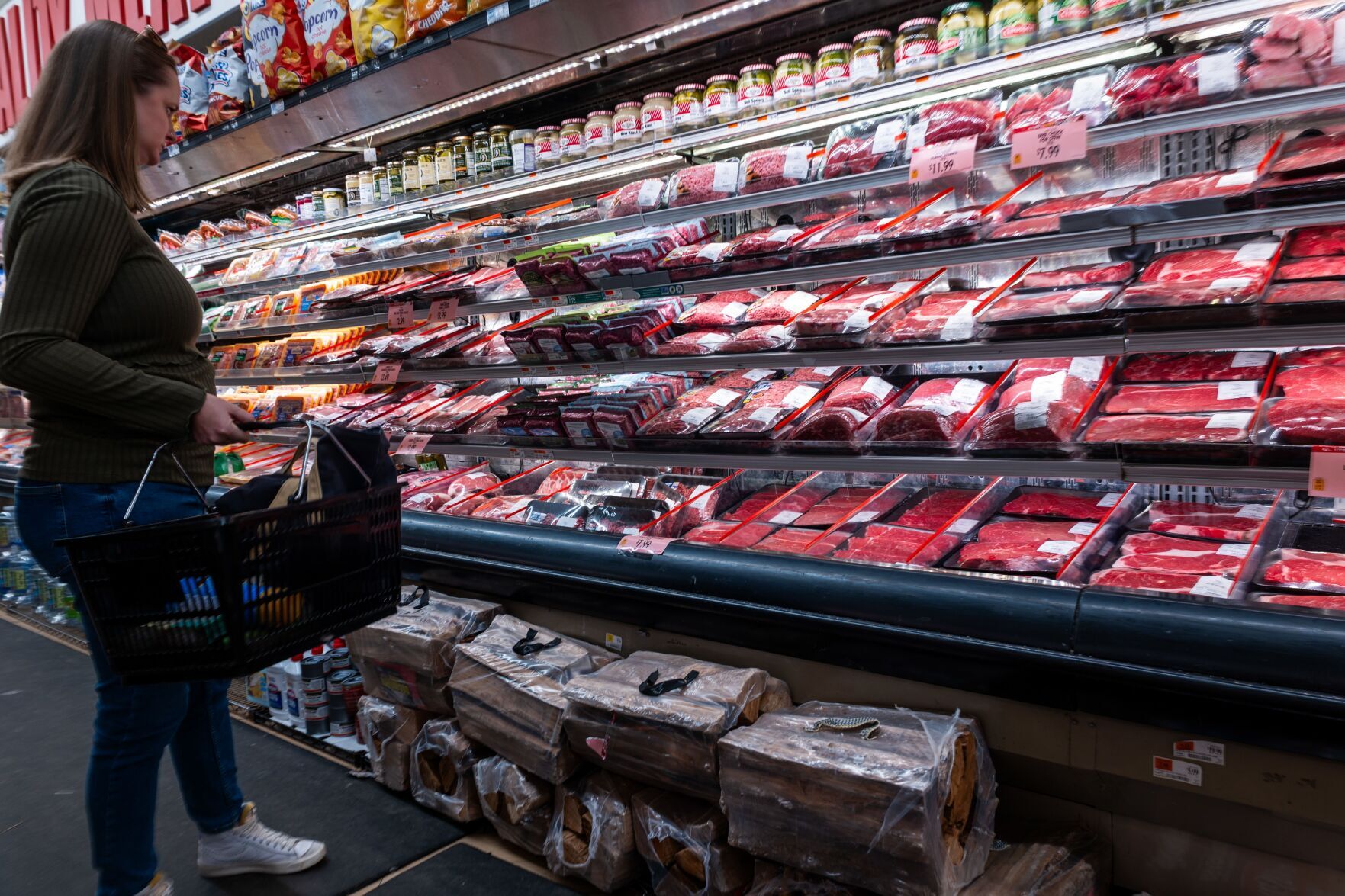
Higher rents also lifted inflation last month. While food price growth slowed after accelerating in April, risks remained to the upside as the war, now in its fourth month, raised the cost of fertilizers. Grocery prices edged up 0.1%, with increases in the prices of nonalcoholic beverages, cereals and bakery products as well as fruits and vegetables partially offset by decreases in the cost of meat and dairy products.
Stocks on Wall Street were lower. The dollar was steady against a basket of currencies. U.S. Treasury yields rose.
![]()
Meat is displayed May 12 at a grocery store in Brooklyn in
New York City.
Spencer Platt, Getty Images
Rate hike
Following news last week that the economy posted a third successive month of above-expectations job growth in May and the unemployment rate staying at 4.3% for three months in a row, financial markets started pricing in a rate hike.
The CPI report, however, suggested the oil price shock hasn't yet spilled over to the broader economy, and remained mostly confined to the transportation sector. There were also signs that the pass-through from import tariffs was fading.
Economists continued to believe the bar remained high for the central bank to tighten monetary policy. They expected the Fed to leave its benchmark overnight interest rate in the 3.50%-3.75% range at next week's meeting, but ditch its easing bias.
Excluding the volatile food and energy components, the CPI increased 2.9% year-on-year in May after rising 2.8% in April.
The so-called core CPI gained 0.2% over the month after rising 0.4% in April. The slowdown in the monthly core CPI mostly reflected a 1.7% drop in motor vehicle insurance, the largest decline since October 2020.
Economists said the decrease was at odds with the reality of higher motor vehicle insurance. They said the drop was unlikely to be reflected in the core PCE inflation measure, which uses the component from the Producer Price Index report.
Prices for household furnishings and supplies fell while those of apparel rose moderately, suggesting the inflation boost from import duties was drawing to a close. New vehicle prices fell and the cost of used cars and trucks edged up 0.1%. Core goods prices dipped 0.1%.
Rents increased a solid 0.4%, with owners' equivalent rent of primary residence rising 0.3%. Rent measures increased 0.5% in April, boosted by a one-time adjustment after last year's shutdown of the government prevented data collection.