With myriad potential uses in health care, skincare, nutrition and elsewhere, a high-tech facility in northeast Roanoke will soon begin producing milk exosomes to supply the world.

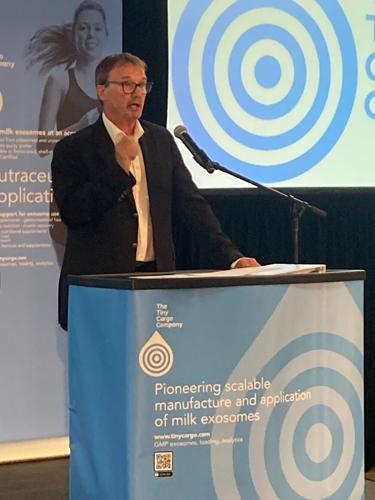
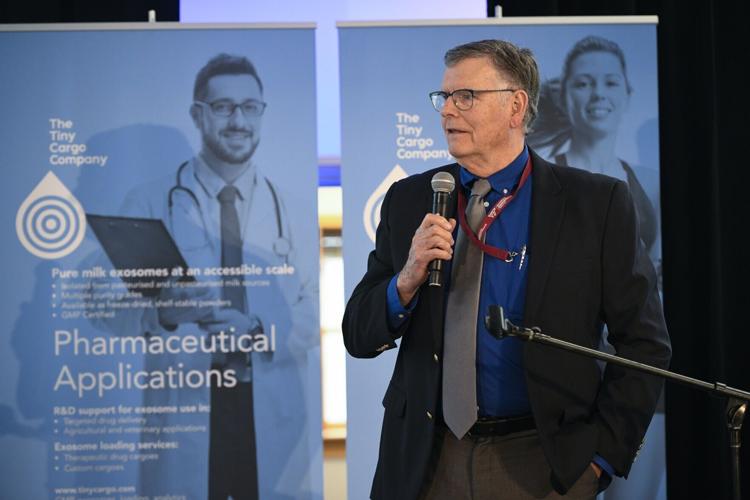
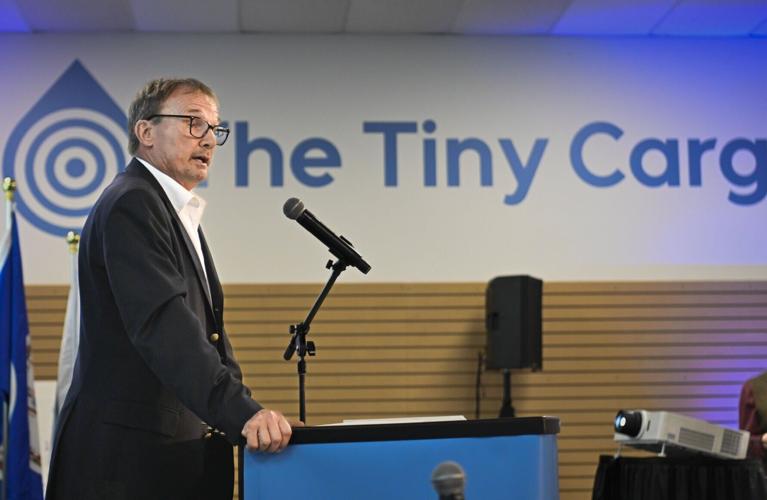
The Tiny Cargo Co.'s CEO, Alan Gourdie, speaks Thursday during a ribbon cutting event in northeast Roanoke. The company's high-tech facility will soon begin producing milk exosomes to supply the world, he said.
People are also reading…

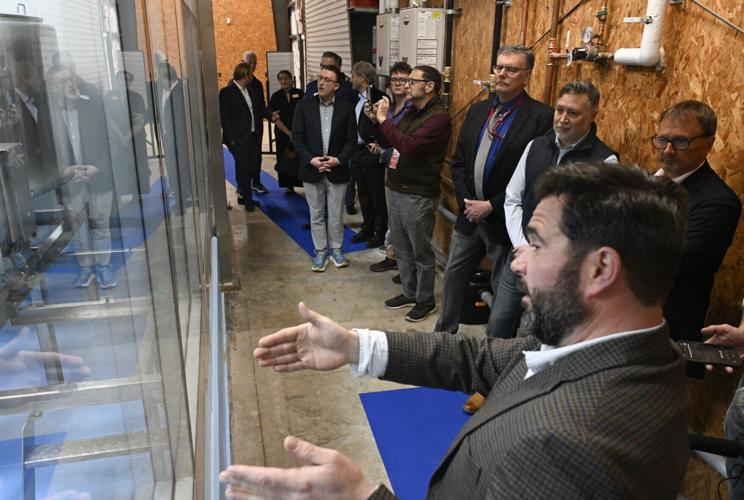
David Whitt, right, conducts a tour of a clean room prior to a ribbon-cutting ceremony of The Tiny Cargo Co.’s new manufacturing plant in northeast Roanoke. The biotech company’s new clean room facility uses raw milk to create milk exosomes, the microscopic cells found in milk that help cells communicate with each other. These exosomes can then be used in the treatment of many diseases, such as cancer, heart disease and radiation-related injuries.

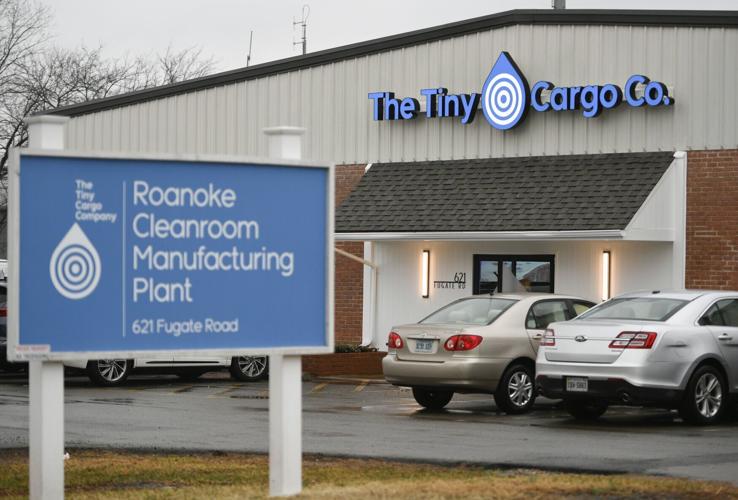
The Tiny Cargo Co.’s new manufacturing plant is pictured in northeast Roanoke.

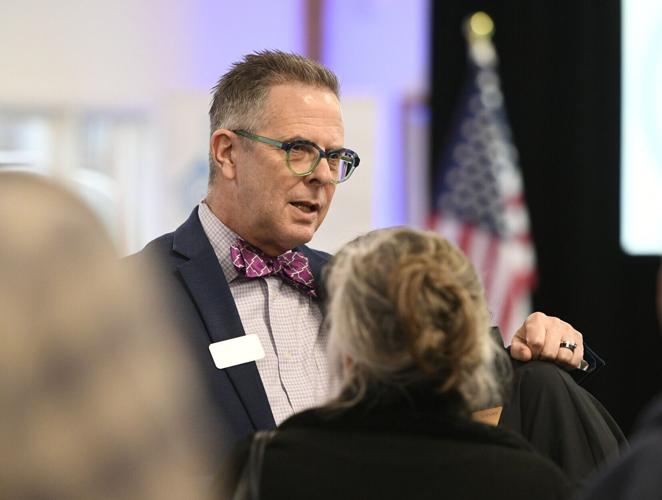
Roanoke Mayor Joe Cobb speaks with guests prior to a ribbon-cutting ceremony of The Tiny Cargo Co.’s new manufacturing plant in northeast Roanoke.

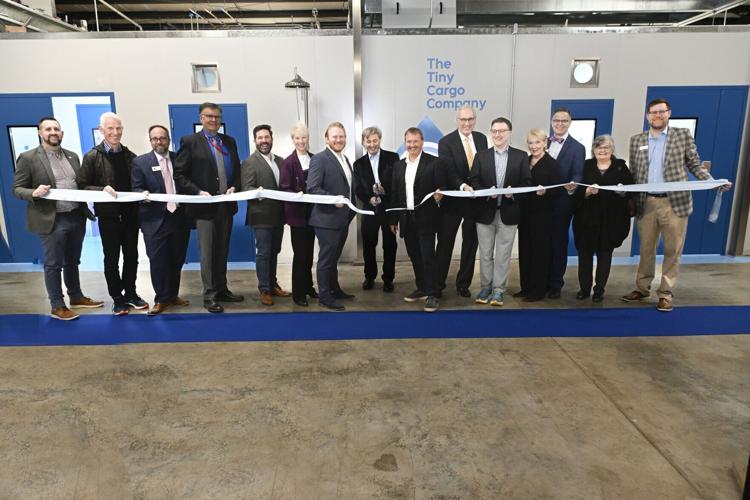
A ribbon-cutting ceremony was held Thursday at The Tiny Cargo Co.’s new manufacturing plant in northeast Roanoke. The biotech company’s new clean room facility uses raw milk to create milk exosomes, the microscopic cells found in milk that help cells communicate with each other. These exosomes can then be used in the treatment of many diseases, such as cancer, heart disease and radiation-related injuries.

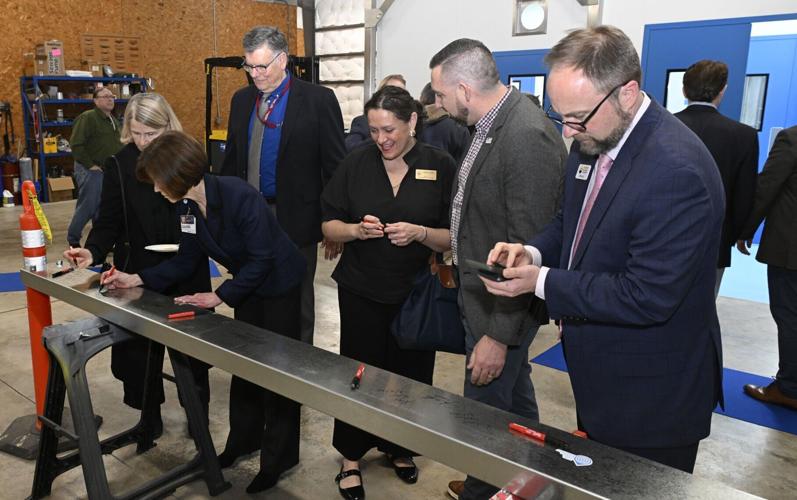
Guests sign a beam used in a clean room at The Tiny Cargo Co. in Roanoke.

Prior to a ribbon-cutting ceremony, CEO Alan Gourdie of the Tiny Cargo Co. speaks to guests at the biotech company's new northeast Roanoke facility. The clean room facility uses raw milk tot create milk exosomes, the microscopic cells found in milk that help cells communicate with each other. These exosomes can then be used in the treatment of many diseases, such as cancer, heart disease and radiation-related injuries.

Dr. Michael Friedlander, executive director of the Fralin Biomedical Research Institute, speaks prior to a ribbon-cutting ceremony of The Tiny Cargo Co.’s new manufacturing plant in northeast Roanoke. The biotech company’s new clean room facility uses raw milk to create milk exosomes, the microscopic cells found in milk that help cells communicate with each other. These exosomes can then be used in the treatment of many diseases, such as cancer, heart disease and radiation-related injuries.

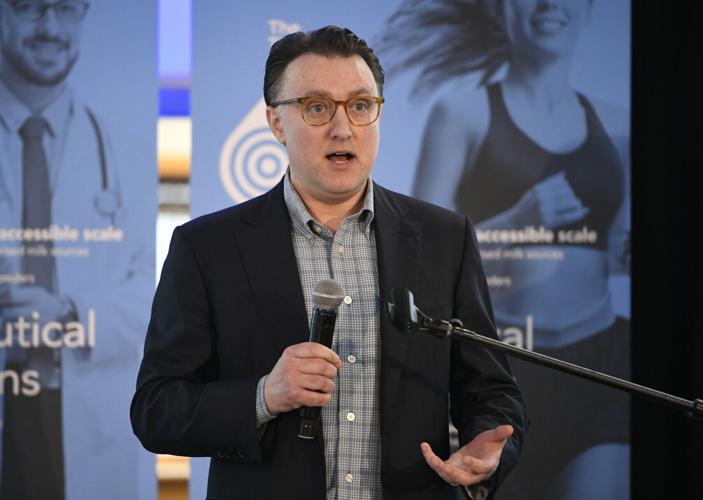
Joseph Benevento, CEO of the Virginia Innovation Partnership Corp., addresses guests prior to a ribbon-cutting ceremony of The Tiny Cargo Co.’s new manufacturing plant in northeast Roanoke. The biotech company’s new clean room facility uses raw milk to create milk exosomes, the microscopic cells found in milk that help cells communicate with each other. These exosomes can then be used in the treatment of many diseases, such as cancer, heart disease and radiation-related injuries.

Prior to a ribbon-cutting ceremony, CEO Alan Gourdie of the Tiny Cargo Co. speaks to guests at the biotech company's new northeast Roanoke facility. The company's new clean room facility uses raw milk to create milk exosomes, the microscopic cells found in milk that help cells communicate with each other. These exosomes can then be used in the treatment of many diseases, such as cancer, heart disease and radiation-related injuries.