Tick exposure can occur year-round, but ticks are most active during warmer months (April-September). Reducing exposure to ticks is the best defense against Lyme disease, Rocky Mountain spotted fever, and other tick-borne infections. You and your family can take several steps to prevent tick…
Although tick season reaches its peak from April through September, ticks can be active on warm days at all times of the year for a variety of reasons including suburbanization, the abundance of deer, as well as climate change and land development.
According to the Virginia Department of Health (VDH), there are four main types (species) of ticks that are most common in Southwest Virginia with three species being responsible for most tick-borne diseases in humans.
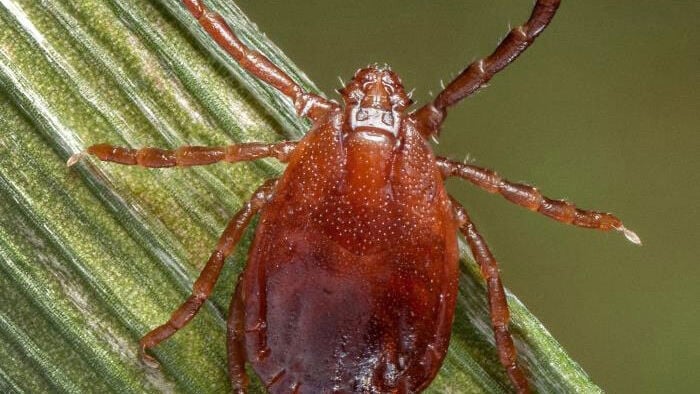
Although it has not been documented to transmit disease to humans in Virginia as of yet, the Asian longhorned tick is of great concern to state epidemiologists. The invasive tick has been found in Connecticut carrying a bacterium that can cause a deadly disease in humans and has spread to at least 38 Virginia localities. The tick reproduces rapidly and can transmit various pathogens, including one that has caused cattle deaths in Virginia.
A warning sign is posted at the entrance of the Jack-O-Lantern Branch Trail at the Booker T. Washington National Monument in Hardy as Chip Conway of Franklin County and his dog take their morning stroll.
A warning sign is posted at the entrance of the Jack-O-Lantern Branch Trail at the Booker T. Washington National Monument in Hardy as Chip Conway of Franklin County and his dog take their morning stroll.
According to the Virginia Department of Health (VDH), there are four main types (species) of ticks that are most common in Southwest Virginia with three species being responsible for most tick-borne diseases in humans.
Although it has not been documented to transmit disease to humans in Virginia as of yet, the Asian longhorned tick is of great concern to state epidemiologists. The invasive tick has been found in Connecticut carrying a bacterium that can cause a deadly disease in humans and has spread to at least 38 Virginia localities. The tick reproduces rapidly and can transmit various pathogens, including one that has caused cattle deaths in Virginia.